

 Engagement Rings
 Anniversary Rings
 Solitaire Rings
 Halo Rings
 Toi Moi Rings
 Three Stone Rings
 Nature Inspired Rings
 Rose Cut Rings
 Fancy Color Rings
 Antique Cut Rings
 Wedding Rings
 Wedding Band Rings
 Exclusive Lab Grown Diamond Rings
 All Lab Grown Diamond Ring
 Engagement Rings
 Three Stone Rings
 Fancy Color Rings
 Antique Cut Rings
 Daily Wear Rings
 Wedding Band Rings
 Exclusive Moissanite Rings
 Earrings
 Bracelet
 Pendant
 Necklace
 Men's Ring
 Bridal Sets
 Rings
 Earrings
 Tennis chain
 Cuban Chains
 Custom Pendant
 Custom Ring
 Custom Teeth Grillz
 Round
 Oval
 Cushion
 Marquise
 Pear
 Emerald
 Heart
 Princess
 Rose Cut
 Radiant
 Antique Cut
 Brooch
 Cufflink
 Keychain
 Unique Products
 +91-9265051773
 Virtual Appointment
 log in




Short answer: There is no fixed rule for how much to spend on a wedding band. A plain gold band usually costs far less than a diamond band, and the price of a diamond band depends on the metal, the karat, the band width, the number and size of diamonds, and the setting style. Many couples set the wedding band budget as a smaller share of the engagement ring budget. Choosing lab grown diamonds, 14K gold and a half eternity design are the easiest ways to get more sparkle for less.
Wedding bands are worn every day for decades, often far more than the engagement ring, so it is worth spending wisely. The good news is that a band is one of the easiest pieces of jewelry to budget for once you understand what you are paying for.
This guide explains what drives wedding band prices, how to set a budget for both partners, where you can safely save, where you should not cut corners, and how to compare two bands that look similar but are priced differently.
What Affects Wedding Band Price?
Every wedding band price is built from the same ingredients: the metal, how much of it there is, the stones, and the hours of skilled work needed to set them. Change any one of these and the price moves.
| Factor | Lower cost | Higher cost |
|---|---|---|
| Metal | 10K or 14K gold | 18K gold or platinum |
| Width and weight | Slim, lightweight band | Wide, heavy band |
| Diamond type | Lab grown diamonds or moissanite | Mined diamonds |
| Diamond coverage | Accent stones or half eternity | Full eternity |
| Stone size | Small melee stones | Larger stones |
| Setting labor | Channel or simple prongs | Micro pave, multi-row, custom work |
Metal and karat
Gold karat tells you how much pure gold is in the alloy. 18K is 75% gold, 14K is about 58% gold, and 10K is about 42% gold. More pure gold means a higher metal cost and a richer colour, but also a slightly softer metal. 14K is the sweet spot for many couples because it balances colour, durability and price.
Weight and width
Two bands in the same karat can be priced very differently simply because one uses more metal. A wide, heavy men's band can cost more in gold alone than a slim women's band with small diamonds. When comparing, ask for the approximate metal weight, not just the width.
Stones and setting work
On diamond bands, the stones and the labour to set them are often the biggest part of the price. Dozens of tiny pave stones each need their own seat and prongs, which takes skilled hands and time. A channel band with fewer, slightly larger stones can cost less to make while looking just as bright.
How to Set Your Budget
Start with the engagement ring
Many couples plan the wedding bands after the engagement ring, keeping them to a smaller share of that budget. There is no correct percentage; choose what feels comfortable.
Budget for two
Remember to include both partners' bands. A diamond band for one and a plain band for the other is a common combination.
Leave room for the future
You can start simple and add an anniversary band later, which spreads the cost over time.
Decide what matters most
Before you shop, agree on your top priority. Is it the metal (for example 18K yellow gold), maximum sparkle, a comfortable everyday fit, or matching bands? Knowing the one thing you won't compromise on makes every other decision easier.
Match the band to your lifestyle
How you use your hands should shape where the money goes. If you work with your hands, play sports or rarely take your ring off, a sturdier band with channel-set or flush-set stones is money well spent, and fine micro pave may not be the best value for you. If you work at a desk and love sparkle, a delicate pave or eternity band will hold up well with normal care.
Tip: Write down one total figure for both bands together, then split it. Couples who budget per ring often overspend on the first band they fall in love with and then squeeze the second.
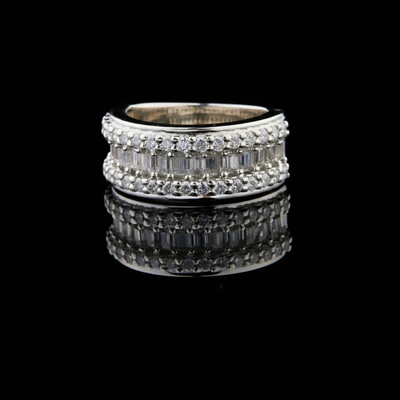
 Shown: Multi Row Baguette & Round Cut Lab Diamond Wedding Band
Budget Planning by Band Type
Instead of starting from a number, it can help to start from the type of band you want. The table below shows how common styles compare on relative cost, so you can see where your budget will go furthest.
| Band type | Relative cost | Good to know |
|---|---|---|
| Plain gold band | Lowest | Price mostly depends on gold weight and karat |
| Accent or few-stone band | Low to moderate | A few diamonds add sparkle without much setting labour |
| Half eternity band | Moderate | Stones across the top only; easier to resize |
| Full eternity band | Higher | Stones all the way round; very hard to resize |
| Multi-row or statement band | Highest | More stones and more skilled setting work |
Lab grown diamonds move every diamond option one step lower in cost than the same design in mined diamonds, and moissanite usually lower again. That is why many couples choose a fuller design, such as a full eternity ring, in lab grown diamonds rather than a simpler band in mined stones.
Lab Grown Diamonds, Moissanite or Mined?
The stone you choose is one of the biggest levers on price, so it helps to understand the real differences.
- Lab grown diamonds: real diamonds, chemically, physically and optically the same as mined diamonds, grown using CVD or HPHT methods. They score 10 on the Mohs hardness scale and are graded by labs such as IGI and GIA. You get the same look and durability at a lower price.
- Moissanite: a different gemstone (silicon carbide), not a diamond. It is very hard at 9.25 on the Mohs scale and has a higher refractive index than diamond (about 2.65 versus 2.42), so it shows more colourful fire. It is usually the most affordable sparkling option. See our moissanite wedding bands.
- Mined diamonds: the traditional choice, typically the most expensive for the same size and quality.
On a band, individual stones are small, so the visual difference between lab grown diamond and mined diamond is nil, and many people find the price difference better spent on metal quality or a fuller design.
What about platinum and silver?
Platinum is dense, naturally white and very durable, but it is usually the most expensive metal for a band. 925 sterling silver is the most affordable precious metal and works well for fashion and stacking rings, though it is softer and tarnishes over time, so most couples choose gold for a band worn every day for life.
7 Ways to Save on Wedding Bands
- Choose lab grown diamonds: real diamonds at a much lower price than mined.
- Pick 14K gold: durable, beautiful and more affordable than 18K or platinum.
- Go half eternity: nearly the same look from the top with fewer stones, and it can be resized.
- Use smaller stones: many small diamonds can sparkle as much as fewer large ones.
- Consider moissanite: bold sparkle at an even lower price.
- Buy as a set: an engagement ring and band designed together, like our lab grown bridal ring sets, can be better value and fit perfectly.
- Buy direct from the maker: fewer middlemen can mean better pricing.
Where Not to Cut Corners
Saving money is smart, but a few things are expensive to fix later. Protect these even on a tight budget.
- Setting quality: loose stones cost more to replace later. Look for even, secure prongs or clean channel walls.
- Metal thickness: very thin bands can bend over time, especially on hands that work hard.
- Fit: a wrong size, especially on full eternity bands, can be expensive to fix.
- Comfort: a band worn every day should have smooth edges and a comfortable inside profile.
- Return policy: make sure you can return or exchange the band if it does not suit you once it arrives.
How to Compare Two Similar Bands
Two bands can look almost identical in photos and still be priced very differently. When that happens, compare them point by point:
- Metal and karat: confirm both are the same karat and ask whether the price is for solid gold or another metal.
- Metal weight: a heavier band uses more gold and will usually feel more solid.
- Total carat weight: check the combined weight of all stones, not just the number of stones.
- Stone quality: ask about colour and clarity. On small stones, near-colourless with good clarity looks bright and even.
- Coverage: is it half, three-quarter or full eternity?
- Certification: larger lab grown diamonds may come with an IGI certificate; tiny melee stones usually do not.
- Policies: shipping, returns and aftercare all add value beyond the ring itself.
Once you line these up, the "cheaper" band is often lighter or set with fewer stones, and the price gap starts to make sense.
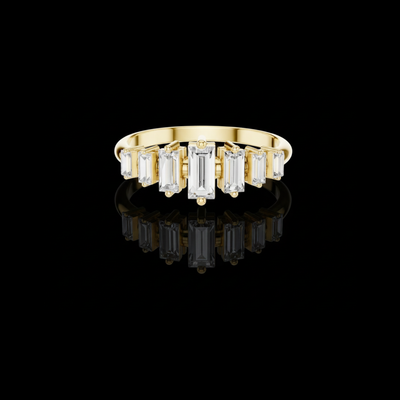
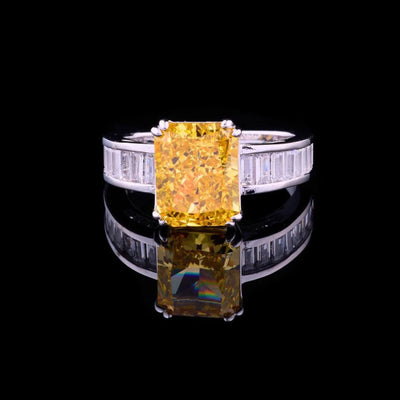
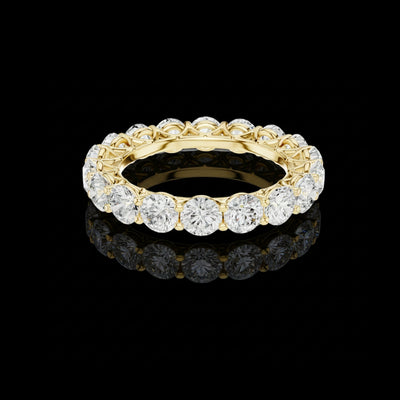
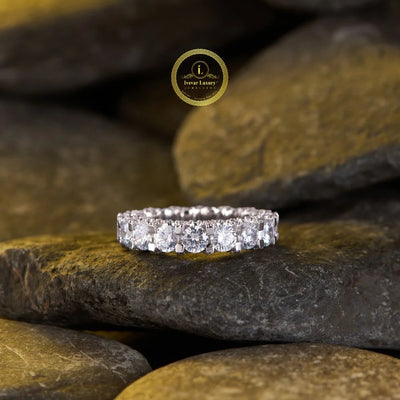
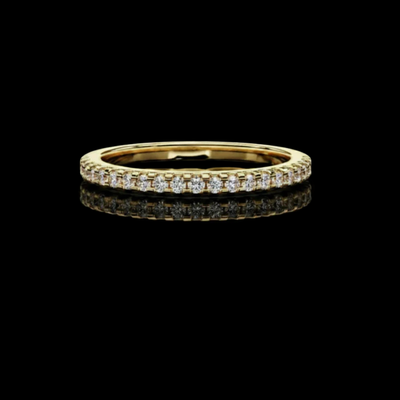
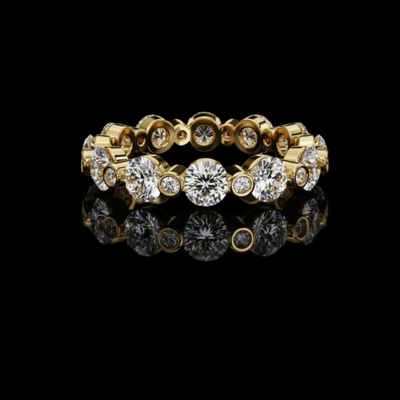
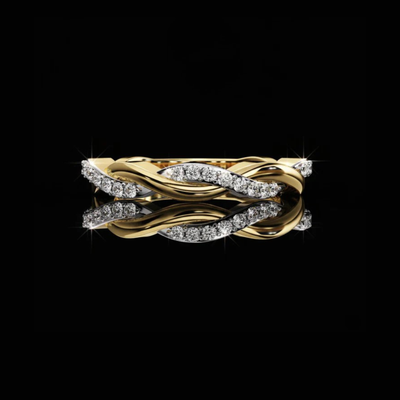
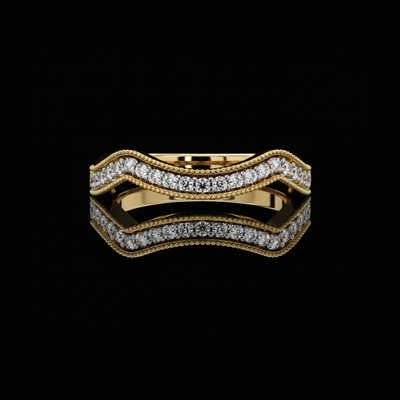
Shop the styles in this guide

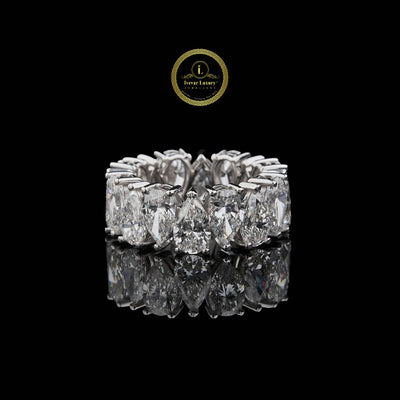

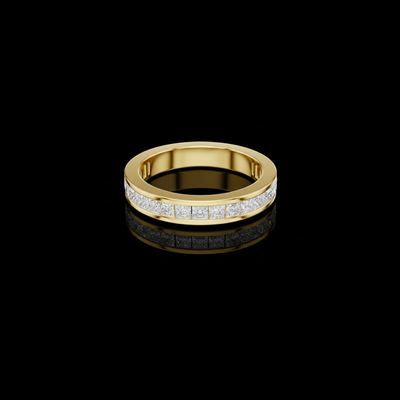
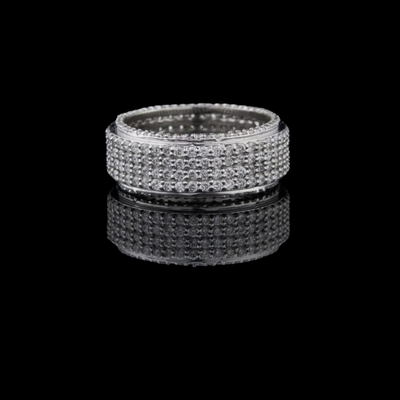
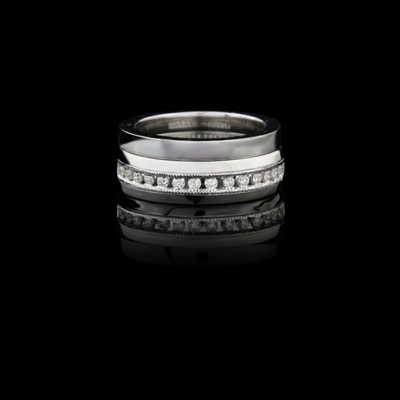
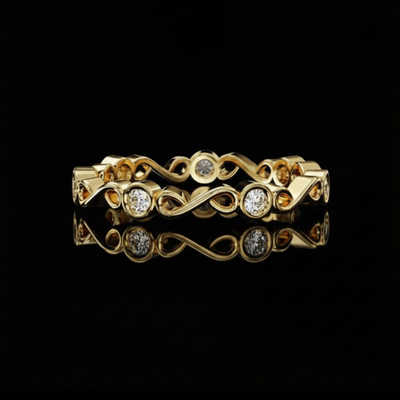
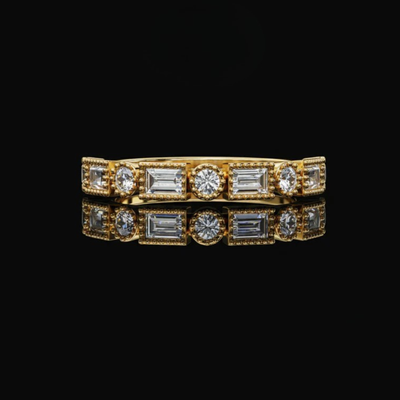
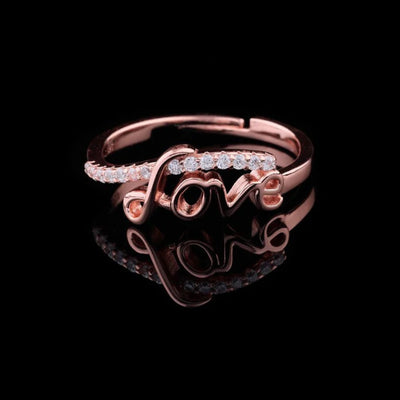
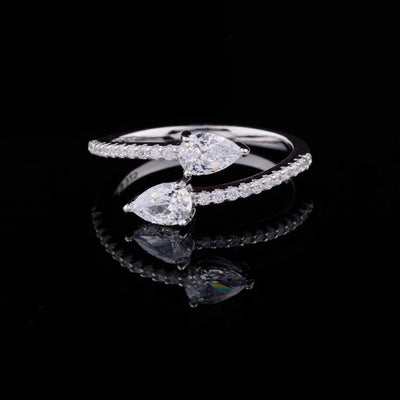

Planning His and Her Bands
Couples often worry that their bands should match in price. They don't need to. It is very common for one partner to choose a diamond band and the other a plain or lightly set band.
- Matching metal, different styles: both bands in 14K yellow gold ties them together even if one has diamonds.
- A shared detail: a matching engraving, a single flush-set diamond, or the same finish links the pair.
- Men's band weight: wider men's bands use more gold, so a plain men's band can cost more than expected. Lab grown diamond men's rings offer a little sparkle without heavy metal.
Tip: Order both bands at the same time if you want the gold colour to match exactly. Different batches and different karats can look slightly different side by side.
Costs Beyond the Ring Itself
The price tag on the band is not always the full cost of owning it. Plan for these smaller items so they don't surprise you later.
- Engraving: a date, initials or a short message inside the band is a popular personal touch. Check whether it is included and how many characters fit.
- Resizing: fingers change over the years. Plain and half eternity bands can usually be resized; full eternity bands often cannot, and may need to be remade.
- Maintenance: pave and prong settings should be checked periodically, and white gold may need occasional re-plating to keep its bright white colour.
- Insurance: many couples add their rings to a home or jewelry insurance policy. Keep receipts and any certificates in a safe place.
- Cleaning: a soft brush, mild soap and warm water handle most cleaning at home, so ongoing costs here are small.
Think in cost per wear
A wedding band is one of the few things you may wear every single day for decades. Spread over that many days, the difference between a slightly cheaper band and one that is better made, more comfortable and more durable becomes very small. That is why it often pays to spend on build quality and fit, and save on things like stone origin and karat.
When to Buy and How to Plan the Timeline
Good timing protects your budget, because rushed orders limit your choices and can push you into whatever is available rather than what you actually want.
- Three months before: start browsing, agree on a combined budget, and get both partners' ring sizes measured.
- Two to three months before: order the bands, especially if you want custom shaping, a curved band to fit the engagement ring, or engraving.
- One month before: try both bands on, check comfort and fit, and use the return window if something isn't right.
- The week of the wedding: clean the rings and hand them to the person responsible for bringing them to the ceremony.
Ordering early also gives you room to compare a few designs side by side and to ask questions without pressure, which is where most good budget decisions are made.
Wedding Bands at Ivevar
Because we design and handcraft in our own Surat workshop and sell directly, we can offer lab grown diamond bands at accessible prices. Choose 10K, 14K or 18K gold, lab grown diamonds (with IGI certificates on many stones) or moissanite, and ask us about custom bands or a virtual appointment if you want help comparing options. Every band ships worldwide with free shipping and 30-day easy returns. Browse lab grown diamond wedding bands and gifts under $500.
Shop Wedding Bands for Every Budget
 Multi Row Baguette Round BandShop Now
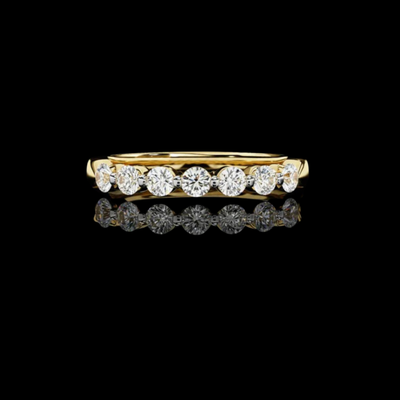
 Nature Inspired Round BandShop Now
 Pave Chain Link Statement RingShop Now
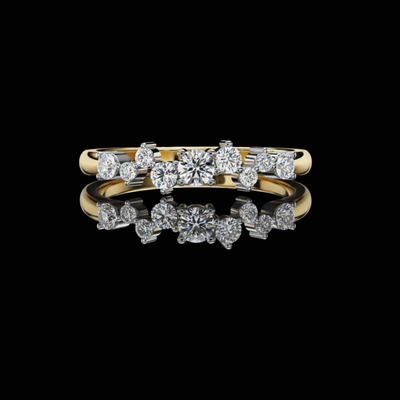
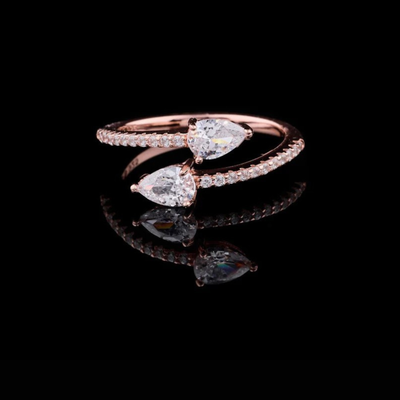
 Marquise and Round BandShop Now
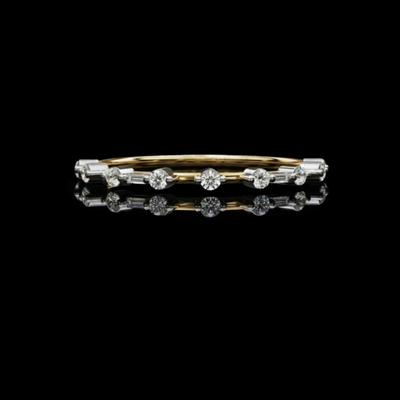
 Mixed Shape Eternity BandShop Now
 Round Statement Eternity BandShop Now
Swipe to see more → | View all wedding bands
Frequently Asked Questions
How much should a wedding band cost?
It varies widely with metal and diamonds. Set a budget you are comfortable with and compare options within it.
Do both partners' bands need to cost the same?
No. It is common for one band to have diamonds and the other to be plain.
Are lab grown diamond bands cheaper?
Yes. They cost significantly less than mined diamond bands of the same size and quality, while being real diamonds.
Is 14K gold good for a wedding band?
Yes. It is durable and one of the most popular choices in the US.
Is a full eternity band worth the extra cost?
If you love sparkle from every angle, yes. If you want easier resizing or a lower price, a half eternity band looks almost the same from the top.
Is moissanite a good choice for a wedding band?
Yes. At 9.25 on the Mohs scale it is very durable, and it gives strong sparkle at a lower price than diamond.
Should the wedding band match the engagement ring metal?
It is best to match the metal and karat so the colours look the same and the rings wear evenly against each other.
Is 10K gold too cheap for a wedding band?
No. 10K gold is harder and more scratch-resistant than higher karats, though its colour is a little paler. It is a sensible choice for a hard-wearing everyday band.
Can we upgrade our bands later?
Yes. Many couples start with simpler bands and add an eternity or anniversary band on a milestone anniversary, spreading the cost over the years.
When should we buy wedding bands?
About two to three months before the wedding, allowing time for sizing, custom work and engraving.
The Bottom Line
Budget for both bands, focus on quality settings and fit, and use lab grown diamonds, 14K gold and half eternity designs to get beautiful bands at a comfortable price.
Related Guides

Author Bio
Aumsri Pradhan
Founder, Ivevar Luxury
Aumsri Pradhan is the founder of Ivevar Luxury, a Surat-based fine jewelry brand that designs and handcrafts lab grown diamond and moissanite jewelry in its own workshop. She leads the brand's design and customer experience, from engagement rings and bridal sets to custom pieces made to each client's story. Through the Ivevar blog, she shares practical guidance on lab grown diamonds, moissanite, diamond grading and ring design to help buyers choose with confidence.


