

 Engagement Rings
 Anniversary Rings
 Solitaire Rings
 Halo Rings
 Toi Moi Rings
 Three Stone Rings
 Nature Inspired Rings
 Rose Cut Rings
 Fancy Color Rings
 Antique Cut Rings
 Wedding Rings
 Wedding Band Rings
 Exclusive Lab Grown Diamond Rings
 All Lab Grown Diamond Ring
 Engagement Rings
 Three Stone Rings
 Fancy Color Rings
 Antique Cut Rings
 Daily Wear Rings
 Wedding Band Rings
 Exclusive Moissanite Rings
 Earrings
 Bracelet
 Pendant
 Necklace
 Men's Ring
 Bridal Sets
 Rings
 Earrings
 Tennis chain
 Cuban Chains
 Custom Pendant
 Custom Ring
 Custom Teeth Grillz
 Round
 Oval
 Cushion
 Marquise
 Pear
 Emerald
 Heart
 Princess
 Rose Cut
 Radiant
 Antique Cut
 Brooch
 Cufflink
 Keychain
 Unique Products
 +91-9265051773
 Virtual Appointment
 log in




Short answer: To care for a wedding band, clean it weekly in warm water with a drop of mild dish soap and a soft toothbrush, then rinse and dry it with a lint-free cloth. Take it off for the gym, swimming, cleaning with chemicals and heavy work. Store it separately so diamonds do not scratch other jewelry, and have a jeweler check the stones and metal once a year. White gold bands may need rhodium re-plating every one to two years.
A wedding band is the one piece of jewelry most people never take off. It goes through hand washing, cooking, commuting, sleep, sunscreen and every other part of daily life. That constant wear is exactly why a little regular care matters. A band that is cleaned, stored and checked properly can look close to new for decades. One that is ignored slowly loses its sparkle, collects scratches and, in the worst case, loses a stone.
The good news is that caring for a wedding band takes only a few minutes a week. This guide covers a simple cleaning routine, what to avoid, how care differs for each metal and stone, how to store your band, and when to see a jeweler.
Why Wedding Bands Need Regular Care
Most of the problems people notice with their bands come from everyday build-up, not from damage. Hand cream, soap, skin oils, sunscreen and dust settle on the metal and on the back of each stone. A diamond or moissanite gets its brilliance from light entering through the top and bouncing back out. When the underside is coated in film, less light comes back, and the stones look dull or gray even though nothing is wrong with them.
Metal also changes with wear. Gold is a relatively soft metal, so every band picks up fine scratches over time. White gold slowly loses its bright rhodium coating. Prongs and pave beads, the tiny bits of metal that hold small stones, can wear thin or bend after a hard knock. None of this happens overnight, which is why a routine works better than an occasional deep clean.
- Sparkle: regular cleaning removes the film that dulls diamonds and moissanite.
- Security: checking settings catches loose stones before they fall out.
- Finish: sensible habits slow down scratches, dents and plating wear.
- Comfort: a clean band is less likely to trap moisture and irritate skin.
Weekly Cleaning Routine
This at-home method is safe for gold, platinum and sterling silver bands set with lab grown diamonds, moissanite and sapphires. It takes about twenty minutes, most of which is soaking time.
- Prepare: fill a small bowl with warm (not hot) water and add a drop of mild, unscented dish soap.
- Soak: leave the band in the water for 15 to 20 minutes to loosen oils and lotion.
- Brush: use a soft toothbrush, especially under stones, between pave and along the inside of the band where grime collects.
- Rinse: rinse under running water with the sink drain closed, or rinse in a second bowl of clean water.
- Dry: pat dry with a lint-free cloth, then let it air dry fully before storing.
For a quick daily refresh, a polishing cloth made for jewelry is enough. Wipe the outer surface and the top of the stones, and you will remove most fingerprints and light film.
Tip: Use a toothbrush that is only for jewelry and label it. Old toothbrushes can carry toothpaste residue, which is abrasive and can scratch gold.
What to Avoid
Most wear on a wedding band comes from a handful of everyday situations. Taking the ring off for these few activities does more to protect it than any cleaning product.
| Avoid | Why |
|---|---|
| Chlorine pools and hot tubs | Can weaken gold alloys over time |
| Bleach and harsh cleaners | Can damage metal and dull finishes |
| Toothpaste or baking soda | Abrasive; scratches gold |
| Heavy lifting and gym work | Can bend bands and loosen stones |
| Ultrasonic cleaners on delicate stones | Can loosen pave or harm softer gems |
| Lotion, sunscreen and hair products | Leave a film that dulls stones |
| Gardening and DIY work | Grit scratches metal; tools can knock stones |
A simple habit helps: put your ring on last when getting ready, after lotion, makeup and hair products, and take it off first before a workout, a swim or a cleaning session. Keep a ring dish or small box in the places where you usually take it off, such as the bathroom, kitchen and bedside table, so it always has a safe spot.
Be careful with the beach too. Sand is abrasive, and cold water makes fingers shrink, which can let a ring slip off unnoticed. If you do swim with your band on, rinse it in fresh water afterwards.
 Shown: Handcrafted Art Deco Ring Natural Sapphire Diamonds
Care by Band Type
The routine above works for almost every band, but different designs have their own weak spots. Knowing which type you have tells you what to watch for.
Plain gold bands
Plain bands are the easiest to care for. Polish them occasionally with a jewelry cloth. Fine scratches are normal and many people like the soft, lived-in look they create over the years. When you want a fresh finish, a jeweler can polish most scratches out. Each polish removes a tiny amount of metal, so there is no need to do it more than every year or two.
Pave and eternity bands
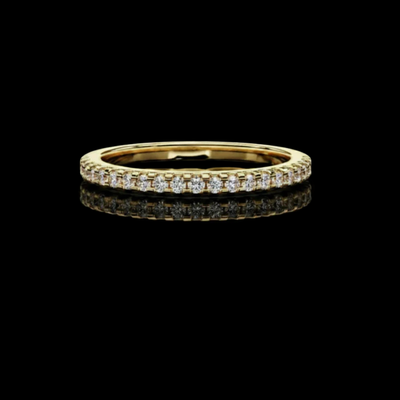
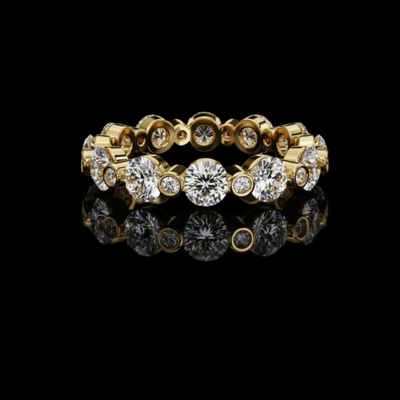
Bands covered in small stones need more frequent cleaning, because lotion and soap collect between the stones and under the beads that hold them. Brush along the rows in both directions. Check the stones yearly, and look at the band under a bright light every few weeks. If one stone looks darker or sits at a different angle than its neighbors, it may be loose. Full eternity rings have stones all the way around, so the underside takes knocks too; this is normal but worth watching.
White gold bands
White gold is a mix of gold with whiter metals, and most white gold jewelry is plated with rhodium for a bright, mirror-white finish. Rhodium wears over time, especially on the underside of the band, which rubs against desks and other rings. When a warm, slightly yellow tone starts to show through, a jeweler can re-plate it. Many people find they need this every one to two years.
Yellow and rose gold bands
Yellow and rose gold do not need plating, because their color runs all the way through the metal. They only need cleaning and an occasional polish. Rose gold gets its color from copper and stays warm-toned for life.
Colored gemstone bands
Sapphires and lab diamonds are durable. Softer gems need gentle cleaning only. Sapphire is 9 on the Mohs hardness scale, so it handles daily wear well, but it can still chip if struck hard at an edge. Clean it with the same soap-and-water method.
Caring for Lab Grown Diamond and Moissanite Bands
The stones in most modern wedding bands are either lab grown diamond or moissanite, and both are among the toughest gems you can wear.
Lab grown diamonds are chemically, physically and optically the same as mined diamonds. They score 10 on the Mohs scale, the highest of any gemstone, so they will not scratch in everyday life. Moissanite is a different gemstone, made of silicon carbide, and scores about 9.25, which is still harder than almost anything you will touch in a normal day. Neither stone needs special treatment beyond regular cleaning.
What both stones do have in common is a tendency to attract grease. Diamonds and moissanite are naturally oil-loving, so a fingerprint or a smear of hand cream sticks to them quickly and cuts the sparkle. That is why a weekly clean makes such a visible difference on a moissanite wedding band or a lab diamond band.
| Stone | Mohs hardness | Care notes |
|---|---|---|
| Lab grown diamond | 10 | Scratch-resistant; clean weekly to remove film |
| Moissanite | About 9.25 | Very durable; same routine as diamond |
| Sapphire | 9 | Durable; avoid hard knocks on edges |
| Softer gems (such as opal or pearl) | Below 7 | Gentle wipe only; no soaking or ultrasonic cleaning |
Remember that hardness is not the same as toughness. A diamond resists scratching better than anything, but a sharp blow at the right angle can still chip any gemstone. That is another reason to take your band off for heavy work.
Caring for Different Metals
Your band's metal affects how it ages. Here is what to expect from the most common options.
10K, 14K and 18K gold
The karat number shows how much pure gold is in the alloy. 18K has more gold, a richer color and is a little softer. 14K and 10K contain more alloy metals, which makes them a bit harder and more resistant to scratches. All three clean the same way. If you are very active with your hands, a 14K or 10K band may hold up to daily knocks slightly better.
Platinum
Platinum does not lose metal when scratched in the same way gold does; instead the metal is pushed aside, creating a soft satin look called a patina. Some people love it, and a jeweler can polish it back to a high shine if you prefer.
925 sterling silver
Sterling silver is beautiful and affordable, but it tarnishes when exposed to air, moisture and sulfur compounds. Wearing it often actually helps, because the gentle rubbing keeps tarnish at bay. Store silver in an airtight pouch when you are not wearing it, and use a silver polishing cloth to remove light tarnish. Keep it away from chlorine, perfume and rubber, which speed up darkening.
At-Home vs Professional Cleaning
Home cleaning keeps your band looking good week to week, while a jeweler can do things you cannot safely do at home. Both have a place.
| Method | Good for | How often |
|---|---|---|
| Polishing cloth | Fingerprints and light film | Daily or as needed |
| Warm water, mild soap and soft brush | Lotion, oil and dirt under stones | Weekly |
| Ultrasonic cleaner | Deep grime in solid diamond or moissanite bands | Occasionally, after checking settings |
| Professional clean and inspection | Deep clean, prong check, polish | Once a year |
| Rhodium re-plating | Restoring white gold's bright finish | Every one to two years, as needed |
Ultrasonic cleaners use vibration to shake dirt loose. They work well on solid bands with durable stones, but the same vibration can loosen a stone that is already slightly loose. If you use one, check your band for loose stones first and keep sessions short. Skip ultrasonic cleaning for pave with any wobble, for softer gems and for anything with glue or fillers.
Avoid DIY tricks you may see online, such as boiling, using vinegar, or scrubbing with toothpaste or baking soda. They either scratch the metal or can damage some stones and finishes.
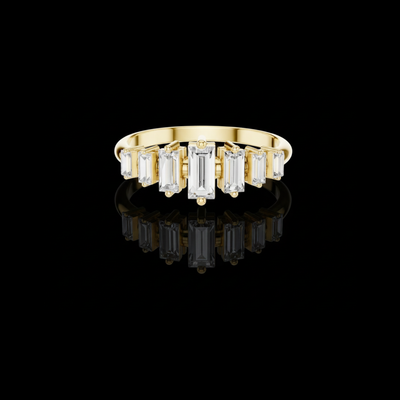
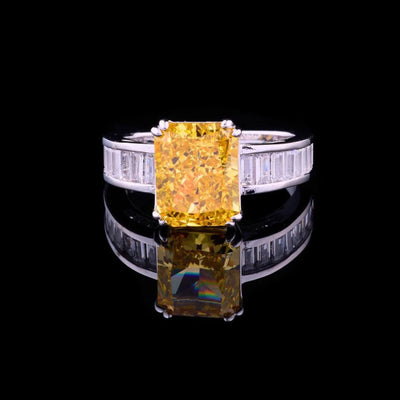
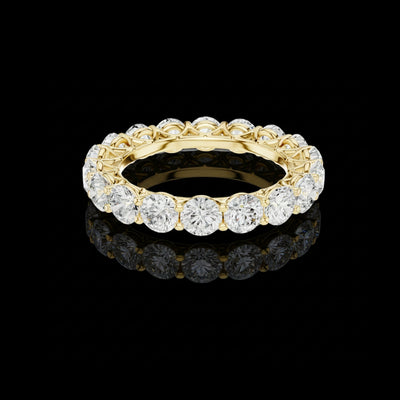
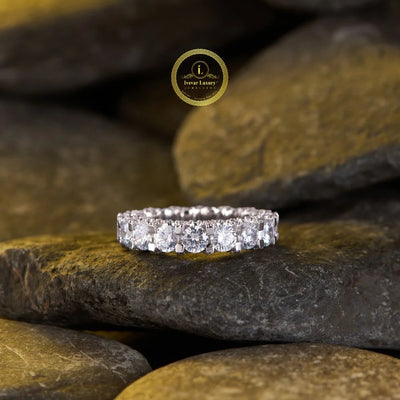
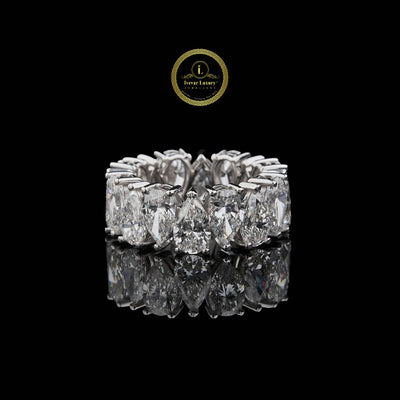
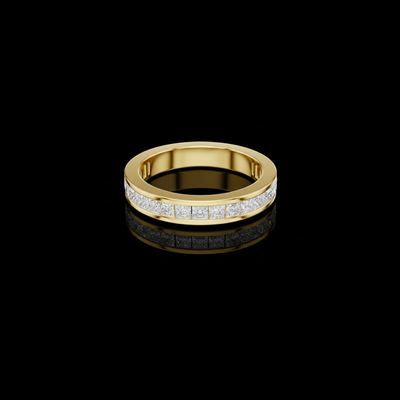
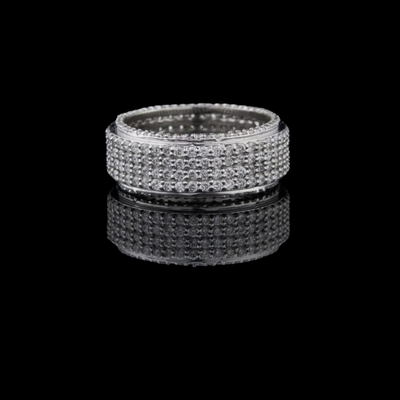
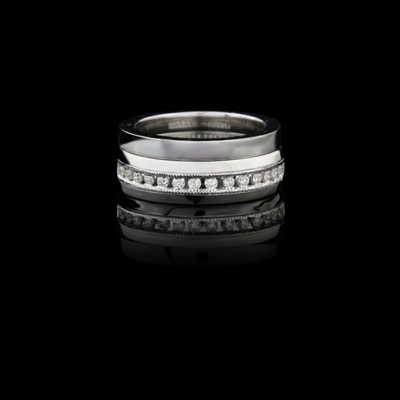
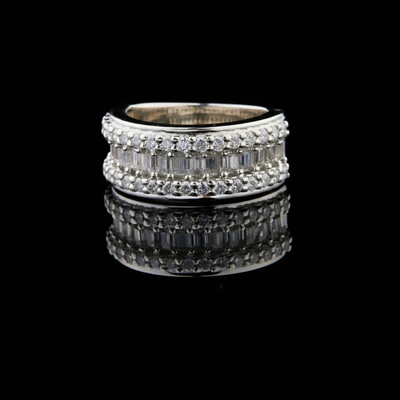
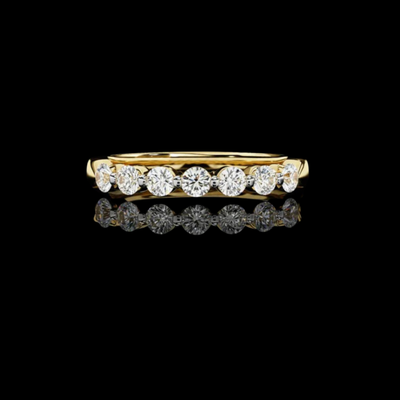
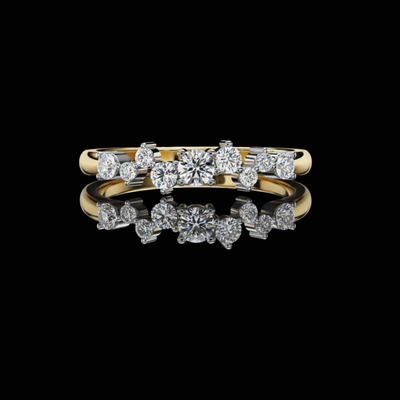
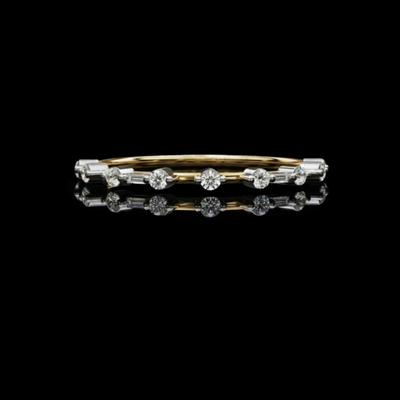
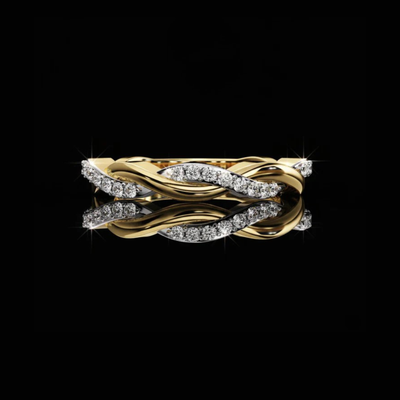
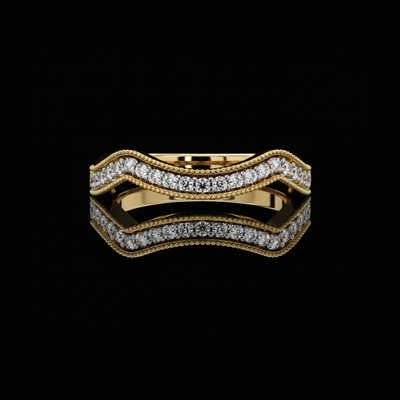
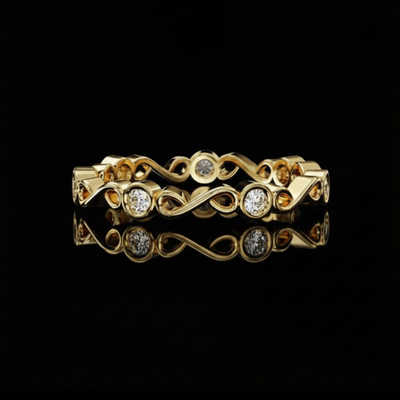
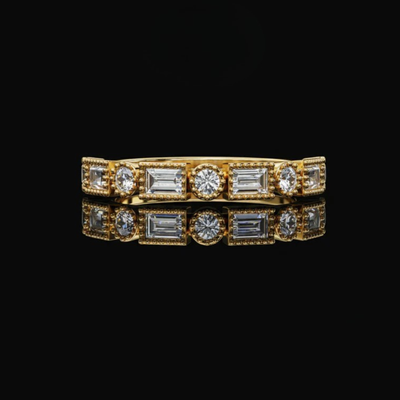
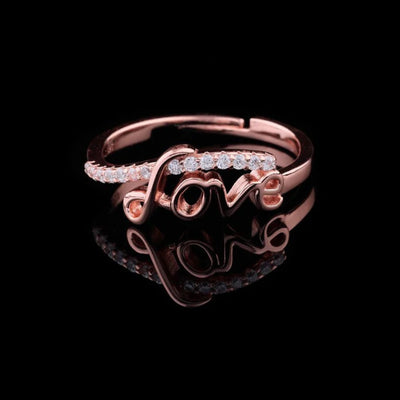
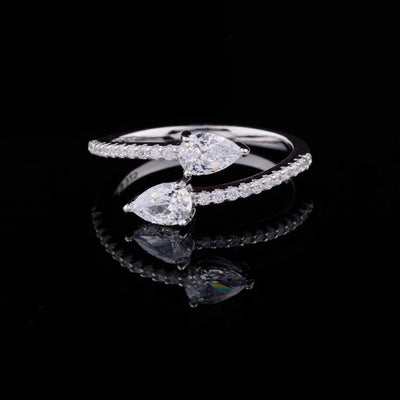
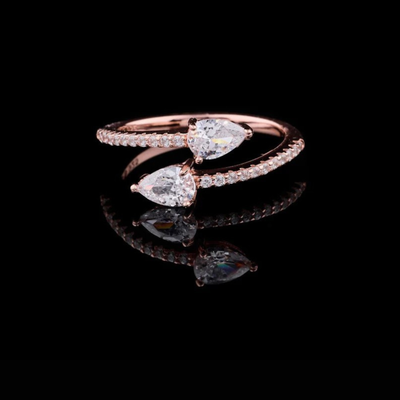
Shop the styles in this guide



Storage Tips
Most scratches happen when rings rub against other jewelry, not while they are being worn. Good storage is simple and inexpensive.
- Separate: keep each ring in its own soft pouch or lined compartment.
- Ring dish: use a ring dish by the sink so rings are never left on the counter.
- Dry place: store away from humidity to protect finishes, especially silver.
- Travel case: use a small padded case when traveling instead of loose pockets.
- Stacks: store a stacked engagement ring and band side by side, not threaded together, so the stones do not grind against each other.
Diamonds and moissanite are hard enough to scratch gold, platinum and silver, and even other gemstones. Tossing several rings together in one tray is the fastest way to wear down the softer pieces.
Tip: Never wrap a ring in a tissue or napkin when you take it off at a restaurant or on a trip. It is one of the most common ways rings get thrown away by accident. Keep a small pouch in your bag instead.
Annual Professional Check
Once a year, visit a jeweler to check prongs, pave stones, band thickness and clasps on any stacking sets. Catching a loose stone early is much easier and cheaper than replacing a lost one. See our jewelry cleaning guide and jewelry care page.
Between visits, a few quick checks at home will tell you if something needs attention sooner:
- Listen: hold the band close to your ear and tap it gently. A faint rattle can mean a loose stone.
- Look: check under bright light for stones that sit unevenly, or for a gap that was not there before.
- Feel: run a finger over the prongs. A prong that snags on clothing may be bent or lifted.
- Shape: look at the band from the side. If it is no longer perfectly round, it may have been bent.
If you notice any of these signs, stop wearing the band until a jeweler has looked at it. Wearing a ring with a loose stone for even a day can be enough to lose it.
Daily Habits That Protect Your Band
Good care is mostly about small, repeatable habits rather than effort. These are the ones that make the biggest difference over the years:
- Last on, first off: put your ring on after lotions and perfume, and take it off before workouts and chores.
- Hold the band, not the stone: when taking the ring off, grip the band rather than pulling on the setting, which can loosen prongs over time.
- Mind the fit: a band that spins or slides off easily is at risk of being lost. If yours feels loose, have it checked.
- Wear gloves: for cleaning, gardening or handling chemicals, gloves protect both your hands and your band.
- Remove for sleep if needed: if your band has raised stones or prongs, taking it off at night can stop it snagging bedding or scratching skin.
If you work with your hands every day, consider a second, simpler band for work hours. Many couples choose a plain band or a low-profile daily wear ring for active days and save a pave or eternity band for evenings and weekends.
Bands Built to Last at Ivevar
We handcraft every band in our Surat workshop with durable settings and quality finishes. You can choose lab grown diamonds, many of which come with IGI certificates, or moissanite, in 10K, 14K or 18K gold, as well as 925 sterling silver designs. Every piece ships free worldwide, with 30-day easy returns. Browse wedding bands and our sapphire collection, or explore moissanite daily wear rings built for everyday life. If you want a custom design or advice on care, you can book a virtual appointment with our team.
Shop Sapphire and Diamond Rings
 Art Deco Sapphire RingShop Now
 Vintage Sapphire RingShop Now
 Vintage Sapphire Wedding RingShop Now
 Art Deco Sapphire Bridal RingShop Now
 Princess Sapphire RingShop Now
 Blue Sapphire Solitaire RingShop Now
Swipe to see more → | View the sapphire collection
Frequently Asked Questions
How often should I clean my wedding band?
A quick clean once a week keeps it sparkling. Rings worn with lots of hand cream or at work may benefit from a quick brush more often.
Can I wear my band in the shower?
Occasionally is fine, but soap film can dull stones; remove it when you can. Shampoo and conditioner also leave residue, so rinse the band well if you forget.
Why does my white gold band look yellow?
The rhodium plating has worn. A jeweler can re-plate it and restore the bright white finish.
Are ultrasonic cleaners safe?
For solid diamond bands usually, but ask your jeweler for pave or colored stones. Always check for loose stones before using one.
How do I remove scratches?
A jeweler can polish most scratches out of gold. Light surface marks on platinum can also be polished back to a high shine.
Can I sleep in my wedding band?
Many people do. A smooth, low band is fine to sleep in. Bands with raised prongs or edges can snag bedding, so you may prefer to take those off.
Will my lab grown diamond or moissanite band get cloudy?
No. Both stones keep their brilliance permanently. If a stone looks cloudy, it is almost always a film of oil or soap that a weekly clean will remove.
How do I clean a sterling silver band?
Wash it in mild soapy water, dry it fully, and use a silver polishing cloth for tarnish. Store it in an airtight pouch when not worn.
The Bottom Line
Weekly gentle cleaning, sensible removal, separate storage and a yearly check are all it takes to keep your wedding band looking new for a lifetime. Build the habits once, and your band will keep its sparkle through every year of your marriage.
Related Guides
- How to clean diamond and moissanite jewelry
- Do lab grown diamonds last forever?
- Best wedding band metals

Author Bio
Aumsri Pradhan
Founder, Ivevar Luxury
Aumsri Pradhan is the founder of Ivevar Luxury, a Surat-based fine jewelry brand that designs and handcrafts lab grown diamond and moissanite jewelry in its own workshop. She leads the brand's design and customer experience, from engagement rings and bridal sets to custom pieces made to each client's story. Through the Ivevar blog, she shares practical guidance on lab grown diamonds, moissanite, diamond grading and ring design to help buyers choose with confidence.


