

 Engagement Rings
 Anniversary Rings
 Solitaire Rings
 Halo Rings
 Toi Moi Rings
 Three Stone Rings
 Nature Inspired Rings
 Rose Cut Rings
 Fancy Color Rings
 Antique Cut Rings
 Wedding Rings
 Wedding Band Rings
 Exclusive Lab Grown Diamond Rings
 All Lab Grown Diamond Ring
 Engagement Rings
 Three Stone Rings
 Fancy Color Rings
 Antique Cut Rings
 Daily Wear Rings
 Wedding Band Rings
 Exclusive Moissanite Rings
 Earrings
 Bracelet
 Pendant
 Necklace
 Men's Ring
 Bridal Sets
 Rings
 Earrings
 Tennis chain
 Cuban Chains
 Custom Pendant
 Custom Ring
 Custom Teeth Grillz
 Round
 Oval
 Cushion
 Marquise
 Pear
 Emerald
 Heart
 Princess
 Rose Cut
 Radiant
 Antique Cut
 Brooch
 Cufflink
 Keychain
 Unique Products
 +91-9265051773
 Virtual Appointment
 log in




Lab Grown Diamond Carat Size on the Hand: 0.5 to 3 Carat
by Aumsri Pradhan on Sep 28, 2026
Quick answer: On an average US size 6 finger, a 0.5 carat round lab grown diamond (about 5.1 mm) looks dainty, a 1 carat (about 6.5 mm) looks classic, a 2 carat (about 8.1 mm) looks bold, and a 3 carat (about 9.3 mm) covers much of the finger's width. Elongated shapes like ovals and pears look larger than rounds of the same weight, and a halo makes any stone look bigger.
Carat is weight, not size, so it helps to think in millimeters. Here is how each size really looks on the hand.
Shop the styles in this guide


Round Diamond Size Chart: Carat to Millimeters
| Carat | Approx. diameter | Look on a size 6 finger |
|---|---|---|
| 0.50 ct | about 5.1 mm | Dainty, minimal |
| 0.75 ct | about 5.8 mm | Delicate but noticeable |
| 1.00 ct | about 6.5 mm | Classic engagement ring size |
| 1.50 ct | about 7.4 mm | Generous and eye-catching |
| 2.00 ct | about 8.1 mm | Bold statement |
| 2.50 ct | about 8.7 mm | Very bold |
| 3.00 ct | about 9.3 mm | Covers much of the finger width |
These are typical for well-cut rounds. Deep or shallow cuts can look smaller or larger. See our diamond size chart for more shapes.
Sizes below half a carat
Smaller stones matter too, especially for stacking rings, studs and accent stones. A well-cut 0.25 carat round is about 4.1 mm across and a 0.33 carat round is about 4.4 mm. On the hand these read as delicate, everyday sparkle rather than a statement, and they suit slim bands and minimalist designs.
Why diameter grows slowly
Carat weight relates to the volume of the stone, while what you see on the hand is the width of the top. Because volume grows faster than width, doubling the weight from 1 to 2 carats adds only about 1.6 mm of diameter. That is why the jump between neighboring sizes often looks smaller than the numbers suggest, and why many buyers find a size just under a round number looks the same on the finger.
Why the Same Carat Can Look Different
Shape
Ovals, pears and marquise spread their weight over a longer outline, so they look larger face-up. Cushions and emeralds carry more weight in depth or corners and can look slightly smaller than a round of the same weight, though emerald cuts have a large, open table.
Cut proportions
A diamond cut too deep hides weight underneath and looks smaller from the top. Well-proportioned stones show their full size.
Finger size
The same diamond looks larger on a slimmer finger. On a size 4 finger, a 1 carat stone looks bigger than on a size 8.
Setting
A halo adds a ring of small diamonds that can make the center look up to a carat bigger. A thin band also makes the center stone look larger by contrast.
Band width
A slim band of around 1.5 to 2 mm makes the center look larger by contrast, while a wide band balances a bigger stone but can make a small one look smaller. Pave bands add sparkle along the finger and draw the eye outward, which makes the whole ring read larger.
Prongs and profile
Thin claw prongs cover less of the stone, so more of the diamond's outline shows. Thick or numerous prongs, and full bezels, hide a little of the edge. A higher setting makes the stone more visible from the side, while a low setting looks sleeker but slightly less prominent.
Metal color
White gold blends with a colorless diamond, so the stone and metal read as one bright area. Yellow and rose gold frame the diamond with contrast, which outlines the stone clearly but can make it look a touch smaller next to a white metal halo or head. Many people choose white gold prongs on a yellow gold band to get both effects.
 Shown: 1.52 Ct Princess Cut Fancy Vivid Pink Lab Grown Diamond, VS2
How Each Size Reads on Different Finger Sizes
The same stone covers a different share of the finger depending on ring size. The table below gives a general picture for round diamonds; elongated shapes will look longer on every hand.
| Ring size (US) | 1 carat (about 6.5 mm) | 2 carat (about 8.1 mm) | 3 carat (about 9.3 mm) |
|---|---|---|---|
| Size 3 to 4.5 | Looks substantial | Very bold, near the edges of the finger | Covers most of the finger |
| Size 5 to 6.5 | Classic and balanced | Bold statement | Covers much of the finger width |
| Size 7 to 8.5 | Elegant, slightly understated | Generous but balanced | Bold statement |
| Size 9 and up | Modest | Balanced | Large and proportionate |
If you do not know the ring size yet, start with our ring size chart. Knowing the size first helps you judge how big each stone will feel.
Settings That Change the Visible Size
The setting can change how big a stone looks almost as much as a step up in weight. Here is how the common styles compare.
| Setting style | Effect on visible size | Good for |
|---|---|---|
| Halo | Largest boost; the center and halo read as one bigger stone | Getting a big look from a modest center |
| Hidden halo | Small boost from the side, none face-up | Extra sparkle with a clean top view |
| Thin-band solitaire | Makes the center look larger by contrast | Classic, minimal rings |
| Three-stone | Adds width across the finger | Wider hands and a fuller look |
| Bezel | Metal rim makes the outline look slightly larger but hides the edge | Active lifestyles |
| Wide or chunky band | Can make a small center look smaller | Larger stones that need balance |
To see these effects in real rings, compare our lab diamond halo rings with our lab diamond solitaire rings.
Fancy Shapes on the Hand
- Oval: looks noticeably larger than a round of the same weight and lengthens the finger. Our oval ratio and bow tie guide explains how the ratio changes the look.
- Pear: long and slimming. Worn point toward the fingertip, it makes the finger look longer.
- Marquise: the longest outline for its weight, so it looks the largest face-up.
- Emerald: a rectangular outline with a wide, flat table. It looks clean and architectural but a little smaller than an oval of the same weight.
- Cushion and princess: square outlines that carry more weight in the corners and depth, so they face up slightly smaller than a round.
- Radiant: a rectangle or square with brilliant sparkle, sitting between emerald and cushion in how large it looks.
If getting the most visible size for your budget is the goal, see our guide to the best lab grown diamond shape for a budget.
How to Choose the Right Carat Size
- Consider lifestyle. Hands-on jobs may suit 1 to 1.5 carats in a low setting; bigger stones suit desk jobs and occasions.
- Match the hand. Longer fingers balance larger or elongated stones beautifully.
- Try it visually. Print a size chart at 100% scale, or cut paper circles in each millimeter size and place them on the finger.
- Use the lab grown advantage. Lab grown prices make moving up from 1 to 1.5 or 2 carats more achievable.
Matching size to hand shape
Short or wide fingers often look best with elongated shapes such as ovals and pears, which add length. Long, slender fingers can carry almost any shape and suit larger rounds and emeralds well. If the knuckle is noticeably wider than the base of the finger, a heavier stone can make the ring spin; a slightly wider band or sizing beads inside the shank can help keep it centered.
Matching size to daily life
A larger stone sits taller and wider, so it is more likely to catch on gloves, hair and knit fabrics. If you type, cook, lift or work with tools all day, consider a lower setting, a bezel or a size that sits comfortably within the finger's width. If the ring is mostly for evenings and occasions, you can go as big as you like.
Bigger stones show more of their grades
As a diamond gets larger, its table gets wider and more light passes through it, so color and inclusions become easier to see. A slight tint that is invisible at half a carat can show at 2 or 3 carats, especially in white gold. If you move up in size, plan to keep cut at Excellent and to stay a little higher in color and clarity than you would for a smaller stone. Elongated shapes also show color more at their tips.
How to Try Carat Sizes at Home
- Find the ring size first, so you know what finger width you are working with.
- Print a diamond size chart and check the scale with a ruler: the circle labeled 6.5 mm should measure 6.5 mm.
- Cut out the circles or outlines for the sizes you are considering.
- Place each one on the finger and look from arm's length, the distance other people see the ring from.
- Take a photo of each size on the hand in daylight, then compare them side by side the next day.
- If you own a ring with a known stone size, use it as a reference point.
- Remember that a real diamond sparkles and catches light, so it will feel slightly larger than a flat paper cutout.
Shop the styles in this guide


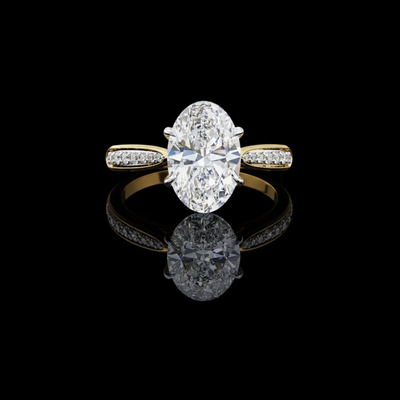
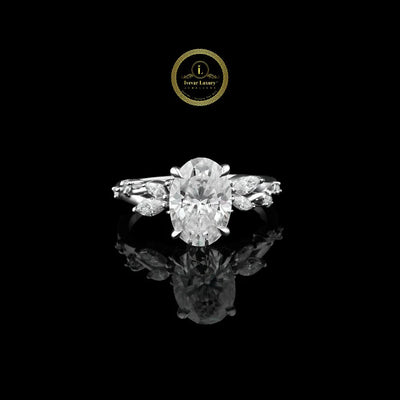


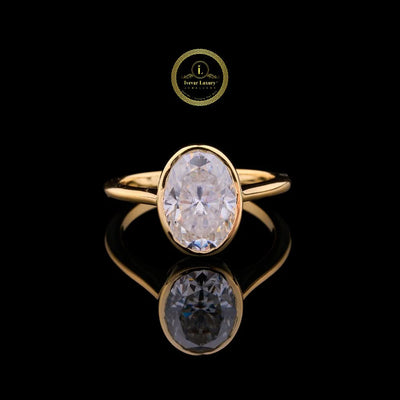


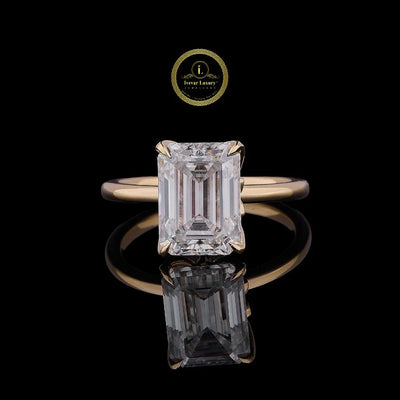


Lab Grown, Mined and Moissanite: Does Size Differ?
A lab grown diamond and a mined diamond have the same density, so a 1 carat lab diamond is the same size as a 1 carat mined diamond with the same cut. Both are carbon, both rate 10 on the Mohs scale, and both have a refractive index of about 2.42.
Moissanite is different. It is silicon carbide, rated 9.25 on the Mohs scale with a refractive index of about 2.65, and it is lighter than diamond. A moissanite the same diameter as a 1 carat diamond weighs less, which is why moissanite is often described by millimeter size or by "diamond equivalent" weight. When comparing the two, compare millimeters, not carats. Our page on moissanite vs lab grown diamond vs diamond covers the other differences.
Carat Size Beyond Engagement Rings
Stud earrings
Earring weights are usually listed as total carat weight for the pair, so "1 carat studs" means about half a carat per ear, roughly 5.1 mm each for rounds. Around a quarter to half a carat per ear suits everyday wear; around one carat per ear is a bold look. Browse our stud earrings to compare sizes.
Pendants
A pendant sits farther from the eye than a ring and is seen against skin or fabric, so a stone can look smaller than it does on the hand. Many people choose a slightly larger stone for a solitaire pendant than they would for a ring. See our lab diamond pendants.
Bands and bracelets
For eternity bands and tennis pieces, the total carat weight is spread across many small stones. Two bands with the same total weight can look very different depending on how many stones there are and how large each one is.
Which Size Suits Whom
- Around half a carat: petite hands, minimalist style, stacking rings, and people who want a ring that never gets in the way.
- Around 1 carat: the classic choice for most hands, noticeable without feeling large, and easy to wear every day.
- Around 1.5 carats: people who want more presence while keeping a practical profile, and medium to larger ring sizes where 1 carat looks modest.
- Around 2 carats: a clear statement on most hands, best with a secure, lower setting for daily wear.
- Around 3 carats: larger hands, special-occasion and cocktail rings, or anyone who wants the ring to be the focal point.
A clean stone also looks larger. Lab grown diamonds do not get cloudy or lose sparkle, but a film of lotion and skin oil on the back of the stone dims it and makes it look smaller. A quick soak in warm, soapy water and a soft brush restore its full brightness.
Common Mistakes When Choosing Carat Size
- Comparing carats across shapes. A 1 carat oval and a 1 carat cushion are very different sizes face-up. Compare millimeters.
- Ignoring depth. A deep stone looks smaller than its weight suggests. Check the diameter on the grading report.
- Guessing the ring size. Finger size changes how big a stone looks, so confirm it before choosing.
- Forgetting the setting. A halo or a thin band changes the visible size as much as a step up in carat.
- Judging only up close. Most people see your ring from a few feet away. Check sizes at arm's length.
Find Your Size at Ivevar
Tell us your finger size and style, and we can help you compare stones in person-like detail with photos and video. Every piece is handcrafted in our Surat workshop and ships free worldwide, with 30-day easy returns. Browse loose lab grown diamonds or check our ring size guide.
Shop Lab Grown Diamonds in Every Size
 0.30 Ct Princess, Vivid GreenShop Now
 0.64 Ct Princess, Vivid GreenShop Now
 1.52 Ct Princess, Vivid PinkShop Now
 1.86 Ct Princess, Vivid PinkShop Now
 2.11 Ct Rose Cut, Fancy BrownShop Now
 2.94 Ct Radiant, Vivid PinkShop Now
Swipe to see more → | View all loose lab grown diamonds
Frequently Asked Questions
What is the most popular engagement ring carat size in the US?
Around 1 to 2 carats is common, and lab grown diamonds have made larger sizes more popular.
Does a 1 carat diamond look small?
No. It is a classic, noticeable size, especially on slimmer fingers or in a halo setting.
How can I make my diamond look bigger?
Choose an elongated shape, an excellent cut, a halo, or a thin band.
Is a 3 carat diamond too big for everyday wear?
It can be worn daily in a secure, lower setting, but it is more likely to catch on things.
Does a lab grown diamond look the same size as a mined diamond?
Yes. They have the same density and optical properties, so the same carat weight and cut give the same size and sparkle. Only lab equipment can tell them apart.
Why does my diamond look smaller than the chart?
It may be cut deep, set in thick prongs or a bezel, or paired with a wide band. A dirty stone also looks smaller and duller; lab diamonds do not cloud over time, but oil and lotion on the back cut down the light.
What carat size suits small hands?
On sizes 3 to 5, a stone between half a carat and one carat already looks substantial. Elongated shapes add length without overwhelming the finger.
How big does a 0.75 carat diamond look?
A well-cut 0.75 carat round measures about 5.8 mm. On a size 5 or 6 finger it looks delicate but clearly present, and in a halo it can read close to a 1 carat look.
Is a 1.5 carat a good middle ground?
Often, yes. At about 7.4 mm it looks clearly larger than 1 carat while staying practical for daily wear on most hands. Our 3 carat ring guide covers the larger end of the range.
The Bottom Line
Think in millimeters, not only carats. Compare sizes on your own hand, consider shape and setting, and choose the size that feels right for your lifestyle and style.
Related Guides
- 2 carat lab grown diamond guide
- How much is a 1 carat lab grown diamond?
- How to find your ring size at home

Author Bio
Aumsri Pradhan
Founder, Ivevar Luxury
Aumsri Pradhan is the founder of Ivevar Luxury, a Surat-based fine jewelry brand that designs and handcrafts lab grown diamond and moissanite jewelry in its own workshop. She leads the brand's design and customer experience, from engagement rings and bridal sets to custom pieces made to each client's story. Through the Ivevar blog, she shares practical guidance on lab grown diamonds, moissanite, diamond grading and ring design to help buyers choose with confidence.


