

 Engagement Rings
 Anniversary Rings
 Solitaire Rings
 Halo Rings
 Toi Moi Rings
 Three Stone Rings
 Nature Inspired Rings
 Rose Cut Rings
 Fancy Color Rings
 Antique Cut Rings
 Wedding Rings
 Wedding Band Rings
 Exclusive Lab Grown Diamond Rings
 All Lab Grown Diamond Ring
 Engagement Rings
 Three Stone Rings
 Fancy Color Rings
 Antique Cut Rings
 Daily Wear Rings
 Wedding Band Rings
 Exclusive Moissanite Rings
 Earrings
 Bracelet
 Pendant
 Necklace
 Men's Ring
 Bridal Sets
 Rings
 Earrings
 Tennis chain
 Cuban Chains
 Custom Pendant
 Custom Ring
 Custom Teeth Grillz
 Round
 Oval
 Cushion
 Marquise
 Pear
 Emerald
 Heart
 Princess
 Rose Cut
 Radiant
 Antique Cut
 Brooch
 Cufflink
 Keychain
 Unique Products
 +91-9265051773
 Virtual Appointment
 log in




Short answer: Moissanite and cubic zirconia (CZ) are both lab-made diamond alternatives, but they are very different in quality. Moissanite is much harder (about 9.25 against 8 to 8.5 on the Mohs scale), far more brilliant, and keeps its sparkle for a lifetime. CZ is inexpensive but scratches, clouds and loses its sharp look over time. For fine jewelry and engagement rings, moissanite is the durable, long-term choice; CZ suits costume or short-term fashion jewelry.
Because both are sold as diamond alternatives, shoppers often treat them as the same thing at different prices. They are not. They are made of different materials, they handle light differently, and they age very differently on the hand. This guide explains each difference in plain terms so you can decide which one fits the piece you are buying.
Moissanite vs Cubic Zirconia at a Glance
| Factor | Moissanite | Cubic zirconia |
|---|---|---|
| Material | Silicon carbide | Zirconium dioxide |
| Hardness (Mohs) | About 9.25 | About 8 to 8.5 |
| Refractive index | About 2.65 to 2.69 | About 2.15 to 2.18 |
| Sparkle | Very high brilliance and fire | Bright at first, less brilliant |
| Durability over time | Keeps its polish and sparkle | Scratches and can look cloudy |
| Weight | Lighter than diamond | Heavier than diamond |
| Price | Affordable fine jewelry | Very low cost |
| Typical use | Engagement rings, fine jewelry | Fashion and costume jewelry |
For comparison, diamond is 10 on the Mohs scale with a refractive index of about 2.42. Lab grown diamonds share those exact properties because they are chemically, physically and optically the same as mined diamonds.
What Each Stone Actually Is
Moissanite
Moissanite is silicon carbide. It was first identified in tiny natural crystals, but natural moissanite is far too rare and small for jewelry, so every moissanite you can buy is grown in a lab. It is a gemstone in its own right, with its own crystal structure and optical properties, not an imitation glass or crystal. It is sometimes called a "diamond alternative," but it is not a diamond and should not be sold as one.
Cubic zirconia
Cubic zirconia is a synthetic crystal of zirconium dioxide. It is made in large quantities at low cost and has been the standard inexpensive diamond simulant for decades. It is used widely in fashion jewelry, costume pieces, and as placeholder stones in display rings.
The key point: both are man-made, but moissanite is grown and cut to fine-jewelry standards, while CZ is designed to be cheap. That difference shows up in everything that follows.
Sparkle: Brilliance and Fire
Two things make a stone sparkle. Brilliance is white light returned to your eye, driven mostly by refractive index. Fire is the flashes of rainbow color produced when a stone splits light into spectral colors, measured as dispersion.
- Moissanite: the highest refractive index of the three (about 2.65) and very strong dispersion, so it shows intense brilliance and bold rainbow fire, more than diamond.
- Diamond: refractive index about 2.42, with balanced white sparkle and moderate fire.
- Cubic zirconia: lower refractive index (about 2.15 to 2.18), so it returns less light. It can show noticeable fire when new, but its overall look is softer and more glassy.
When new and clean, a well-cut CZ can look attractive. The gap widens over time, because CZ's sparkle depends on sharp, polished facets, and those are exactly what wear away.
Tip: Look at both stones in daylight rather than under store spotlights. Spotlights make almost any clear stone sparkle; daylight shows the difference in brilliance much more honestly.
Why Durability Matters
Everyday dust contains quartz, which is about 7 on the Mohs scale. Over time, softer stones like CZ get tiny scratches that dull their facets. Moissanite's hardness means its edges stay crisp and its sparkle stays bright for decades.
Hardness is not the only factor. CZ also tends to chip at facet edges and the girdle when knocked against hard surfaces. On a ring worn every day, the table and the edges of the crown take the most contact, so that is where CZ shows wear first. After a few years of daily wear, many CZ rings look slightly frosted, as if the stone is fogged. That is surface abrasion, and it cannot be reversed with cleaning.
Moissanite, at 9.25, is harder than every common gem except diamond. It still needs reasonable care, but it keeps a crisp polish through years of everyday wear.
 Shown: Interlocking Oval Mixed Moissanite Cluster Necklace
Weight and Density
CZ is a dense material. A CZ stone is noticeably heavier than a diamond of the same size, while moissanite is slightly lighter than diamond. In practice, this means:
- Carat numbers do not compare directly: a CZ of a given millimeter size weighs more than a diamond of that size, and a moissanite weighs a little less.
- Shop by millimeters: for all diamond alternatives, millimeter size tells you how big the stone looks. Many moissanite listings also give a diamond equivalent weight (DEW).
- Weight as a clue: jewelers can use weight and size together to tell materials apart.
How to Tell Them Apart
- Sparkle: moissanite shows stronger brilliance and fire.
- Wear: older CZ often shows scratches and rounded facet edges.
- Weight: CZ is heavier than moissanite of the same size.
- Testing: CZ fails thermal diamond testers; moissanite often passes them.
- Doubling: moissanite is doubly refractive. Viewed at an angle through a loupe, its back facet edges can appear doubled. CZ is singly refractive and does not show this.
What diamond testers show
A basic thermal tester measures how quickly a stone conducts heat. Diamond and moissanite both conduct heat well, so moissanite can read as "diamond" on a thermal-only tester. CZ conducts heat poorly and fails. Many jewelers now use multi-testers that also check electrical conductivity, which identifies moissanite. A gemologist can separate all three easily with standard tools.
Color and Clarity
Because both stones are made in controlled conditions, both can be produced colorless and very clean. The differences are in how they are graded and how they look in larger sizes.
- CZ: usually made flawless and colorless, and rarely graded at all. Its uniform, perfect look is part of why it can appear slightly artificial.
- Moissanite: graded on a diamond-style color scale (D to F colorless, G to I near-colorless) and clarity scale (VVS, VS and so on). Most fine-jewelry moissanite is D to F and VVS to VS, which looks white and eye-clean.
- Large stones: in sizes over about 2 carats, moissanite's color grade matters more, so ask for D to F if it will sit in white gold or 925 silver.
Read our guides to moissanite color grades and moissanite clarity grades for the details.
Metal and Setting Quality
The stone is only half of a piece of jewelry. CZ is most often sold in fashion jewelry made from base metals or thin gold plating, because there is little reason to put an inexpensive, short-lived stone in a precious metal. Plating wears through with use, which can expose a darker base metal and, for some people, cause skin irritation.
Moissanite is usually set in solid gold or 925 sterling silver. Solid metal can be polished, repaired and resized by a jeweler, and the stone will outlast many years of wear. When comparing prices, check what the metal is, not just the stone. A "moissanite ring" in solid 14K gold and a "CZ ring" in plated brass are very different products.
Moissanite vs CZ vs Lab Grown Diamond
Many shoppers comparing moissanite and CZ are also considering lab grown diamond. Here is how the three line up.
| Factor | Moissanite | Cubic zirconia | Lab grown diamond |
|---|---|---|---|
| Material | Silicon carbide | Zirconium dioxide | Carbon (real diamond) |
| Hardness (Mohs) | 9.25 | 8 to 8.5 | 10 |
| Sparkle | Most fire | Softer, glassy | Balanced white sparkle |
| Lasts for daily wear | Yes | No | Yes |
| Grading | Seller or maker grade | Rarely graded | IGI or GIA reports |
Lab grown diamonds are grown by CVD or HPHT methods and are chemically, physically and optically the same as mined diamonds. If you want a real diamond, lab grown is the natural next step up from moissanite.
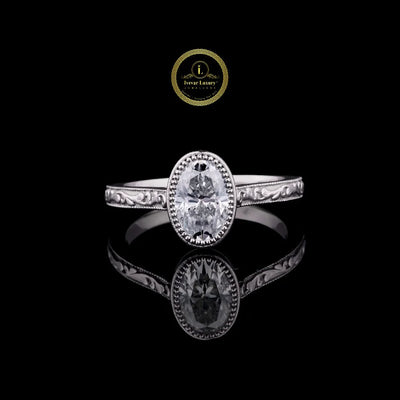
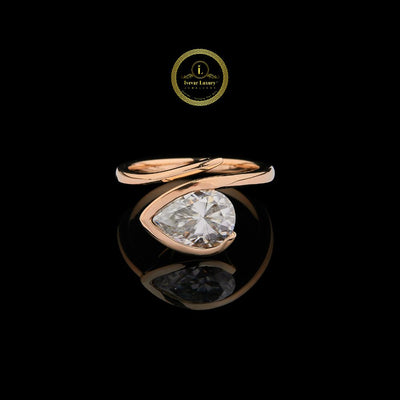
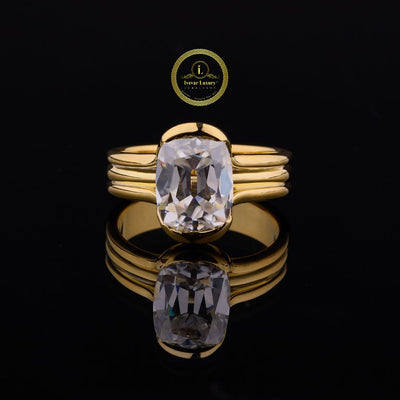
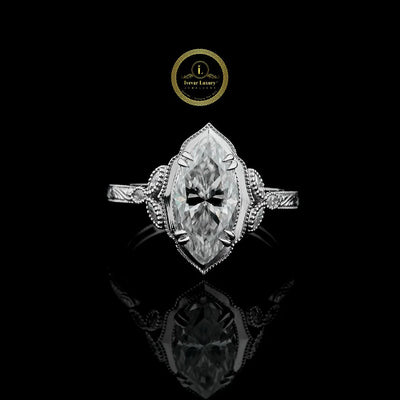
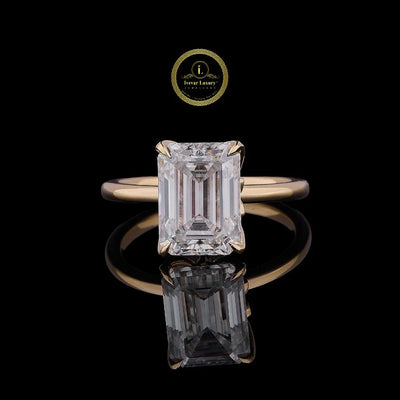
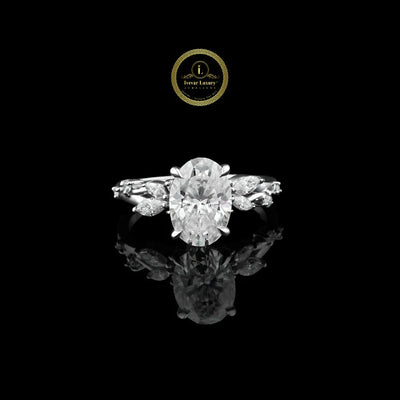
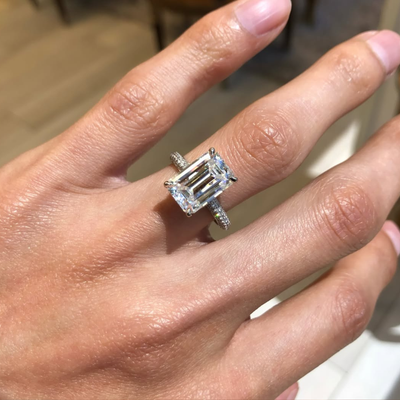
Shop the styles in this guide













Common Myths
- "Moissanite is just expensive CZ": false. They are different materials with different hardness, refractive index and density.
- "CZ is a lab diamond": false. Lab grown diamonds are real carbon diamonds; CZ is zirconium dioxide.
- "All simulants get cloudy": false. CZ scratches and looks frosted over time; moissanite keeps its polish.
- "Nobody can tell the difference": partly true at a glance when stones are new, but easy for a jeweler, and increasingly obvious to anyone as CZ wears.
Cost and Long-Term Value
CZ is one of the least expensive stones you can buy. Moissanite costs more than CZ but far less than a diamond of the same size. The more useful question is cost per year of wear.
| Question | Moissanite | Cubic zirconia |
|---|---|---|
| Upfront cost | Moderate | Very low |
| Looks after years of daily wear | Close to new | Often scratched and dull |
| Likely to need replacing | Rarely | Often, for daily pieces |
| Worth setting in solid gold | Yes | Usually not |
Because CZ wears out, it rarely makes sense to put it in a solid gold setting, since the stone will age long before the metal does. Moissanite is worth setting in 10K, 14K or 18K gold, or 925 sterling silver, because the stone lasts as long as the setting.
Which Should You Choose?
- Engagement rings and heirlooms: moissanite or lab grown diamond.
- Everyday fine jewelry: moissanite for lasting sparkle.
- Trend pieces or costume jewelry: CZ can be fine for short-term wear.
- Want a real diamond: lab grown diamond gives you diamond's hardness and properties, often with an IGI certificate.
If you are choosing an engagement ring, our moissanite engagement rings are made to be worn daily for decades. If a real diamond matters to you, compare with lab grown diamond engagement rings.
Choosing by Jewelry Type
Rings
Rings take the most knocks and the most contact with surfaces. This is where CZ's softness shows fastest and where moissanite's hardness pays off. For any ring you plan to wear daily, moissanite is the safer choice.
Earrings
Studs and drops face far less abrasion than rings, so CZ lasts longer in earrings. Even so, moissanite's stronger sparkle is visible from a distance, and it will not cloud. For earrings you plan to keep, moissanite is worth it; see our moissanite earrings.
Necklaces and pendants
Pendants sit away from most impacts, but chains and pendants still rub against clothing and each other. Moissanite keeps a pendant looking crisp for years.
Bracelets
Tennis bracelets hit desks, keyboards and doorframes constantly. Many small stones in a line make wear easy to see, so hardness matters a lot here.
Caring for Moissanite and CZ
- Clean regularly: warm water, mild dish soap and a soft toothbrush, scrubbing gently behind the stone where oils collect.
- Rinse and dry: rinse well and dry with a lint-free cloth.
- Store separately: keep pieces apart so harder stones do not scratch softer ones. Moissanite can scratch CZ, and diamond can scratch both.
- Take rings off for heavy work: gym sessions, gardening and moving furniture risk knocks to any stone.
- Check prongs: have settings checked periodically so stones stay secure.
Cleaning will restore moissanite's sparkle completely. With CZ, cleaning removes film but cannot remove scratches.
Questions to Ask Before You Buy
Listings for diamond alternatives can be vague. Words like "simulated diamond," "lab diamond look" or "diamond-like stone" can describe CZ, moissanite or something else entirely. Before you pay, get clear answers to these questions:
- What exactly is the stone? The listing should name the material: moissanite, cubic zirconia or lab grown diamond. If it only says "simulant," ask.
- What are the color and clarity? Moissanite should come with a stated color and clarity grade. A lab grown diamond should come with a grading report, often from IGI.
- What is the size in millimeters? Carat weights differ between materials, so millimeters are the honest comparison.
- What is the metal? Look for a karat stamp such as 10K, 14K or 18K, or 925 for sterling silver. "Gold tone" or "gold plated" is not solid gold.
- What is the return policy? A fair return window lets you see the stone in daylight at home before committing.
Tip: If a listing is unclear, ask the seller to describe the stone in writing. A reputable jeweler will name the material and grade without hesitation.
Moissanite at Ivevar
We use moissanite, never CZ, in our fine jewelry, handcrafted in our Surat workshop in solid settings. Every piece ships free worldwide, with 30-day easy returns. We also offer custom jewelry and virtual appointments if you want to see a stone before you choose. Browse moissanite necklaces and moissanite fine jewelry.
Shop Moissanite Necklaces
 Interlocking Oval NecklaceShop Now
 Geometric Fringe NecklaceShop Now
 Infinity Bar NecklaceShop Now
 Curved Wave Bar NecklaceShop Now
 Chevron Pear Drop NecklaceShop Now
 Layered Emerald Y NecklaceShop Now
Swipe to see more → | View all moissanite necklaces
Frequently Asked Questions
Is moissanite better than cubic zirconia?
For fine jewelry, yes: it is harder, more brilliant and lasts far longer.
Does CZ get cloudy?
Over time it can scratch and look dull. The fogged look comes from surface abrasion, which cleaning cannot fix.
Does moissanite get cloudy?
No. Moissanite does not cloud. If it looks dull, it is usually a film of oil or lotion, and a gentle clean restores it.
Is moissanite more expensive than CZ?
Yes, but it is still affordable compared with diamond, and it does not need replacing.
Can CZ pass a diamond tester?
No. CZ fails thermal diamond testers. Moissanite can pass a thermal-only tester but is identified by multi-testers.
Is CZ good for engagement rings?
It is not recommended for rings meant to last a lifetime. Some people use a CZ as a temporary placeholder while a final ring is made.
Is moissanite a type of diamond?
No. Moissanite is silicon carbide, a separate gemstone. Diamond is pure carbon.
Can moissanite scratch?
Only materials as hard or harder can scratch it, which in practice means diamond or another moissanite. Store pieces apart so stones do not rub against each other.
Can I replace a CZ in my ring with moissanite?
Often, yes. If the setting is solid metal and in good condition, a jeweler can usually swap the CZ for a moissanite of the same millimeter size. A custom piece is another option if the setting is worn or plated.
Which looks more like a diamond?
New, both can pass at a glance. Moissanite shows more fire than diamond; CZ looks softer. Over time, moissanite holds a diamond-like crispness that CZ loses.
The Bottom Line
Cubic zirconia is a budget fashion stone; moissanite is a durable fine jewelry gemstone that keeps its sparkle for life. If the piece is meant to be worn daily or kept for years, choose moissanite.
Related Guides
Author Bio
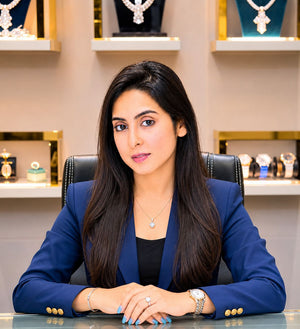
Aumsri Pradhan
Founder, Ivevar Luxury
Aumsri Pradhan is the founder of Ivevar Luxury, a Surat-based fine jewelry brand that designs and handcrafts lab grown diamond and moissanite jewelry in its own workshop. She leads the brand's design and customer experience, from engagement rings and bridal sets to custom pieces made to each client's story. Through the Ivevar blog, she shares practical guidance on lab grown diamonds, moissanite, diamond grading and ring design to help buyers choose with confidence.


