

 Engagement Rings
 Anniversary Rings
 Solitaire Rings
 Halo Rings
 Toi Moi Rings
 Three Stone Rings
 Nature Inspired Rings
 Rose Cut Rings
 Fancy Color Rings
 Antique Cut Rings
 Wedding Rings
 Wedding Band Rings
 Exclusive Lab Grown Diamond Rings
 All Lab Grown Diamond Ring
 Engagement Rings
 Three Stone Rings
 Fancy Color Rings
 Antique Cut Rings
 Daily Wear Rings
 Wedding Band Rings
 Exclusive Moissanite Rings
 Earrings
 Bracelet
 Pendant
 Necklace
 Men's Ring
 Bridal Sets
 Rings
 Earrings
 Tennis chain
 Cuban Chains
 Custom Pendant
 Custom Ring
 Custom Teeth Grillz
 Round
 Oval
 Cushion
 Marquise
 Pear
 Emerald
 Heart
 Princess
 Rose Cut
 Radiant
 Antique Cut
 Brooch
 Cufflink
 Keychain
 Unique Products
 +91-9265051773
 Virtual Appointment
 log in




Short answer: Antique diamond cuts are historic cutting styles made before the modern round brilliant. The rose cut has a flat base and domed, triangular facets for a soft glow; the old mine cut is a cushion-like shape with a high crown, small table and large culet; and the old European cut is a round forerunner of today's brilliant with chunky, candlelight-friendly flashes. Today, these looks are recreated in lab grown diamonds and moissanite, along with modern "antique" shapes like kite and elongated hexagon cuts.
Antique cuts have soul and history. Each one reflects the tools, tastes and lighting of its era, and each gives a look you won't get from a modern brilliant. This guide explains how to recognize the main antique cuts, how they differ from today's stones, what to look for on a certificate and how to choose a setting that shows them at their best.
Antique Cuts Compared
Here are the antique and antique-inspired cuts you are most likely to see, with the period each is linked to and the look it gives.
| Cut | Era | Look |
|---|---|---|
| Rose cut | 1500s onward | Flat back, domed top, soft glow |
| Old mine cut | 1700s to late 1800s | Squarish, high crown, open culet |
| Old European cut | Late 1800s to 1930s | Round, chunky flashes, small table |
| French cut | Popular in the Art Deco period | Square, with a cross pattern on the crown |
| Kite and shield cuts | Modern revival | Geometric, architectural |
| Elongated hexagon | Modern revival | Six-sided, sleek and unique |
Why Antique Cuts Look Different
Before modern cutting tools and light-performance science, diamonds were cut by hand and eye to look beautiful in candlelight. Cutters also worked to save as much of the rough crystal as possible, because rough was precious and hard to find. The result: broader facets, softer brilliance and a warm, romantic glow instead of intense white sparkle.
Three features give most antique cuts away:
- Small table: the flat top facet is smaller than on a modern brilliant, so more of the crown is made up of angled facets.
- High crown: the top half of the stone sits taller, which creates bigger, slower flashes of color.
- Open culet: the bottom point is polished flat instead of coming to a point. Looking down through the table, you may see it as a small circle or octagon in the center of the stone. This is normal for antique cuts, not a flaw.
Candlelight is a soft, low and warm light source. Under it, big chunky facets throw out bold, dancing flashes, which is exactly what antique cutters wanted. Under modern bright LED and office lighting, the same stones look gentler and more glowing than a modern round, which many buyers now prefer.
 Shown: Antique Kite Shape Lab Diamond Engagement Ring
Rose Cut Diamonds
Rose cuts have a flat base and a dome of triangular facets resembling a rosebud. There is no pavilion underneath, so light doesn't bounce around inside the stone the way it does in a brilliant. Instead, a rose cut gives a subtle, glassy shimmer across its surface.
Because they are shallow, rose cuts look larger for their weight than most other cuts. A rose cut can show a wide face for a modest carat weight, which makes it a smart choice if you want visible size without a tall, deep stone. They sit low on the finger and suit minimalist, everyday and vintage styles.
What to know before buying a rose cut
- Clarity shows: with few facets and a clear window into the stone, inclusions are easier to see. Choose a higher clarity grade or a stone you have seen on video.
- Thin edges need protection: the flat, thin edge can chip if knocked. Bezel settings are the classic choice.
- Shape options: rose cuts come in round, oval, pear, hexagon and cushion outlines, which makes them easy to personalize.
Browse rose cut rings or loose lab diamond rose cuts for custom pieces.
Old Mine and Old European Cuts
These two are the cuts most people mean when they say "antique diamond." Both have 58 facets, like a modern round brilliant, but the proportions are very different.
Old mine cut
The old mine cut has a softly squared, cushion-like outline. It has a high crown, a small table, a deep pavilion and a large open culet. Each stone was shaped around the natural rough crystal, so no two look quite the same. Old mine cuts were popular in the Georgian and Victorian eras and are the ancestor of the modern cushion cut.
On the hand, an old mine cut shows big, blocky flashes of light and color rather than fine glitter. Many people describe the look as warm and moody. If you love cushion cuts but want something with more character, this is the shape to look at.
Old European cut
The old European cut is round, with a small table, high crown and open culet. It was the most common shape from the late 1800s into the early twentieth century and is the direct ancestor of today's round brilliant. As cutters learned more about how light moves through a diamond, they gradually enlarged the table, lowered the crown and sharpened the culet, which led to the modern design.
An old European cut looks like a round brilliant from a distance, but up close it shows chunkier, slower flashes. Looking down through the table, the facets form a distinctive flower-like pattern around the open culet.
Transitional cuts
Between the old European cut and the modern round brilliant came the transitional cut. It has a larger table and smaller culet than an old European cut but is not yet fully modern. It is a good choice if you want vintage character with a little more sparkle.
Other Historic Cuts
A few other antique styles show up in vintage jewelry and modern recreations.
- Single cut: a simple round cut with far fewer facets than a full brilliant. It was used for tiny accent stones and gives a gentle, old-fashioned twinkle.
- French cut: a square stone whose crown facets form a cross or star pattern. It was a favorite for Art Deco accent stones and calibrated rows.
- Portrait cut: a very thin, flat stone with a large table, originally used to cover miniature portraits. Today it is used for unusual, glass-like rings.
- Briolette: a teardrop covered all over in triangular facets, with no table at all. It is mainly used in drop earrings and pendants.
- Asscher cut: a square step cut with deeply cropped corners and a high crown, closely tied to the Art Deco look.
Modern Antique-Inspired Shapes
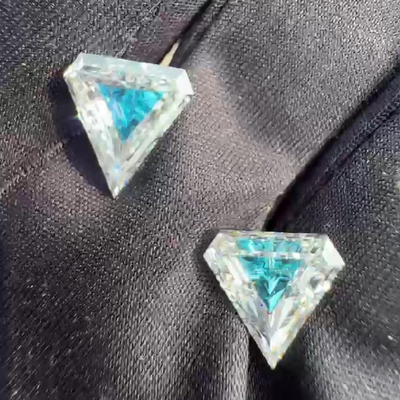
Alongside true historic cuts, many newer shapes borrow the geometric, hand-cut feel of antique stones. These often have step-style or rose-style faceting and unusual outlines.
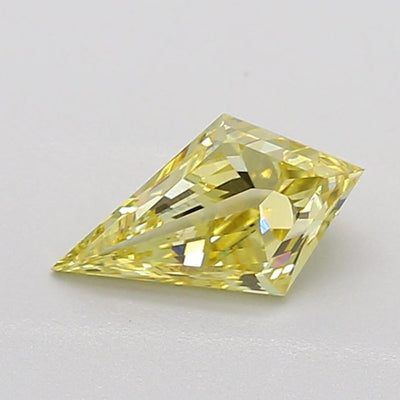
- Kite: a four-sided shape with two short sides and two long sides, like a classic kite. It looks bold set north-south or tilted.
- Shield: a flat top edge with sides tapering to a point. It has an architectural, heraldic feel.
- Elongated hexagon: a stretched six-sided outline that looks sleek and slightly unexpected.
- Half moon and trapezoid: mostly used as side stones to frame an antique-style center.
These shapes suit buyers who love vintage character but want something that no one else at the table is wearing. Explore lab diamond antique cuts and moissanite antique cuts to compare shapes.
Antique Cuts vs the Modern Round Brilliant
This table shows how a typical antique cut differs from a modern round brilliant. It explains why they look so different even at the same size.
| Feature | Antique cuts | Modern round brilliant |
|---|---|---|
| Table | Small | Larger |
| Crown | High | Lower |
| Culet | Large, open, often visible | Pointed or very small |
| Light pattern | Big, slow, chunky flashes | Fine, fast, bright sparkle |
| Best lighting | Soft, warm and candle-like | Any lighting |
| Character | Each stone slightly different | Highly consistent |
Neither is better. Modern rounds deliver the most brightness. Antique cuts deliver character, softness and a feeling of history.
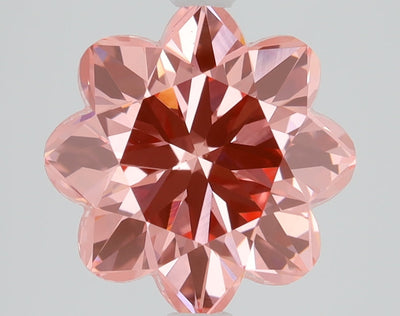
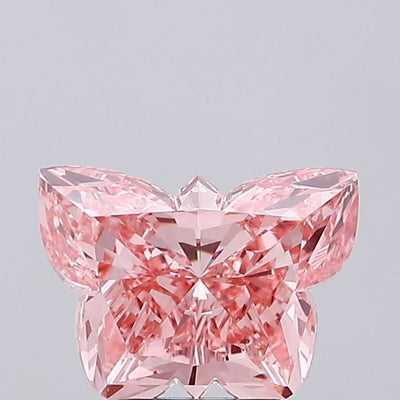
Shop the styles in this guide






Choosing an Antique-Style Diamond
Color and clarity
Antique stones were often warmer in color, and many buyers want that warmth. A near-colorless or faintly warm stone set in yellow gold can look more authentic than an icy white one. If you prefer a bright white look, choose a higher color grade and white gold.
Clarity depends on the cut. Old mine and old European cuts have enough facets to hide small inclusions well. Rose cuts and step-style antique shapes show more, so aim for a higher clarity grade with those.
Cut quality
Labs don't give antique and fancy shapes the same cut grade as a modern round, so you need to judge cut by eye. Look for an even, balanced outline, facets that line up neatly and a stone that doesn't look dark in the center. Videos help more than numbers here.
Settings and metals
- Protect shallow stones: choose a bezel or low setting for rose cuts and thin portrait cuts.
- Go warm for vintage: pair with yellow or rose gold for a warm, heirloom look.
- Check symmetry: look for good symmetry even in "imperfect" historic styles.
- Add vintage details: milgrain edges, engraving and halos of small accent stones all suit antique cuts.
- Consider lab grown: lab grown versions offer the look with modern consistency and a choice of color.
Tip: An open culet in an old mine or old European cut is part of the design. If you see a small circle in the center of the stone when you look straight down, that is the culet, not an inclusion. Ask the seller to confirm if you are unsure.
Lab Grown and Moissanite Antique Cuts
Original antique diamonds can be hard to find in matching sizes, and each one is unique. Lab grown diamonds solve that problem. They are chemically, physically and optically the same as mined diamonds, and cutters can shape them to old mine, old European, rose and other historic patterns. You get the antique look with the color and clarity you choose, and many lab grown stones come with IGI certificates.
Moissanite is a different gemstone, not a diamond. It has a refractive index of about 2.65 compared with diamond's 2.42, so it shows more colorful fire. In an antique cut with big facets, that fire turns into bold rainbow flashes. Moissanite is also very durable, at 9.25 on the Mohs scale compared with diamond's 10.
| Option | Best for | Look |
|---|---|---|
| Lab grown diamond | A true diamond antique look with a chosen color | Classic, soft glow and white light |
| Moissanite | Extra fire at a friendlier price | Bold, colorful flashes |
| Original vintage diamond | Buyers who want a stone with real history | One of a kind, often warm |
Wearing and Caring for Antique Cuts
Antique cuts are not only for engagement rings. Their soft glow and unusual outlines work across a whole jewelry box.
Beyond the engagement ring
- Stud earrings: rose cut studs sit flat against the ear and catch light gently, which makes them easy to wear every day.
- Pendants: a single old mine or kite cut stone on a fine chain looks like a family heirloom from day one.
- Stacking bands: rows of small rose cuts or French cuts add texture next to a modern solitaire without competing with it.
- Toi et moi rings: pairing an antique cut with a modern shape, such as a rose cut pear beside a round brilliant, mixes old and new in one design.
Everyday care
Antique cuts gather oil and lotion like any stone, and a film dulls their glow quickly because they rely on broad facets. Soak the piece in warm water with a drop of mild dish soap, brush gently behind the stone with a soft toothbrush, rinse and pat dry. For pieces with milgrain or engraving, brush along the pattern to lift dirt from the grooves.
Check settings every few months. Bezels on rose cuts should sit snugly against the stone, and prongs on old mine cuts should not catch on fabric. Take rings off for heavy work, gym sessions and when using harsh cleaning products. Store pieces separately so harder stones don't scratch softer metal or other gems.
Antique Cuts at Ivevar
We cut and set antique-style lab grown diamonds and moissanite in our Surat workshop. Every ring ships worldwide with free shipping and 30-day easy returns, in 10K, 14K or 18K gold. Want a specific old cut, a milgrain halo or a recreated heirloom design? Our custom jewelry team can make it for you, and you can book a virtual appointment to see stones on video first. Browse antique cut rings or the wider antique cut jewelry collection.
Shop Antique Cut Rings
 Antique Kite RingShop Now
 Elongated Hexagon RingShop Now
 Antique Oval SolitaireShop Now
 Antique Pear Bypass RingShop Now
 Rose Cushion Bezel RingShop Now
 Oval Rose Cut RingShop Now
Swipe to see more → | View all antique cut rings
Frequently Asked Questions
What is an old mine cut?
A cushion-like antique cut with a high crown, small table, deep pavilion and open culet. It was popular in the Georgian and Victorian eras.
What is an old European cut?
A round antique cut with a small table, high crown and chunky flashes. It is the ancestor of the modern round brilliant.
Do rose cuts sparkle?
They glow softly rather than sparkle intensely, because they have a flat base and no pavilion to reflect light back up.
Are antique cuts durable?
Yes. Diamond is 10 on the Mohs scale whatever its cut, though shallow rose cuts benefit from protective bezel settings.
Can lab grown diamonds be antique cut?
Yes. Lab grown diamonds can be cut to old mine, old European, rose and other historic patterns.
What is the dark circle in the middle of my old cut diamond?
Usually the open culet, a small flat facet at the bottom of the stone. It is a normal feature of antique cuts.
Do antique cuts look smaller than modern rounds?
Old mine and old European cuts often carry more weight in their high crown and deep pavilion, so they can look a little smaller face-up. Rose cuts are the opposite: they look larger for their weight.
Is an antique-style lab diamond the same as a vintage diamond?
Not quite. A lab grown antique cut has the same shape and faceting style as a historic stone, but it is newly grown and newly cut. It is still a real diamond with the same chemistry and optics, and it gives you more choice of size, color and clarity than hunting for an original vintage stone.
Can I add an antique cut to a ring I already own?
Often, yes. Rose cut and old cut accent stones can be added in a matching band or a custom stacking ring designed to sit next to your existing piece.
Which metal suits an antique cut best?
Yellow and rose gold give the most traditional, warm look. White gold suits a brighter, more modern take on a vintage stone.
The Bottom Line
Antique cuts offer romance and individuality. The rose cut glows softly, the old mine cut brings blocky, moody flashes, and the old European cut gives a round stone with vintage soul. Choose a style you love, judge it by eye, and pick a setting that protects it.
Related Guides
Author Bio
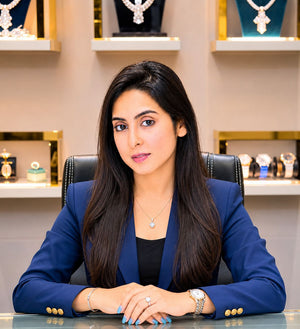
Aumsri Pradhan
Founder, Ivevar Luxury
Aumsri Pradhan is the founder of Ivevar Luxury, a Surat-based fine jewelry brand that designs and handcrafts lab grown diamond and moissanite jewelry in its own workshop. She leads the brand's design and customer experience, from engagement rings and bridal sets to custom pieces made to each client's story. Through the Ivevar blog, she shares practical guidance on lab grown diamonds, moissanite, diamond grading and ring design to help buyers choose with confidence.


