

 Engagement Rings
 Anniversary Rings
 Solitaire Rings
 Halo Rings
 Toi Moi Rings
 Three Stone Rings
 Nature Inspired Rings
 Rose Cut Rings
 Fancy Color Rings
 Antique Cut Rings
 Wedding Rings
 Wedding Band Rings
 Exclusive Lab Grown Diamond Rings
 All Lab Grown Diamond Ring
 Engagement Rings
 Three Stone Rings
 Fancy Color Rings
 Antique Cut Rings
 Daily Wear Rings
 Wedding Band Rings
 Exclusive Moissanite Rings
 Earrings
 Bracelet
 Pendant
 Necklace
 Men's Ring
 Bridal Sets
 Rings
 Earrings
 Tennis chain
 Cuban Chains
 Custom Pendant
 Custom Ring
 Custom Teeth Grillz
 Round
 Oval
 Cushion
 Marquise
 Pear
 Emerald
 Heart
 Princess
 Rose Cut
 Radiant
 Antique Cut
 Brooch
 Cufflink
 Keychain
 Unique Products
 +91-9265051773
 Virtual Appointment
 log in




Diamond Color Guide: What Color Grade Should You Actually Buy?
by Aumsri Pradhan on Sep 29, 2026

Short answer: For most people, G or H color is the best buy. These near-colorless grades look white once set in white gold or platinum and cost less than colorless D–F. In yellow or rose gold, H to J is often enough, because the warm metal hides any faint tint.
Color is the C that confuses buyers most, because the differences between neighboring grades are tiny and the price differences are not. This guide explains what each grade really looks like, how the metal, shape and size of your ring change what you see, and how to pick the lowest grade that still looks white to you. That last point is where the savings are.
The D-to-Z Color Scale
For white diamonds, color grading measures the absence of color. D is the top of the scale and completely colorless. As you move down the alphabet, a faint yellow or brown tint becomes more noticeable. The scale starts at D rather than A to avoid confusion with older, inconsistent grading systems.
| Grades | Category | What you see |
|---|---|---|
| D, E, F | Colorless | Icy white |
| G, H, I, J | Near colorless | White once set |
| K, L, M | Faint | Slight warmth |
| N to Z | Very light to light | Visible yellow or brown |
What Each Range Means in Practice
- D to F: the stone looks icy and bright even beside other diamonds. You pay for the knowledge that it is top of the scale, since the difference from G is hard to see once set.
- G and H: the sweet spot for most white metal rings. Face up, they read as white to nearly everyone.
- I and J: very good value, especially in yellow or rose gold, and in smaller stones. A trained eye may spot a hint of warmth in a large I or J in white gold.
- K to M: a visible warm tone. Some buyers choose it on purpose for a soft, vintage look in yellow gold.
How Diamond Color Is Graded
Graders judge color with the diamond turned face down, under controlled daylight-style lighting, next to reference stones of known grades. Looking through the side of the stone removes the sparkle that can hide body color. That is why two diamonds one grade apart can look the same once they are face up in a ring.
In everyday wear, you see the diamond from the top, in mixed light, surrounded by metal. Face-up, the gap between neighboring grades is very hard to spot. The grade on the report is accurate, but it was found under conditions designed to reveal color, not the conditions you live in.
Labs such as IGI and GIA grade both mined and lab grown diamonds. Each grade covers a small range, so a stone at the top of G and one at the bottom of G can differ slightly. This is another reason to look at the actual stone rather than relying only on the letter.
Match Color to Your Metal
The metal around a diamond reflects into it. White metal shows up any warmth, while warm metal hides it. Choosing your metal first makes choosing a color grade much easier.
- White gold and platinum: G–H looks white; choose D–F if you want the iciest look.
- Yellow gold: H–J; the metal's warmth makes the diamond look whiter by comparison.
- Rose gold: H–J works beautifully, and the pink tone flatters the stone.
- Two-tone: set the diamond in a white gold head on a yellow or rose band to keep it looking white while enjoying a warm band.
| Metal | Good value grade | Why |
|---|---|---|
| White gold / platinum | G–H | White metal shows any tint, so stay near colorless |
| Yellow gold | H–J | Warm metal masks faint warmth |
| Rose gold | H–J | Pink tone blends with near-colorless stones |
| Two-tone (white head) | G–H | The stone sits against white metal |
Shape and Size Matter Too
Larger diamonds and certain shapes show color more easily. Round brilliants hide color best, because their many facets break light into bright sparkle that masks body color.
Emerald, Asscher, oval and pear shapes can show a little more, especially at the ends, so consider going one grade higher for them and for stones over 2 carats. Step cuts like the emerald and Asscher have large, open facets that act like windows into the stone. Elongated brilliants such as ovals, pears and marquises tend to collect color at their tips, where the stone is thinner and the light path changes.
| Shape | Shows color | White metal starting point |
|---|---|---|
| Round, princess, radiant | Least | H |
| Cushion | Moderate | G–H |
| Oval, pear, marquise | More at the tips | G |
| Emerald, Asscher | Most | F–G |
These are starting points, not rules. A well-cut H oval can look whiter than a poorly cut G, and personal sensitivity to warmth varies a lot.
Size Changes Everything
Small stones, such as the pavé diamonds in a band or the accent stones in a halo, show very little color because there is so little material for light to travel through. That is why accent stones are often graded in ranges, such as G–H. For a center stone under about half a carat, you can usually drop a grade without seeing a difference. Above 2 carats, consider moving up a grade, because the larger body gives color more room to show.
Color vs Cut, Clarity and Carat
Color is only one of the four Cs, and it is rarely the one people notice first. A well cut diamond throws back so much light that it can make a near-colorless stone look brighter than a poorly cut colorless one. When you set a budget:
- Cut first: it drives sparkle more than any other factor.
- Color second: pick the lowest grade that still looks white in your chosen metal.
- Clarity third: aim for a stone that looks clean to the naked eye.
- Carat last: once the first three are right, choose the size that fits your budget.
In practice, a G or H stone with an excellent cut and eye-clean clarity is a balanced, beautiful choice that leaves room in the budget for a better setting or a slightly larger size.
Picking a Grade: Real-World Examples
Putting the rules together is easier with examples. Here is how the choice usually plays out for common ring styles.
A 1 Carat Round Solitaire in White Gold
A round brilliant hides color well, and at 1 carat the stone is not large enough for warmth to build up. G or H is a comfortable choice. If you are very sensitive to warmth, or the ring will sit next to a very white wedding band, F or G gives extra peace of mind.
A 2 Carat Oval in Yellow Gold
The oval shows a little color at its tips, and 2 carats gives the color more room to show. But yellow gold works in your favor by warming everything around the stone. H or I is usually a good balance here, with a white gold head as an option if you want the stone to look whiter.
A 1.5 Carat Emerald Cut in Platinum or White Gold
This is the most demanding combination: an open step cut, a fair size and white metal. Start at F or G. The emerald's long, clear facets make it look like a window, and any tint is easier to see than in a brilliant.
A Vintage-Style Ring in Yellow or Rose Gold
Antique-style cuts such as old mine and old European cuts were often cut from warmer stones, and many people love that soft glow. J or K in yellow or rose gold can look intentional and charming rather than yellow.
A Pavé or Eternity Band
Small stones show very little color, so G–H accent stones look bright and white in any metal. Match them to the center stone if the band will be worn beside an engagement ring.
Fluorescence and Color
Some diamonds glow, usually blue, under ultraviolet light such as a black light or strong sunlight. This is called fluorescence, and it appears on grading reports as None, Faint, Medium, Strong or Very Strong.
- In near-colorless stones: medium or strong blue fluorescence can make an I, J or K stone look a little whiter in daylight, because blue offsets a faint yellow tint.
- In colorless stones: very strong fluorescence can occasionally give a slightly hazy or milky look, so check videos of D to F stones with strong fluorescence.
- Most of the time: fluorescence has no visible effect under normal indoor light.
Tip: Do not reject a stone only because the report lists fluorescence. Look at the stone itself. If it looks bright and clear in a video, the fluorescence is not a problem for you.
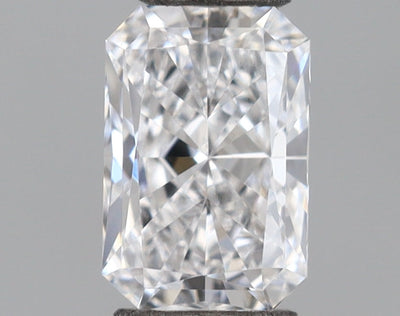
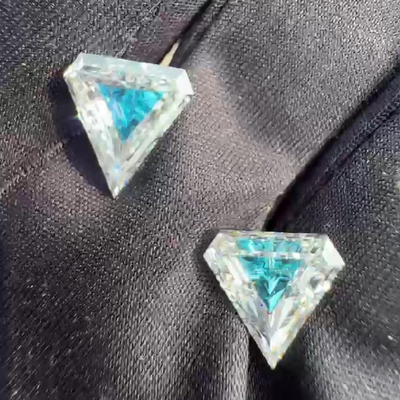
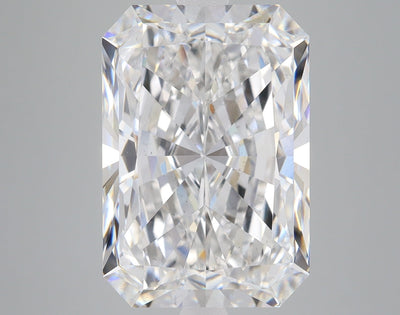
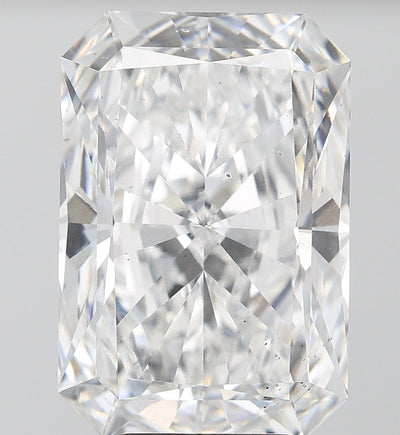
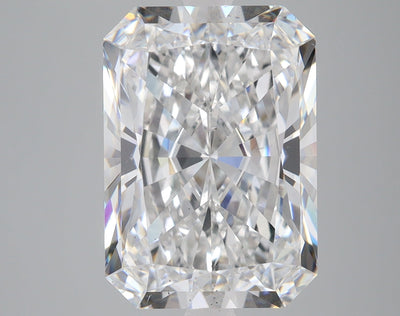
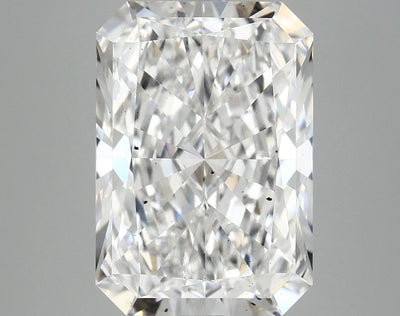
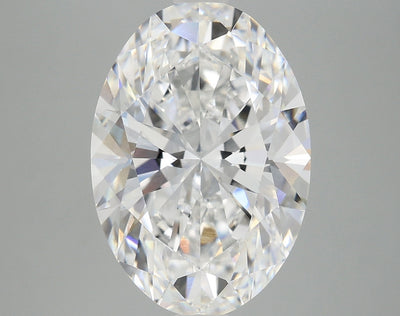
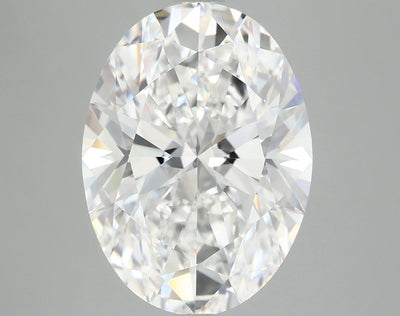
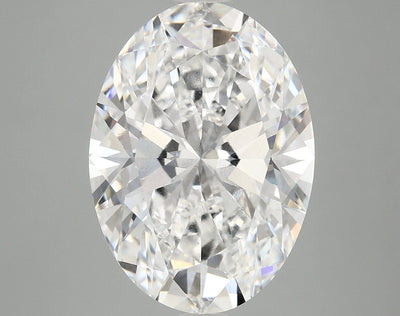
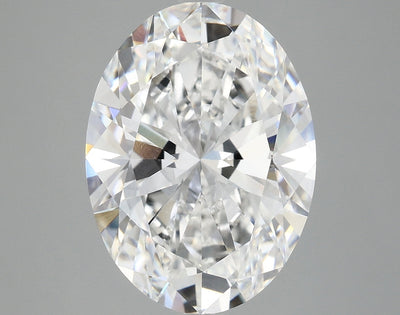
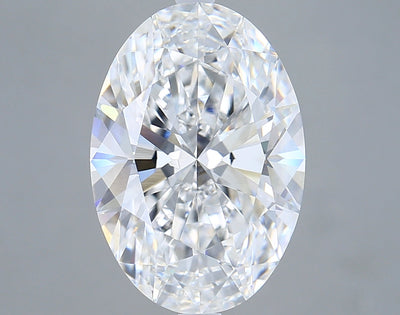
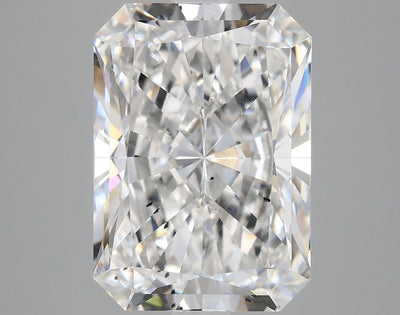
Shop the styles in this guide








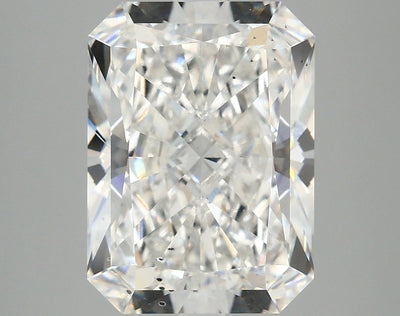
Color in Lab Grown Diamonds
Lab grown diamonds are real diamonds, grown by CVD or HPHT, and they use the same D-to-Z scale. They are chemically, physically and optically the same as mined diamonds. Because growers can control conditions closely, many lab diamonds land in the colorless and near-colorless range. Some CVD stones also go through a post-growth heat step to improve color, which a good seller discloses.
Lab grown diamonds cost far less than mined ones, so many buyers can choose a higher color grade without giving up size. Many of our lab diamonds come with IGI certificates that state the color grade, so you know exactly what you are buying. Browse our lab diamond solitaire rings to see how different grades look when set, or explore loose stones in all lab grown diamonds.
Fancy Colored Diamonds
Pink, blue, green and yellow diamonds are graded on a separate fancy color scale based on hue and intensity, such as "Fancy Vivid Pink". For these, strong color is the goal, and the more saturated and even the color, the more the stone is valued.
Fancy color grades usually run from Faint and Light through Fancy Light, Fancy, Fancy Intense and Fancy Vivid, with Fancy Deep and Fancy Dark describing darker tones. Lab grown fancy colored diamonds bring these shades within reach, and they suit right-hand rings and statement pieces as well as engagement rings. See our lab grown fancy color rings for ideas.
What Changes the Cost
Each step up the color scale costs more, and the jump is sharpest in the colorless D to F range. Larger stones make that gap wider. Shape also matters: a round brilliant hides tint better, so you can often go a grade lower on a round than on an emerald or Asscher cut and see no difference.
The smartest way to save is to find the point where you stop seeing a difference. For many people that is G or H in white gold and I or J in yellow gold. Money saved there can go toward a better cut, a larger stone or a more detailed setting, all of which you will notice every day.
How Moissanite Compares
Moissanite is a different gemstone, silicon carbide, not diamond. Its color is often described with the same letters, but it is not graded the same way. Colorless moissanite can show a faint gray or yellow cast in some lights, and it shows more rainbow fire than diamond because its refractive index, about 2.65, is higher than diamond's 2.42. It is also very hard, at 9.25 on the Mohs scale compared with diamond's 10.
If you love the colorless look on a smaller budget, colorless moissanite is a strong option. Our moissanite vs lab grown diamond vs diamond guide covers the differences in detail.
Tips for Checking Color
- Use a white background: view the stone on white paper in daylight, not under warm indoor bulbs.
- Compare side by side: look at it next to a stone one or two grades higher, since color is easier to judge in comparison.
- View it in your metal: look at it in the metal you plan to use, since the setting shifts how warm it looks.
- Check from the side: tint shows most through the side, so a stone that looks white from there will look white face up.
- Ask for a video: a video in natural light tells you more than a polished studio photo.
- Read the report: confirm the color grade on the IGI or GIA report matches what the seller states.
IGI Certified Lab Diamonds at Ivevar
At Ivevar we craft rings in 10K, 14K and 18K gold with lab grown diamonds, many with IGI certificates, and with moissanite. We offer custom designs, virtual appointments to view stones, free shipping worldwide and 30-day easy returns. Start with our lab diamond engagement rings to compare color grades in real settings.


FAQ
What diamond color is best value?
G or H for white metals; H to J for yellow or rose gold. These grades look white once set and cost less than colorless stones.
Can you see the difference between D and G?
Only side by side under good light. Once set, G looks white.
Are lab grown diamonds color graded?
Yes, IGI grades them D–Z. GIA now gives lab grown stones a Premium or Standard tier instead.
Does diamond color change over time?
No. A diamond's body color is permanent. It can look dull when dirty, so regular cleaning keeps it looking its best.
Is I color too yellow for an engagement ring?
Not usually. In yellow or rose gold, or in a round brilliant under about 1.5 carats, I color generally looks white face up. In a large emerald cut set in white gold, some people notice warmth, so check a video first.
Should I pay more for D color?
Only if knowing your stone is top of the scale matters to you. Face up and set, D, E and F look very similar, and the saving from choosing G can go toward size or cut.
Do halo or pavé stones need to match the center color?
Ideally they should be close. If the small stones are much whiter than the center, they can make it look warmer by contrast. A center within a grade or two of the accent stones looks balanced.
Does the color grade matter for earrings?
Less than for a ring. Earrings are seen from further away and usually in smaller stones, so H to J often looks white. Just make sure the two stones in a pair are close in color so they match.
What color grade do lab grown diamonds usually come in?
Many lab grown diamonds fall in the colorless and near-colorless ranges, roughly D to H, because growers control the process closely. Always confirm the grade on the certificate rather than assuming.
Can a jeweler change a diamond's color?
Some lab grown and mined diamonds are treated after growth or mining to improve color, and reputable sellers and grading reports disclose this. You cannot change the color of a finished, set diamond at home, but cleaning restores its original brightness.
Aumsri Pradhan is the founder of Ivevar Luxury, a Surat-based fine jewelry brand that designs and handcrafts lab grown diamond and moissanite jewelry in its own workshop.


