

 Engagement Rings
 Anniversary Rings
 Solitaire Rings
 Halo Rings
 Toi Moi Rings
 Three Stone Rings
 Nature Inspired Rings
 Rose Cut Rings
 Fancy Color Rings
 Antique Cut Rings
 Wedding Rings
 Wedding Band Rings
 Exclusive Lab Grown Diamond Rings
 All Lab Grown Diamond Ring
 Engagement Rings
 Three Stone Rings
 Fancy Color Rings
 Antique Cut Rings
 Daily Wear Rings
 Wedding Band Rings
 Exclusive Moissanite Rings
 Earrings
 Bracelet
 Pendant
 Necklace
 Men's Ring
 Bridal Sets
 Rings
 Earrings
 Tennis chain
 Cuban Chains
 Custom Pendant
 Custom Ring
 Custom Teeth Grillz
 Round
 Oval
 Cushion
 Marquise
 Pear
 Emerald
 Heart
 Princess
 Rose Cut
 Radiant
 Antique Cut
 Brooch
 Cufflink
 Keychain
 Unique Products
 +91-9265051773
 Virtual Appointment
 log in




Lab Grown Diamond Tennis Necklace: Length and Carat Guide
by Aumsri Pradhan on Sep 28, 2026
Quick answer: The most popular length for a lab grown diamond tennis necklace in the US is 16 to 18 inches, which sits at or just below the collarbone. For carat weight, around 5 to 10 carats total gives a refined everyday look, while 15 carats and up creates a dramatic, special-occasion sparkle.
A tennis necklace is a continuous line of matched diamonds, and it frames the face like nothing else. Here is how to choose the right length, carat weight and style.
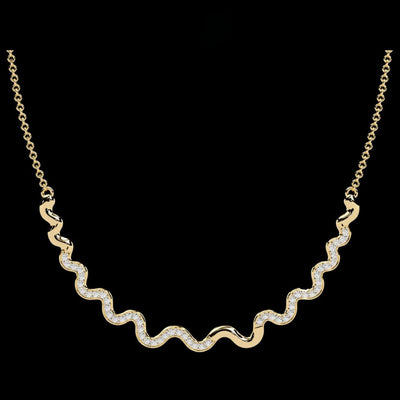
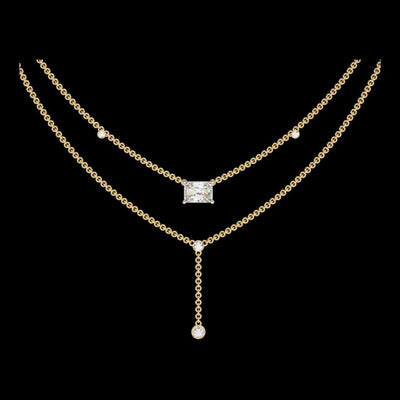
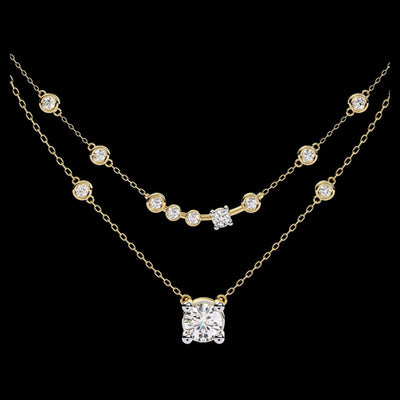
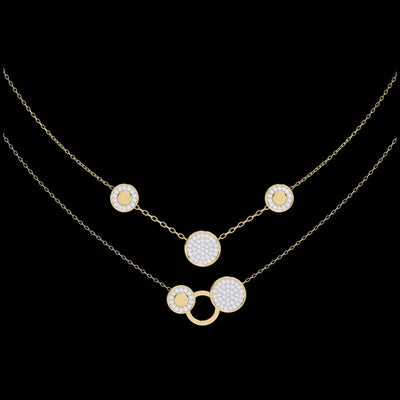
Shop the styles in this guide


Tennis Necklace Length Guide
| Length | Where it sits | Best for |
|---|---|---|
| 14 to 15 in | Close to the base of the neck | Choker look, slim necks |
| 16 in | On the collarbone | Classic, most popular for women |
| 18 in | Just below the collarbone | Easy to wear, great with open necklines |
| 20 in | Above the bust | Layering, men's tennis chains |
| 22 in and up | At or below the bust | Statement and hip hop styles |
Not sure? Place a string around your neck at different lengths and check it in the mirror with your favorite necklines.
How Many Carats Should a Tennis Necklace Be?
Carat weight depends on stone size and length. For a 16 inch necklace of round stones, these are approximate guides:
| Total carat weight | Approx. stone size | Look |
|---|---|---|
| 3 to 5 ctw | about 2 mm | Delicate, everyday |
| 7 to 10 ctw | about 2.5 to 3 mm | Classic tennis necklace |
| 12 to 20 ctw | about 3.5 to 4 mm | Bold, evening wear |
| 20+ ctw | 4 mm and up | Red carpet statement |
Tennis necklaces use many stones, so lab grown diamonds make a dramatic difference in price compared with mined diamonds.
How length changes total carat weight
The carat table above is based on a 16 inch necklace. Because a tennis necklace is one unbroken line of stones, every extra inch adds more diamonds. An 18 inch necklace made with the same stones carries noticeably more total weight than a 16 inch one, and a 20 inch version more again. When comparing listings, make sure the carat figure refers to the same length, or the comparison is meaningless.
This also explains why men's and hip hop tennis chains in longer lengths often show much higher carat totals. The stones themselves may be similar in size; there are simply more of them.
Match the Length to Your Neckline
A tennis necklace looks best when it has clear space to sit in. The neckline you wear most often should guide your length choice more than anything else.
| Neckline | Best tennis necklace length | Why it works |
|---|---|---|
| Crew neck and high necklines | 18 to 20 in, worn over the fabric | Sits on top of the neckline instead of being hidden underneath |
| Scoop neck | 16 to 18 in | Fills the open area without crowding the edge of the fabric |
| V-neck | 16 to 18 in, or a V shape design | Echoes the angle of the neckline and draws the eye down |
| Strapless and off the shoulder | 14 to 16 in | Frames the collarbone and shoulders, a classic evening look |
| Button-up shirts | 16 to 18 in | Peeks out from an open collar for a relaxed everyday look |
Height, frame and neck size
Neck size changes where any given length lands. On a larger neck, a 16 inch necklace may sit like a choker, so 18 inches becomes the classic collarbone length. On a petite frame, an 18 inch necklace can fall lower than expected. Measure your neck with a soft tape and add about 2 inches to get the length that rests on or near the collarbone.
Stone size should also suit your frame. A fine 2 mm line looks elegant on a slim neck, while broad shoulders and a longer neck carry 3.5 to 4 mm stones with ease.
Uniform vs Graduated Tennis Necklaces
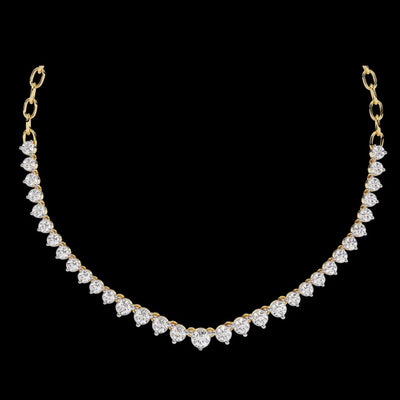
In a uniform necklace, every stone is the same size from clasp to clasp, which gives a clean, modern line. In a graduated necklace, the stones get larger toward the center front. Graduated designs put the most sparkle where people actually look, and the smaller stones at the back make the necklace lighter and more comfortable against the neck.
Graduated necklaces also help keep the necklace centered, since the heavier front tends to settle at the base of the throat. If you dislike constantly turning a necklace back into place, this is worth considering.
Popular Tennis Necklace Styles
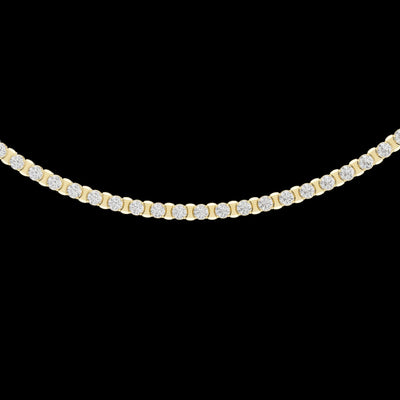
Classic straight line
Equal-size round diamonds all the way around. Timeless and versatile.
V shape and drop
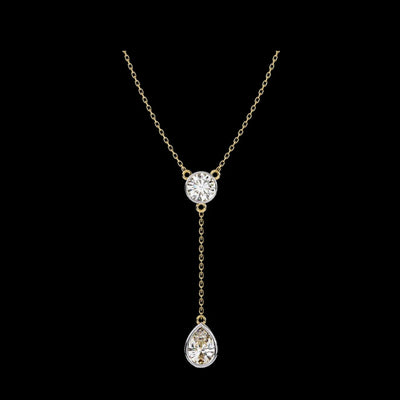
A center point or pear drop draws the eye down and flatters V-neck tops.
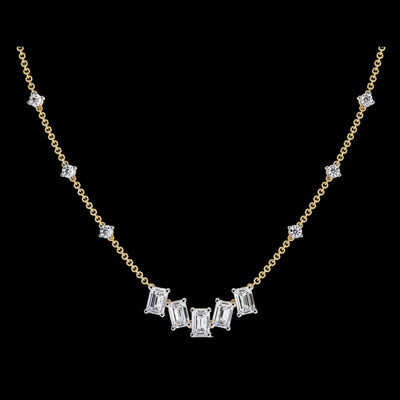
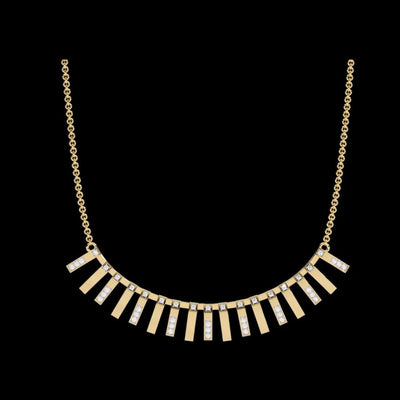
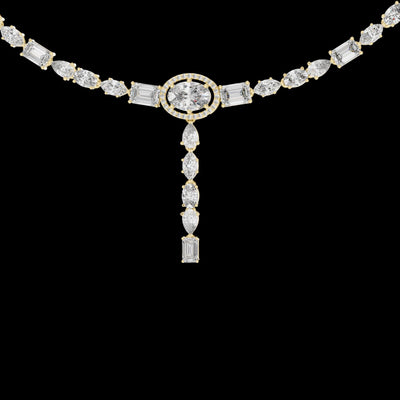
Station and fringe
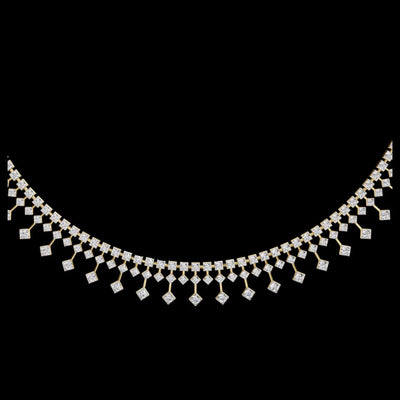
Larger diamonds spaced along the line, or cascading drops, add movement and a vintage feel.
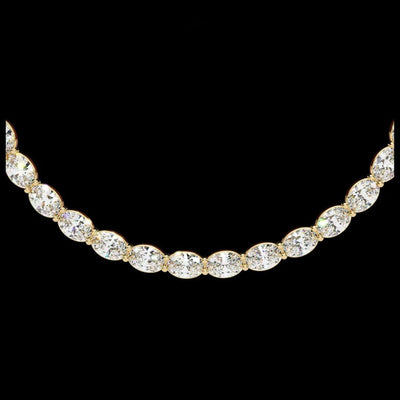
East-west oval
Oval stones set sideways create a modern, elongated look.
 Shown: Round Cut Lab Grown Diamond V Shape Tennis Necklace
What to Check Before You Buy
- Matched stones: diamonds should be even in color and size along the whole length.
- Flexibility: the necklace should drape smoothly, without stiff sections.
- Clasp: a box clasp with a safety latch is the standard for security.
- Metal: 14K gold is a durable, popular choice for everyday wear.
- Weight: high carat necklaces can feel heavy; try to feel the weight or ask for it in grams.
Settings That Suit a Tennis Necklace
Four prong
The traditional choice. Four small claws hold each stone and let in plenty of light, giving the brightest look and the classic square profile between stones.
Three prong or martini style
Each stone sits in a V-shaped basket with three prongs, so the stones nest closely together. This creates an almost continuous line of light with very little visible metal.
Bezel
A thin rim of metal wraps each stone. Bezel necklaces feel smooth against the skin and do not catch on sweaters, scarves or hair, which makes them a good choice for daily wear.
Illusion and buttercup settings
Some designs use a shaped metal plate behind each stone to make smaller diamonds look larger. These give a bigger look for a given carat weight, though the effect is softer than with larger stones.
Diamond Quality for a Necklace of Many Stones
A tennis necklace may hold well over a hundred small diamonds, so evenness matters far more than the grade of any single stone. The eye notices one stone that looks darker or smaller long before it notices a slight difference in clarity.
- Color: Near colorless stones look crisp in white metals. In yellow gold, slightly warmer stones blend in and can look just as bright. Our guide to G color lab grown diamonds explains how color grades read in jewelry.
- Clarity: At 2 to 4 mm, eye clean stones are what you need. Paying for flawless clarity in tiny stones adds cost you will not see.
- Cut: Well cut stones throw back more light, and this is easy to see across a whole necklace.
- Matching: Look at a video of the necklace in motion to check that every stone flashes evenly.
Lab Grown Diamond vs Mined Diamond vs Moissanite Tennis Necklaces
| Point to compare | Lab grown diamond | Mined diamond | Moissanite |
|---|---|---|---|
| What it is | Real diamond grown by CVD or HPHT | Diamond formed in the earth | Silicon carbide, a different gemstone |
| Hardness | 10 on the Mohs scale | 10 on the Mohs scale | 9.25 on the Mohs scale |
| Sparkle | Classic diamond brilliance, RI about 2.42 | Same as lab grown | More colorful fire, RI about 2.65 |
| Cost for a full necklace | Far less than mined | Highest by a wide margin | Usually the most affordable |
For a piece that uses this many stones, the cost gap between lab grown and mined diamonds is at its widest. Lab grown and mined diamonds look identical to the eye and cannot be told apart without lab equipment. If you prefer the extra rainbow flash of moissanite, see our moissanite tennis chains, or read our full comparison of moissanite, lab grown and mined diamond.
Clasp, Weight and Comfort
A necklace holds its weight from the back of the neck, so the clasp works harder than on a bracelet. A box clasp that clicks firmly shut, backed by one or two figure-eight safety catches, is the standard to look for. Some designs hide the clasp within the line of stones so the necklace looks continuous all the way around.
Weight builds quickly with length and stone size. A delicate 2 mm necklace feels barely there, while a 4 mm line in gold has real heft. If you plan to wear it all day, choose a lighter design or a graduated style that keeps the back of the necklace slim.
Flexibility matters too. Run the necklace through your fingers and lay it in a curve. A well made tennis necklace pours like liquid; stiff sections or gaps between links point to poor construction.
Choosing a Metal
- 10K gold: The toughest gold option, good for a necklace that will see daily wear and rubbing against collars.
- 14K gold: A balance of rich color and durability, and the most common choice.
- 18K gold: The deepest gold color. Softer, so it suits necklaces worn for occasions more than every day.
- 925 sterling silver: The most budget friendly way to wear a large tennis necklace. It will tarnish over time and needs regular polishing.
White gold and silver give the icy, bright look many people associate with a tennis necklace. Yellow gold reads warmer and a little more vintage, and it pairs well with gold earrings and watches.
Shop the styles in this guide
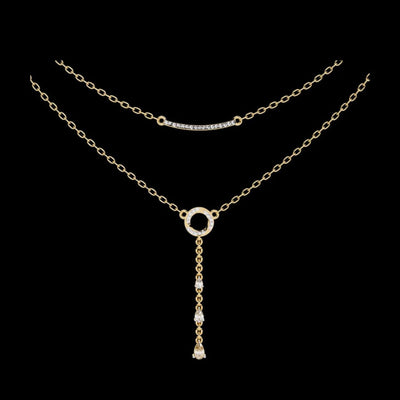



Layering and Matching Sets
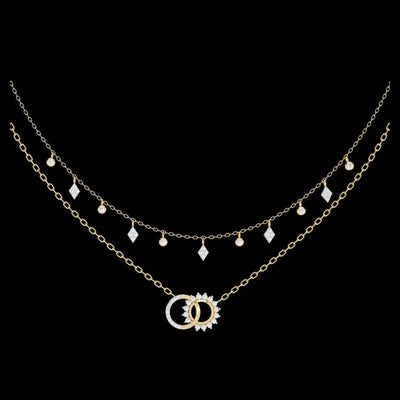
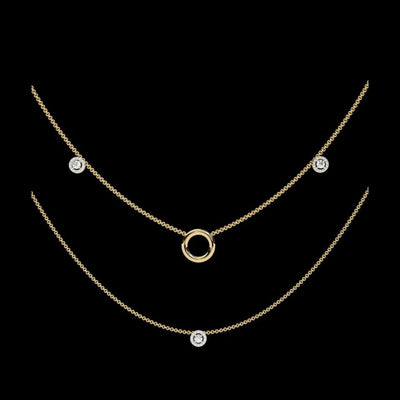
Tennis necklaces layer well with pendants and plain chains. Keep at least 2 inches between each layer so they do not tangle, for example a 16 inch tennis necklace with an 18 or 20 inch pendant. Our lab diamond pendants are designed to sit below a tennis line.
For a coordinated look, choose a matching tennis bracelet in the same stone size and metal. Our tennis bracelet size guide explains how to get the wrist length right.
Men's Tennis Necklaces
Men usually wear tennis necklaces in 20 to 24 inch lengths with stones of 3.5 mm and up, often in white or yellow gold. Longer lengths sit over a T-shirt or open shirt and suit a broader neck. Because of the length and stone size, these pieces are heavier, so the clasp matters even more.
What Affects the Cost
- Length: Every extra inch adds stones and metal.
- Stone size: Larger individual stones cost more per carat than small ones.
- Quality: Whiter, better cut and more closely matched stones add to the cost.
- Design: Graduated, fringe, station and fancy shape designs take more setting work than a simple straight line.
- Metal: Gold costs more than silver, and higher karat gold costs more than lower karat.
Caring for a Tennis Necklace
Lab grown diamonds will not cloud, fade or lose sparkle. Any dullness comes from skin oil, perfume, hair products and lotion collecting behind the stones.
- Put the necklace on last, after perfume, hairspray and lotion have dried.
- Clean it in warm water with a drop of mild dish soap, using a soft brush behind each stone.
- Rinse in a bowl, not over an open drain, and dry with a lint free cloth.
- Store it flat or laid straight in its own box so it does not kink or tangle.
- Check the clasp and look for loose stones every few months.
Take it off for sleep, the gym and swimming. Read our jewelry care guide for more detail.
Mistakes to Avoid
- Buying the length by habit: A 16 inch length is popular, but on a larger neck it can feel like a choker. Measure first.
- Ignoring weight: A high carat necklace can feel heavy after a long day. Lighter styles are better for daily wear.
- Kinking the necklace: Folding or twisting a tennis necklace sharply can bend the links. Lay it flat when you take it off.
- Comparing carat totals at different lengths: Always check what length the carat figure refers to.
- Layering too close: Necklaces less than 2 inches apart tend to tangle and rub against each other.
Step-by-Step Tennis Necklace Checklist
- Measure your neck and decide where you want the necklace to sit.
- Check the length against the necklines you wear most.
- Choose a stone size that suits your frame and how often you will wear it.
- Decide on a uniform or graduated design and a straight, V shape or station style.
- Pick a setting: prong for maximum sparkle, bezel for comfort and fewer snags.
- Choose your metal and color.
- Confirm the clasp has a box lock and a safety catch.
- Plan your layering or matching bracelet if you want a set.
Styling a Tennis Necklace for Different Occasions
- Everyday and office: A fine line at 16 or 18 inches, worn alone or with small studs.
- Weddings and black tie: A bold or graduated line close to the collarbone, paired with drop earrings or a matching bracelet.
- Casual weekends: Layer a tennis necklace with a simple chain or pendant over a T-shirt.
- Street style: A longer, heavier line in yellow gold, often stacked with a Cuban chain.
Who a Tennis Necklace Suits
A tennis necklace suits anyone who wants an instantly polished look without a single large pendant. A delicate 2 mm line works for office and everyday wear, while a bold line makes a striking piece for weddings, galas and milestone celebrations. It is also a natural upgrade gift for someone who already loves a tennis bracelet.
Tennis Necklaces at Ivevar
We hand-set each tennis necklace in our Surat workshop, matching every stone for color and size, and test each clasp before it ships. Lengths can be customized, and every order ships free worldwide, with 30-day easy returns. Browse our lab grown diamond necklaces or lab grown diamond tennis chains.
Shop Lab Grown Diamond Tennis Necklaces
 Round V Shape Tennis NecklaceShop Now
 Round Station Tennis NecklaceShop Now
 East West Oval Tennis NecklaceShop Now
 Pear V Drop Tennis NecklaceShop Now
 Fringe Tennis NecklaceShop Now
 Pave Buckle Tennis NecklaceShop Now
Swipe to see more → | View all necklaces
Frequently Asked Questions
What is the best tennis necklace length?
16 inches is the most popular for women; 18 inches is easier to wear with more necklines.
How much does a lab grown diamond tennis necklace cost?
It depends on carat weight, stone quality and metal, but lab grown versions cost far less than mined diamond necklaces of the same weight.
Can I wear a tennis necklace every day?
Yes, especially lighter styles. Remove it for sleep, sports and swimming.
Can a tennis necklace be shortened?
Yes, a jeweler can usually remove links. Ordering the right length is simpler.
What length tennis necklace should a man wear?
Most men choose 20 to 24 inches, which sits over the collarbone or on the chest, often with stones of 3.5 mm or larger.
Why does my tennis necklace keep turning around?
The clasp is usually the heaviest point, so it slides to the front. A graduated design or a slightly shorter length helps the necklace stay centered.
Is a lab grown diamond tennis necklace a real diamond necklace?
Yes. Lab grown diamonds are pure carbon diamonds with the same hardness and sparkle as mined ones, and standard diamond testers read them as diamond.
Can I layer a tennis necklace with a pendant?
Yes. Leave about 2 inches between them, such as a 16 inch tennis necklace with an 18 inch pendant, so they do not tangle.
The Bottom Line
Choose 16 to 18 inches for a classic look, pick a carat weight that suits how often you will wear it, and check for matched stones and a secure clasp. Lab grown diamonds make a full-sparkle tennis necklace far more attainable.
Related Guides
- Types of lab grown diamond necklaces
- What does TW mean in jewelry?
- How to buy a lab grown diamond: a simple buying guide

Author Bio
Aumsri Pradhan
Founder, Ivevar Luxury
Aumsri Pradhan is the founder of Ivevar Luxury, a Surat-based fine jewelry brand that designs and handcrafts lab grown diamond and moissanite jewelry in its own workshop. She leads the brand's design and customer experience, from engagement rings and bridal sets to custom pieces made to each client's story. Through the Ivevar blog, she shares practical guidance on lab grown diamonds, moissanite, diamond grading and ring design to help buyers choose with confidence.


