

 Engagement Rings
 Anniversary Rings
 Solitaire Rings
 Halo Rings
 Toi Moi Rings
 Three Stone Rings
 Nature Inspired Rings
 Rose Cut Rings
 Fancy Color Rings
 Antique Cut Rings
 Wedding Rings
 Wedding Band Rings
 Exclusive Lab Grown Diamond Rings
 All Lab Grown Diamond Ring
 Engagement Rings
 Three Stone Rings
 Fancy Color Rings
 Antique Cut Rings
 Daily Wear Rings
 Wedding Band Rings
 Exclusive Moissanite Rings
 Earrings
 Bracelet
 Pendant
 Necklace
 Men's Ring
 Bridal Sets
 Rings
 Earrings
 Tennis chain
 Cuban Chains
 Custom Pendant
 Custom Ring
 Custom Teeth Grillz
 Round
 Oval
 Cushion
 Marquise
 Pear
 Emerald
 Heart
 Princess
 Rose Cut
 Radiant
 Antique Cut
 Brooch
 Cufflink
 Keychain
 Unique Products
 +91-9265051773
 Virtual Appointment
 log in




Short answer: Table percentage is the width of the diamond's top flat facet divided by its total width. Depth percentage is the diamond's height divided by its width. For round brilliant diamonds, a table of about 54% to 60% and a depth of about 59% to 62.5% usually give excellent sparkle. Fancy shapes have wider acceptable ranges. Diamonds that are too deep look smaller face-up for their weight; diamonds that are too shallow can look glassy and leak light.
These two numbers appear on every full grading report, usually on the proportions diagram. They are not grades, just measurements, but they are among the quickest ways to tell whether a diamond is likely to be well cut, and whether it will look its size.
This guide explains how table and depth are measured, why they affect sparkle and face-up size, the ranges to look for in each shape, and how to use them alongside cut grade, photos and video when choosing a diamond.
What Are Table and Depth Percentage?
Table percentage
The table is the large, flat facet on top of the diamond. Table percentage compares the width of that facet with the width of the whole diamond at its girdle (the outer edge).
Table % = table width ÷ average diameter × 100
For example, if a round diamond is 6.5 mm across and its table is 3.7 mm wide, its table percentage is about 57%.
Depth percentage
Depth percentage compares the total height of the diamond, from the table down to the culet (the bottom point), with its width.
Depth % = total depth ÷ average diameter × 100
For the same 6.5 mm round, a total depth of 4.0 mm gives a depth percentage of about 61.5%. For fancy shapes such as ovals and emeralds, labs divide the depth by the width (the shorter side), not the length.
| Measurement | What it compares | Where to find it |
|---|---|---|
| Table % | Top facet width vs total width | Proportions diagram |
| Depth % | Total height vs total width | Proportions diagram and measurements |
| Total depth (mm) | Actual height of the stone | Measurements line |
| Diameter or width (mm) | Face-up size | Measurements line |
Reading the proportions diagram
On most reports, the proportions diagram is a side view of the diamond. The table percentage sits across the top, the depth percentage runs down the side, and the crown and pavilion angles are marked on the upper and lower halves. Girdle thickness is written at the widest point and the culet size at the bottom. If you are comparing several stones, copying these figures into a simple list side by side makes the differences easy to see.
Why Table and Depth Matter
A diamond's beauty comes from how it handles light. Light enters through the top, bounces off the angled facets underneath, and returns through the top as sparkle. The proportions decide how much light comes back to your eye and how much escapes out of the bottom or sides.
- Brilliance: The bright white light a diamond returns. A larger table generally lets in and shows more of it.
- Fire: The flashes of rainbow color. Smaller tables and taller crowns generally give more fire.
- Scintillation: The sparkle and pattern of light and dark as the diamond or viewer moves.
- Face-up size: How large the diamond looks from above for its carat weight.
Table and depth do not tell the whole story on their own, because angles matter too, but they quickly rule out stones that are badly proportioned.
Ideal Ranges by Shape (Guide)
| Shape | Table % | Depth % |
|---|---|---|
| Round | 54 to 60 | 59 to 62.5 |
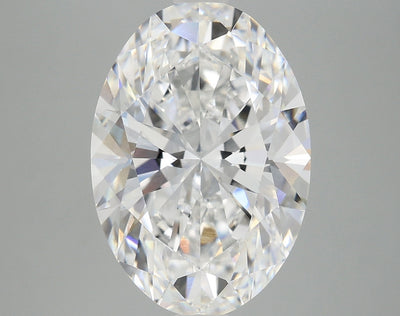
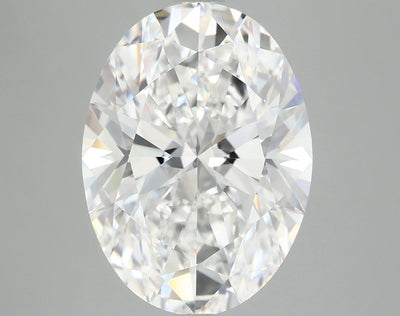
| Oval | 53 to 63 | 58 to 63 |
| Pear | 53 to 63 | 58 to 64 |
| Cushion | 58 to 68 | 61 to 68 |
| Princess | 64 to 72 | 64 to 75 |
| Emerald | 60 to 68 | 60 to 68 |
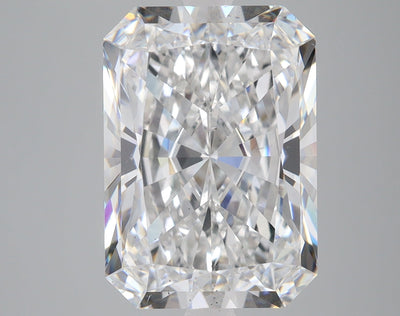
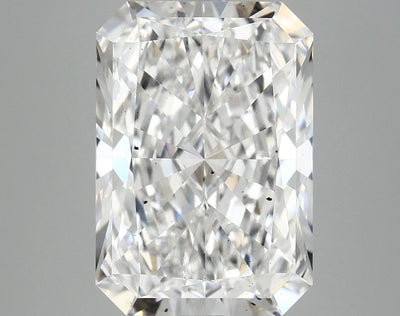
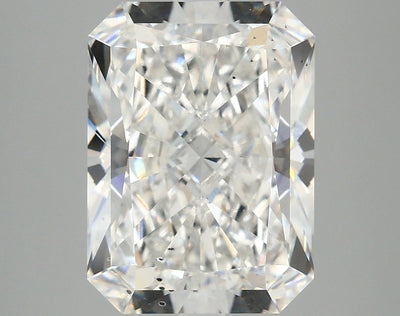
| Radiant | 61 to 69 | 61 to 67 |
These ranges are general guides; always judge the actual stone's brightness. A diamond just outside a range can still look beautiful, and one inside the range can still be dull if its angles are off.
Why fancy shapes have wider ranges
The round brilliant has been studied and refined for a long time, so its best proportions are well understood. Fancy shapes vary much more in outline, facet pattern and length-to-width ratio. A deep cushion and a shallow cushion can both be attractive, just with different looks. That is why the acceptable ranges for fancy shapes are broader and why visuals matter more.
What Happens Outside the Range
Too deep
More weight is hidden in the bottom of the stone, so the diamond looks smaller than its carat weight suggests. Light can also leak out through the sides of the pavilion, which can create a dark center in rounds or a strong dark "bow tie" across the middle of ovals, pears and marquises.
Too shallow
The diamond looks large for its weight, but light passes straight through the bottom instead of reflecting back. This can create a dull, glassy "window" in step cuts, or a grey ring known as a "fisheye" in rounds, where the reflection of the girdle shows through the table. Shallow stones can also have thin girdles that are more prone to chipping.
Table too large
More brilliance but less fire. The crown becomes small, leaving less room for the angled facets that split light into color.
Table too small
More fire but less brilliance. The diamond can look slightly darker and smaller face-up.
| Problem | What you see | Why it happens |
|---|---|---|
| Too deep | Looks small, darker center | Weight hidden below the girdle; light leaks |
| Too shallow | Glassy window or fisheye | Light escapes through the bottom |
| Very large table | Bright but less colorful | Smaller crown, less fire |
| Very small table | Colorful but less bright | Less light returned as white sparkle |
 Shown: Luxury Moissanite Pear Shaped Halo Stud Earrings
Depth and Face-Up Size
Many buyers focus on carat weight, but carat is weight, not size. What people see when they look at your ring is the diameter or length and width of the stone from above.
A well-cut 1 carat round diamond typically measures around 6.4 to 6.5 mm across. A diamond of the same weight cut too deep will measure less across because more of its weight sits in the pavilion. A shallow stone will look wider, but at the cost of sparkle.
That is why it pays to compare measurements in millimeters, not only carat weight, when you are choosing between two stones. A slightly lighter diamond with good proportions can face up the same size as, or larger than, a heavier deep one.
A simple comparison
Imagine two round diamonds, both 1.00 carat with the same color and clarity. Diamond A has a depth of 61.5% and measures 6.45 mm across. Diamond B has a depth of 64.5% and measures noticeably less across. On paper they weigh the same, but A will look larger from above and, with its depth in the ideal range, is also more likely to return bright light. B carries extra weight underneath where nobody sees it. This is exactly the kind of difference the depth percentage helps you catch.
Tip: When comparing two diamonds with similar grades, check the millimeter measurements first. If one is noticeably wider for the same weight and its depth is still within range, it will usually look bigger on the hand.
How the setting changes the picture
The setting can work with the proportions. A halo makes a center stone look larger and can help a slightly deeper stone hold its own visually. Thin prongs and a slim band also make the center look bigger by contrast. A deep stone needs a taller setting to sit at the right height, which matters if you want a low-profile ring. Mention the stone's total depth in millimeters when choosing a setting so the jeweler can plan the head correctly.
Other Numbers That Matter
- Crown angle: about 34 to 35 degrees is ideal for rounds. It works with the table to balance brilliance and fire.
- Pavilion angle: about 40.6 to 41 degrees for rounds. This angle has the biggest single effect on how much light reflects back.
- Length-to-width ratio: key for fancy shapes; see our oval ratio guide.
- Girdle thickness: thin to slightly thick is best. Very thin edges can chip; very thick ones add hidden weight.
- Culet: "none" or "pointed" is normal. A large culet can show as a small dark dot through the table.
- Polish and symmetry: Excellent or Very Good means the facets are smooth and well aligned, which helps light behave as intended.
Table and Depth by Shape: Practical Notes
Round
Start with an Excellent cut grade, which already considers proportions and angles. Then check that table and depth sit within the ideal ranges. Rounds are the most forgiving to buy on paper because their best proportions are so well defined.
Oval and pear
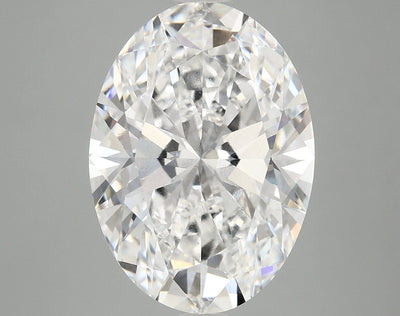
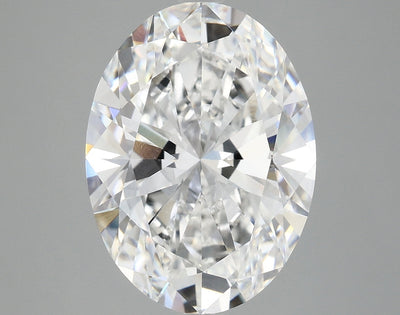
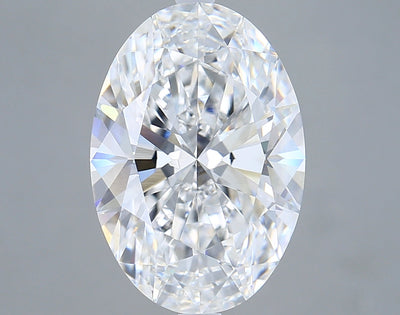
Watch the bow tie, a dark band across the center. Some bow tie is normal and adds contrast, but a deep or very dark one is distracting. Depth at the lower to middle end of the range often helps the stone face up larger. Explore lab diamond ovals and lab diamond pears to compare shapes.
Cushion and radiant
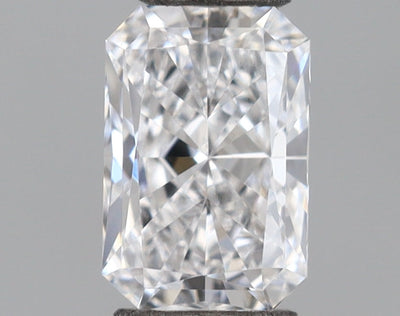
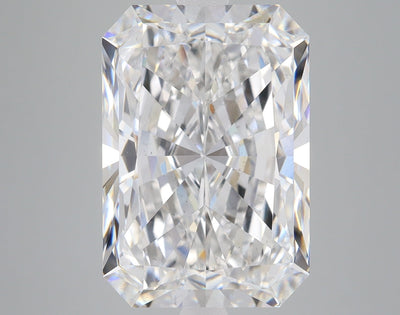
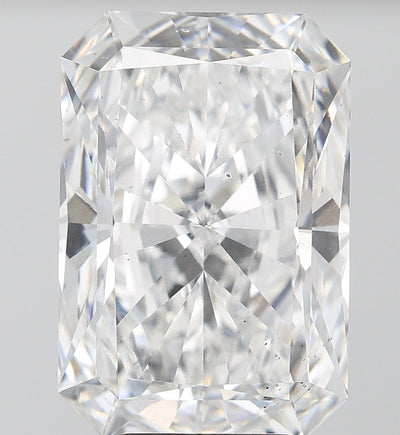
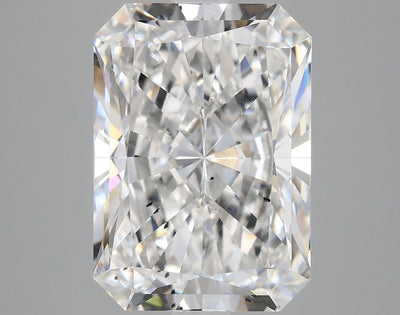
These shapes can be cut deeper while still looking lively, so higher depth figures are normal. Compare face-up measurements carefully, since deep cushions can look small for their weight.
Princess
Princess cuts naturally have large tables and high depth percentages because of their square, pyramid-like profile. Numbers that look high for a round are normal here.
Emerald and Asscher
Step cuts show clarity and a hall-of-mirrors look rather than scattered sparkle. Avoid very shallow stones, which can show a large, glassy window. Browse lab diamond emeralds for examples.
Marquise and heart
Both shapes can show a bow tie like ovals and pears. For hearts, look for a clear cleft and evenly rounded lobes; a very deep heart can look small and dark in the center. For marquises, check that the points are protected by prongs, since a thin girdle at the tips is more exposed to chipping.
Shop the styles in this guide








Common Myths About Table and Depth
- "There is one perfect number": There is a range of excellent combinations. A 56% table can be ideal with one set of angles and a 59% table with another. Look at the whole profile, not a single figure.
- "Shallower is better because it looks bigger": A shallow stone does spread wider, but if it leaks light it will look flat and glassy. A slightly smaller but bright stone looks better on the hand.
- "Depth only matters for rounds": Depth matters for every shape. It is the main reason two ovals of the same weight can look different in size.
- "A good cut grade makes the numbers irrelevant": For rounds, an Excellent cut grade covers a lot. For fancy shapes without a cut grade, the numbers are one of the few objective guides you have.
- "Proportions do not matter for lab grown": Lab grown diamonds follow exactly the same optics as mined diamonds. A poorly cut lab diamond is just as dull as a poorly cut mined one.
Does This Apply to Lab Grown Diamonds and Moissanite?
Yes. Lab grown diamonds are chemically, physically and optically the same as mined diamonds, so the same table and depth guidance applies. IGI and GIA reports for lab grown diamonds list these proportions in the same way.
Moissanite is a different gemstone, not a diamond. It has a higher refractive index (about 2.65 compared with about 2.42 for diamond) and stronger dispersion, so it shows more colorful fire. Moissanite is cut using similar shapes and proportions, and good cutting still matters: a well-proportioned moissanite looks brighter and livelier than a poorly cut one. Moissanite does not come with a diamond grading report, so judge it by the seller's specifications, photos and video.
How to Use These Numbers
- Rounds: start with an Excellent cut grade.
- Check the ranges: confirm table and depth are within the ideal range for the shape.
- Compare measurements: look at the millimeter size, not just carat weight.
- Check angles: for rounds, look at crown and pavilion angles if you want extra confidence.
- Use visuals: for fancy shapes, prioritize photos and videos showing brightness and the bow tie.
- Trust your eyes: if a stone looks bright and lively, small deviations on paper rarely matter.
Well-Cut Stones at Ivevar
We select well-proportioned stones and hand-set them in our Surat workshop. Many of our lab grown diamonds come with IGI reports, so you can check table, depth and angles yourself, and our moissanite is chosen for brightness and fire. Need help comparing two stones? Book a virtual appointment. Every piece ships free worldwide and comes with 30-day easy returns. Browse moissanite earrings.
Shop Fancy Shape Earrings
 Pear Halo StudsShop Now
 Emerald Pear Halo DropsShop Now
 Pear Marquise Floral DropsShop Now
 Round Floral Top DropsShop Now
 Butterfly Drop EarringsShop Now
 Sunburst Statement EarringsShop Now
Swipe to see more → | View all moissanite earrings
Frequently Asked Questions
What is a good table percentage for a round diamond?
About 54% to 60%.
What is a good depth percentage?
About 59% to 62.5% for rounds. Fancy shapes have wider ranges.
Why does a deep diamond look smaller?
More weight sits below the girdle, reducing face-up size.
Do fancy shapes have cut grades?
Many labs grade only polish and symmetry; use proportions and visuals.
Is a bigger table better?
Not always; balance matters for brilliance and fire.
Where do I find table and depth on a report?
On the proportions diagram, usually beside the main grades. Depth may also be calculated from the measurements line.
Can a diamond outside the ideal range still look good?
Yes, especially fancy shapes. The ranges are guides. Bright, even light return in photos or in person matters more than a single number.
Do table and depth matter for small diamonds?
They matter less for tiny accent stones, which are hard to see individually, but they still matter for center stones and larger earring studs.
Is a 63% depth too deep for a round?
It is slightly above the usual ideal range. Such a stone may face up a little smaller, so compare its millimeter diameter with similar stones and check how bright it looks.
Do table and depth affect price?
Indirectly. They influence cut quality and face-up size, which affect how desirable a stone is. Well-proportioned diamonds are usually in higher demand.
Should I choose by numbers or by looks?
Use both. The numbers help you shortlist well-cut stones quickly; photos, video or seeing the stone in person confirm which one you actually like best.
The Bottom Line
Table and depth percentages are shortcuts to a well-cut diamond. Stay within ideal ranges, compare face-up measurements, and trust what your eyes see.
Related Guides
Author Bio
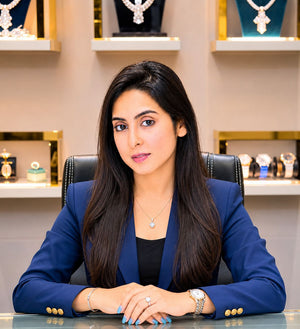
Aumsri Pradhan
Founder, Ivevar Luxury
Aumsri Pradhan is the founder of Ivevar Luxury, a Surat-based fine jewelry brand that designs and handcrafts lab grown diamond and moissanite jewelry in its own workshop. She leads the brand's design and customer experience, from engagement rings and bridal sets to custom pieces made to each client's story. Through the Ivevar blog, she shares practical guidance on lab grown diamonds, moissanite, diamond grading and ring design to help buyers choose with confidence.


