

 Engagement Rings
 Anniversary Rings
 Solitaire Rings
 Halo Rings
 Toi Moi Rings
 Three Stone Rings
 Nature Inspired Rings
 Rose Cut Rings
 Fancy Color Rings
 Antique Cut Rings
 Wedding Rings
 Wedding Band Rings
 Exclusive Lab Grown Diamond Rings
 All Lab Grown Diamond Ring
 Engagement Rings
 Three Stone Rings
 Fancy Color Rings
 Antique Cut Rings
 Daily Wear Rings
 Wedding Band Rings
 Exclusive Moissanite Rings
 Earrings
 Bracelet
 Pendant
 Necklace
 Men's Ring
 Bridal Sets
 Rings
 Earrings
 Tennis chain
 Cuban Chains
 Custom Pendant
 Custom Ring
 Custom Teeth Grillz
 Round
 Oval
 Cushion
 Marquise
 Pear
 Emerald
 Heart
 Princess
 Rose Cut
 Radiant
 Antique Cut
 Brooch
 Cufflink
 Keychain
 Unique Products
 +91-9265051773
 Virtual Appointment
 log in




Short answer: Most jewelry allergies are caused by nickel, a metal found in many base metals and some white gold alloys. The safest choices for sensitive skin are platinum, 18K gold (higher purity means less alloy), nickel-free 14K gold, implant-grade titanium and good-quality 925 sterling silver. Avoid gold-plated base metals and costume jewelry if you react easily. Earrings matter most, since posts sit inside the skin. Diamonds, lab grown diamonds and moissanite do not cause allergies; the metal around them does.
Itchy ears, a red patch under a ring or a rash where a necklace clasp sits are all signs that your skin does not like the metal you are wearing. The good news is that it is usually easy to fix once you know what to look for.
This guide explains what causes jewelry reactions, which metals are safest, how to choose earrings, rings and necklaces for sensitive skin, why some rings leave green marks, and practical habits that keep everyday jewelry comfortable. If you have a severe or ongoing reaction, see a dermatologist; this guide is about choosing and caring for jewelry, not medical treatment.
What Causes Jewelry Allergies?
Most reactions are a type of allergic contact dermatitis. The immune system becomes sensitised to a specific metal, and from then on, skin contact with that metal triggers inflammation where the jewelry touches.
- Nickel: by far the most common culprit. It is used in many base metals, fashion jewelry, belt buckles, watch backs and some white gold alloys.
- Cobalt: sometimes found alongside nickel in alloys and can cause similar reactions.
- Chromium: present in some stainless steels and plated finishes.
- Copper: rarely an allergen, but it is responsible for harmless green marks on the skin.
Sweat makes things worse. Moisture and salt help release tiny amounts of metal from an alloy onto the skin, which is why reactions often flare in hot weather, during exercise or under rings that trap water after hand washing.
Hypoallergenic Is Not a Guarantee
"Hypoallergenic" simply means less likely to cause a reaction. There is no single legal standard for the word on jewelry, so a product labelled hypoallergenic may still contain some nickel. It is always better to know the exact metal and karat than to rely on the label.
Metals for Sensitive Skin
This table ranks common jewelry metals by how likely they are to cause problems for sensitive skin.
| Metal | Allergy risk | Notes |
|---|---|---|
| Platinum (950) | Very low | Naturally hypoallergenic |
| Titanium (implant grade) | Very low | Popular for piercings |
| 18K gold | Low | 75% gold, less alloy |
| 14K yellow or rose gold | Low | Usually nickel-free |
| White gold | Varies | Some alloys contain nickel; rhodium plating helps until it wears |
| 925 sterling silver | Low to medium | Some alloys add other metals |
| Surgical stainless steel | Low to medium | Contains nickel, though usually tightly bound |
| Gold-plated base metal | High | Base metal may contain nickel |
Metals to Avoid If You React Easily
- Unmarked costume jewelry: if the metal is not stated, assume it may contain nickel.
- Gold-plated brass or copper: comfortable at first, but reactions often start once the plating wears.
- Silver-tone fashion metal: often a nickel-containing alloy rather than sterling silver.
- Mixed-material earrings: a gold post on a plated back or hook can still cause trouble.
When in doubt, ask the seller for the exact metal and karat, and look for a purity stamp such as 585, 750 or 925.
Why Higher Karat Gold Is Gentler
Pure gold is very unlikely to cause a reaction. The risk comes from the other metals mixed in to make an alloy. 18K gold is 75% gold, 14K is about 58.3% and 10K is 41.7%, so as the karat drops, the share of alloy metals rises. If you have very sensitive skin, 18K is the safest gold choice. Many people with mild sensitivity wear 14K yellow or rose gold without any trouble, because those alloys typically use silver and copper rather than nickel.
The White Gold Question
White gold is made by alloying gold with white metals. Some white gold uses nickel, while other alloys use palladium instead. Most white gold is then rhodium plated, which acts as a barrier while it is intact. As the rhodium wears, especially on the inside of a ring band, the alloy underneath can touch your skin. If you have a known nickel allergy and want a white metal, ask what the alloy contains, or choose platinum.
Signs of a Metal Allergy
- Redness and itching: a rash exactly where the jewelry touches skin.
- Dry or scaly patches: under a ring, watch or necklace clasp after repeated wear.
- Swelling or weeping: around earring holes, sometimes with crusting.
- Delayed timing: symptoms usually appear within hours to a day or two of wear, not instantly.
- Clear boundaries: the rash matches the shape of the jewelry, which helps distinguish it from other skin problems.
If symptoms are severe or persistent, see a dermatologist, who can confirm nickel allergy with a patch test. Once you know which metal causes the problem, choosing jewelry becomes much simpler.
Allergy or Irritation?
Not every reaction is an allergy. Soap, lotion and water trapped under a ring can irritate skin, especially under wide bands. This often shows up as a red, itchy patch on the palm side of the finger. Cleaning the ring, drying your hands well and taking the ring off for washing usually clears it. If the rash returns even with a spotless ring, metal allergy is more likely.
Why Skin Turns Green
A green or black mark is usually a harmless reaction between skin acids and copper or silver in the alloy, not an allergy. Copper forms green compounds when it meets sweat; silver forms a dark film. Lower-karat gold, sterling silver and plated jewelry are the usual sources.
- Green marks: copper reacting with moisture and skin acids.
- Black or grey marks: silver tarnish, or metal particles rubbed off by makeup containing hard minerals.
- Prevention: keep jewelry clean and dry, take rings off for washing and exercise, and put lotion on before your jewelry.
The mark washes off with soap and water and does not damage the skin.
 Shown: Exquisite Moissanite Cushion Halo Stud Earrings
Choosing Jewelry Piece by Piece
Start with the pieces that touch your skin the most, and work outwards from there.
Earrings for Sensitive Ears
Earrings cause more reactions than any other jewelry, because the post passes through the skin and sits against tissue for hours. If you react to anything, start here.
- Solid gold posts: 14K or 18K posts and backs are the most reliable everyday choice.
- Check the backs: a solid gold post with a plated base-metal back can still cause trouble, so make sure the whole earring is the same metal.
- Studs over hooks: studs touch less skin than long hooks and are easier to keep clean.
- New piercings: use implant-grade titanium or solid gold starter studs until the piercing has healed.
- Clean regularly: wipe posts with a little rubbing alcohol and let them dry before wearing.
Our lab grown diamond earrings and moissanite earrings are crafted in solid gold or 925 sterling silver, so you can choose the metal that suits your skin.
Rings, Necklaces and Bracelets
Each piece of jewelry touches the skin differently, so the advice changes slightly.
| Piece | Main risk | Best choice |
|---|---|---|
| Earrings | Post inside the skin | Solid 14K or 18K gold, titanium |
| Engagement and wedding rings | Worn constantly; traps moisture | 18K or 14K yellow or rose gold, platinum |
| Necklaces | Clasp at the back of the neck | Solid gold chain and clasp |
| Bracelets | Sweat and friction at the wrist | Solid gold; avoid plated cuffs |
| Watches | Metal case backs and buckles | Titanium or a leather strap |
For rings, a comfort-fit band with a rounded inside edge lets air circulate and makes it easier to dry your finger, which reduces irritation under the band.
Tips for Sensitive Skin
- Earring posts: choose 14K or 18K solid gold posts for earrings.
- White metals: ask for nickel-free white gold, or choose yellow or rose gold.
- Rhodium: replate white gold with rhodium when it starts to wear.
- Remove for activities: take jewelry off before swimming, sweating and sleeping.
- Keep it clean: wash jewelry regularly to remove irritants, sweat and soap residue.
- Dry thoroughly: dry hands and rings fully after washing.
- Test at home: a nickel spot test kit can show whether a piece releases nickel.
Tip: Clear nail polish painted on the inside of a ring band or on a clasp can act as a short-term barrier for a favourite piece. It wears off quickly, so treat it as a stopgap, not a long-term fix.
Are Diamonds and Moissanite Hypoallergenic?
Yes. Gemstones themselves do not cause metal allergies; the setting metal is what matters. Diamond is pure carbon, and lab grown diamonds are chemically, physically and optically the same as mined diamonds, so they are equally inert. Moissanite is silicon carbide, a separate gemstone that is also very stable and does not react with skin.
That makes the choice simple: pick the stone you love, then choose a skin-friendly metal for the setting. A lab grown diamond or moissanite in solid 14K or 18K gold is a comfortable, long-lasting combination for most people with sensitive skin.
What About Cleaning Products?
Harsh jewelry cleaners and dips can leave residues that irritate sensitive skin. Warm water, a few drops of mild, fragrance-free soap and a soft brush clean diamonds, moissanite and gold perfectly well. Rinse thoroughly and dry before wearing.
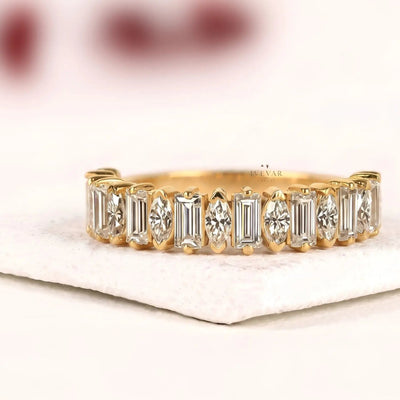
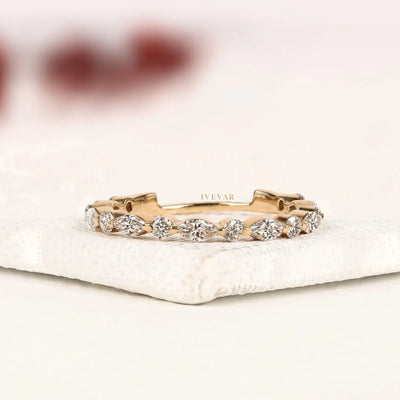
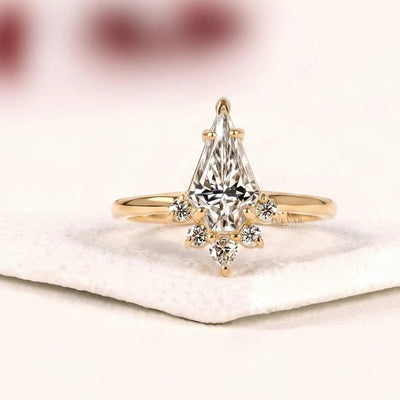
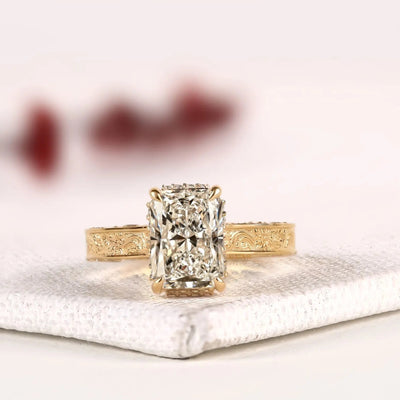
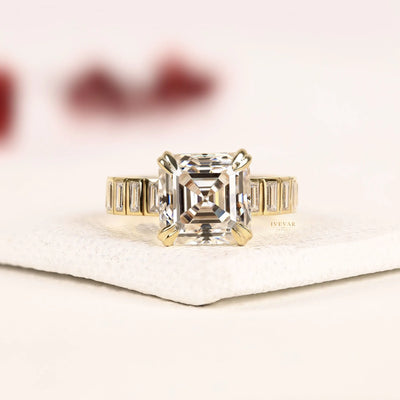
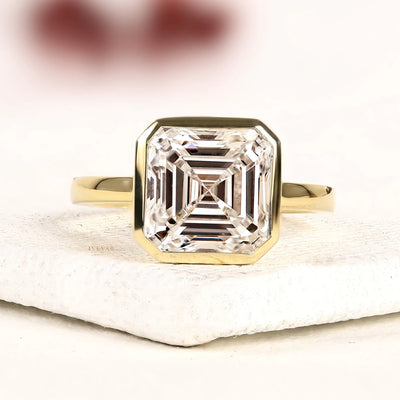
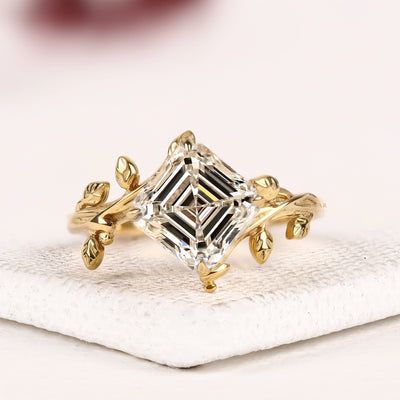
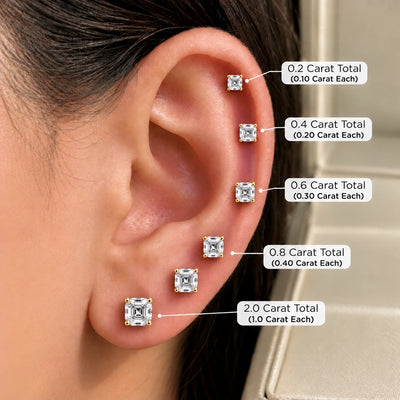
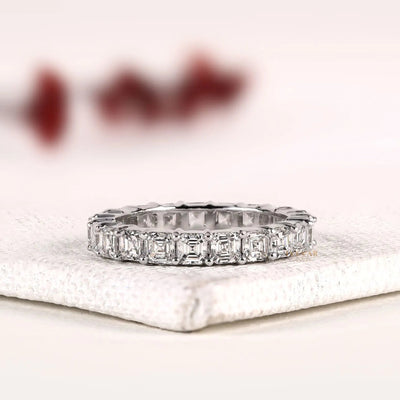
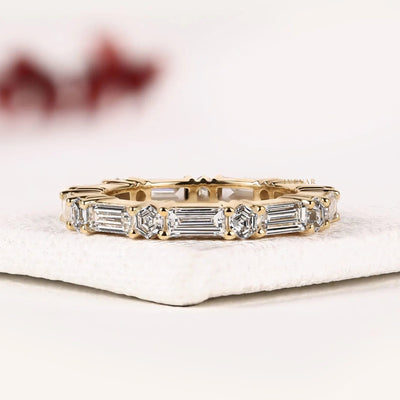
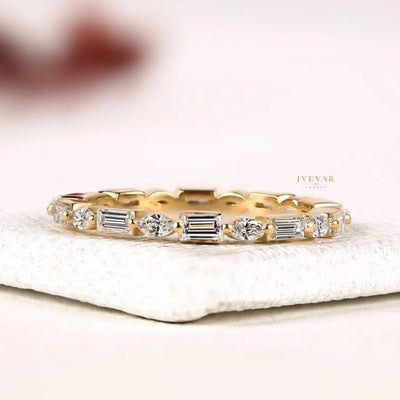
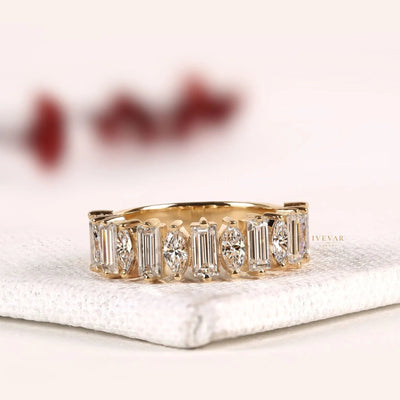
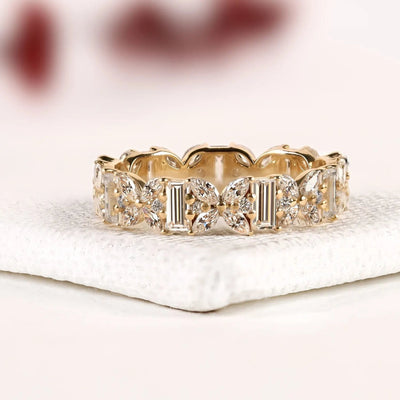
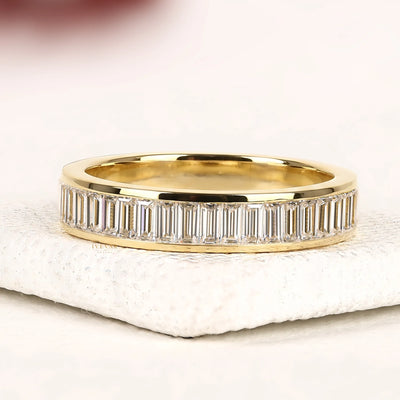
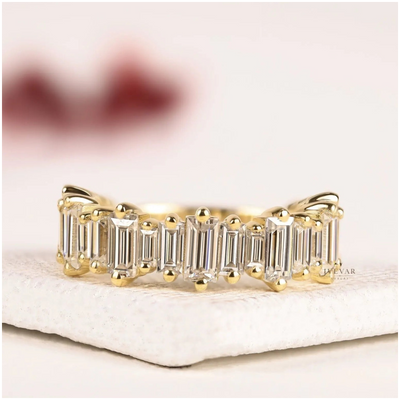
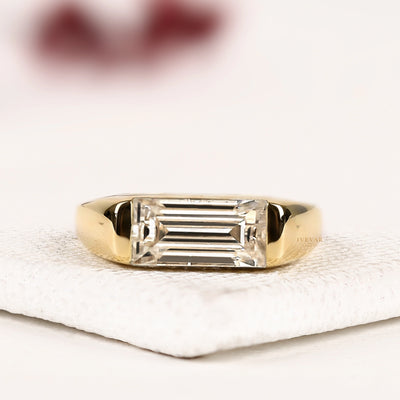
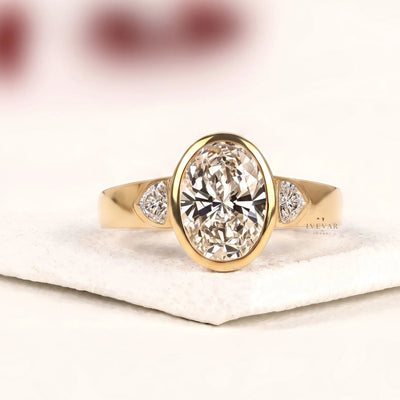
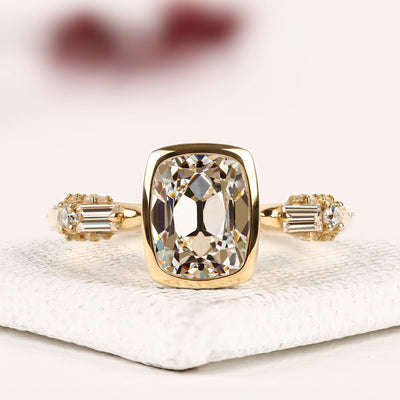
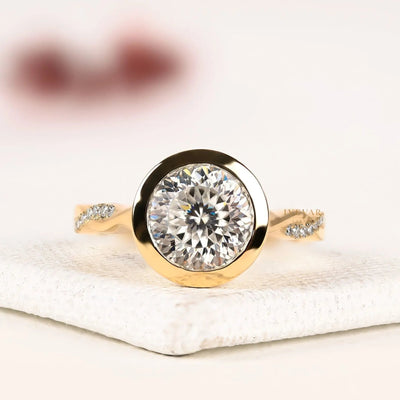
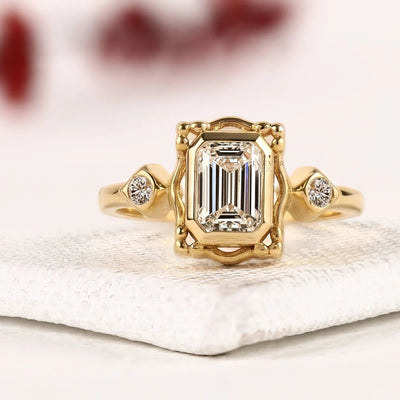
Shop the styles in this guide



Plated and Costume Jewelry
Fashion jewelry is affordable and fun, but it is the most common source of reactions. The base metal under a thin gold or silver plating often contains nickel, and the plating wears away with friction, sweat and water. Once it does, that base metal sits directly on your skin.
If you love statement pieces, keep them for short occasions, avoid them for earrings, and choose solid gold for anything you wear daily. Our guide to solid gold vs vermeil vs gold plated explains how to tell each type apart.
Building a Skin-Friendly Collection on a Budget
You do not need to replace everything at once. A few well-chosen pieces in skin-friendly metal will cover most days, and you can keep fashion pieces for occasional wear.
- Start with earrings: a pair of solid gold studs is the single most useful upgrade, because earrings cause the most reactions.
- Then your daily ring: anything worn all day, every day, should be solid gold or platinum.
- Choose a simple chain: a solid gold chain lets you swap pendants without worrying about the clasp.
- Consider 10K or 14K yellow gold: if 18K is outside your budget, lower karat yellow or rose gold is usually still nickel-free and far gentler than plated metal.
- Keep plated pieces short-term: wear them for an evening, not a working week.
Lab grown diamonds and moissanite help here too. Because they cost less than mined diamonds of a similar look, more of your budget can go towards a solid gold setting.
Choosing Gifts for Someone With Sensitive Skin
Buying jewelry for someone else is tricky when you do not know how their skin reacts. A few safe choices take the guesswork out.
- Choose solid gold: 14K or 18K yellow or rose gold suits the widest range of people.
- Pick pendants and bracelets: they touch less sensitive skin than earrings.
- Ask discreetly: a friend or family member may know whether they react to cheap earrings or watch backs.
- Check the return policy: pierced earrings are often not returnable for hygiene reasons, so be sure before choosing them.
Caring for Jewelry When You Have Sensitive Skin
Good habits matter as much as the metal itself. Even the gentlest gold can irritate skin if it is covered in soap residue or sweat.
- Clean weekly: soak pieces in warm water with fragrance-free soap, brush gently and rinse well.
- Dry completely: moisture under a ring is a common cause of irritation.
- Rotate pieces: giving the skin under a ring or earring a break overnight helps it recover.
- Store separately: keep skin-friendly pieces away from plated jewelry, which can shed metal particles and tarnish.
- Check white gold: look at the inside of white gold rings for yellowish patches where rhodium has worn, and replate when needed.
Skin-Friendly Jewelry at Ivevar
We craft in solid 10K, 14K and 18K gold and 925 sterling silver in our Surat workshop, and can recommend skin-friendly metal options. If you have a known metal sensitivity, mention it when you order or book a virtual appointment, and we will help you choose the right karat and colour. Our custom jewelry service also lets you choose the metal for a design you love.
Every piece ships free worldwide and comes with 30-day easy returns (pierced earrings are returnable only if faulty, for hygiene reasons). Browse moissanite earrings, explore stud earrings for everyday wear, or see our lab grown daily wear rings.
Shop Earrings for Every Day
 Cushion Halo StudsShop Now
 Floral Halo StudsShop Now
 Clover Pave StudsShop Now
 Marquise Four Petal StudsShop Now
 Marquise Bezel ClusterShop Now
 Marquise Leaf ClimbersShop Now
Swipe to see more → | View all moissanite earrings
Frequently Asked Questions
What metal is best for sensitive ears?
Platinum, implant-grade titanium or 18K gold. Solid 14K yellow or rose gold also suits most people with mild sensitivity.
Is 14K gold hypoallergenic?
Yellow and rose 14K are usually nickel-free; ask about white gold, since some white gold alloys contain nickel.
Is sterling silver hypoallergenic?
Good quality 925 silver suits most people. It is usually alloyed with copper, which can cause harmless dark or green marks but rarely an allergy.
Why does my ring leave a green mark?
Copper reacting with skin; it is harmless and not an allergy. Keeping the ring clean and dry reduces it.
Can I become allergic later?
Yes, nickel sensitivity can develop over time, even if you have worn the same jewelry for years without trouble.
Is rhodium-plated white gold safe for nickel allergies?
The rhodium layer helps while it is intact, but it wears over time. If you have a nickel allergy, choose a nickel-free alloy, keep up replating, or choose platinum or yellow gold.
Are lab grown diamonds safe for sensitive skin?
Yes. The diamond itself is inert. Comfort depends entirely on the metal it is set in.
Is surgical steel hypoallergenic?
It contains nickel, but in a form that releases little. Many people tolerate it, but those with strong nickel allergies may still react, so titanium or solid gold is safer.
How do I know if my jewelry contains nickel?
Check the stamp and product description first. A nickel spot test kit can confirm whether a piece releases nickel, and a jeweler can test it for you.
The Bottom Line
Avoid nickel, choose 14K or 18K solid gold for earrings and rings, and keep jewelry clean for comfortable everyday wear. Gemstones like diamond and moissanite are never the problem; the metal is, so choose it carefully.
Related Guides

Author Bio
Aumsri Pradhan
Founder, Ivevar Luxury
Aumsri Pradhan is the founder of Ivevar Luxury, a Surat-based fine jewelry brand that designs and handcrafts lab grown diamond and moissanite jewelry in its own workshop. She leads the brand's design and customer experience, from engagement rings and bridal sets to custom pieces made to each client's story. Through the Ivevar blog, she shares practical guidance on lab grown diamonds, moissanite, diamond grading and ring design to help buyers choose with confidence.


