

 Engagement Rings
 Anniversary Rings
 Solitaire Rings
 Halo Rings
 Toi Moi Rings
 Three Stone Rings
 Nature Inspired Rings
 Rose Cut Rings
 Fancy Color Rings
 Antique Cut Rings
 Wedding Rings
 Wedding Band Rings
 Exclusive Lab Grown Diamond Rings
 All Lab Grown Diamond Ring
 Engagement Rings
 Three Stone Rings
 Fancy Color Rings
 Antique Cut Rings
 Daily Wear Rings
 Wedding Band Rings
 Exclusive Moissanite Rings
 Earrings
 Bracelet
 Pendant
 Necklace
 Men's Ring
 Bridal Sets
 Rings
 Earrings
 Tennis chain
 Cuban Chains
 Custom Pendant
 Custom Ring
 Custom Teeth Grillz
 Round
 Oval
 Cushion
 Marquise
 Pear
 Emerald
 Heart
 Princess
 Rose Cut
 Radiant
 Antique Cut
 Brooch
 Cufflink
 Keychain
 Unique Products
 +91-9265051773
 Virtual Appointment
 log in




Short answer: Jewelry stamps (hallmarks) are tiny marks, usually inside a ring band or on a clasp, that show the metal's purity. Common gold stamps are 10K or 417, 14K or 585 and 18K or 750; 925 means sterling silver; 950 PT or PLAT means platinum. Letters like GP, GEP or HGE mean gold plated, and GF means gold filled. Many pieces also carry a maker's mark and sometimes a stone mark such as "LGD" for lab grown diamond.
Stamps tell you what your jewelry is made of. They are the quickest way to check whether a ring is solid gold or plated, whether a chain is sterling silver, and sometimes who made a piece and where it was tested. Once you know the common codes, you can read most jewelry in seconds.
This guide covers every common purity mark for gold, silver and platinum, explains karat stamps versus number stamps, shows where to find marks on each type of jewelry, and explains how official hallmarking works in India, the UK and the US. It also covers stone marks, laser inscriptions, fake stamps and why some genuine pieces carry no stamp at all.
Stamps vs Hallmarks: What Is the Difference?
People often use the two words interchangeably, but they are not quite the same thing.
- Quality or purity stamp: a mark applied by the maker stating the metal's purity, such as 14K or 925.
- Hallmark: in countries with official assaying, a set of marks applied after an independent assay office has tested the metal and confirmed the purity.
- Maker's mark: a logo, initials or trademark identifying the manufacturer or brand.
In everyday shopping, "hallmark" usually just means any mark that tells you what the metal is. The important point is that an independently tested hallmark carries more weight than a maker's own stamp.
Common Jewelry Stamps
These are the marks you will see most often on fine jewelry around the world.
| Stamp | Meaning | Purity |
|---|---|---|
| 10K / 417 | 10 karat gold | 41.7% |
| 14K / 585 | 14 karat gold | 58.5% (58.3% by karat math) |
| 18K / 750 | 18 karat gold | 75% |
| 22K / 916 | 22 karat gold | 91.6% |
| 925 / STER | Sterling silver | 92.5% |
| 950 PT / PLAT | Platinum | 95% |
| GF | Gold filled | Thick bonded gold layer |
| GP / GEP / HGE | Gold plated / electroplated / heavy gold electroplate | Thin gold layer |
| Vermeil | Gold over sterling silver | Silver base |
Karat Stamps vs Number Stamps
Gold purity can be shown in two ways. Karat stamps (10K, 14K, 18K) count parts of gold out of 24. Number stamps, also called millesimal fineness, show parts of gold per 1,000. Both mean the same thing; the number system is simply more precise and is used widely in Europe and India.
- 375: 9 karat gold, 37.5% gold, common in the UK.
- 417: 10 karat gold.
- 585: 14 karat gold. It is slightly above 14/24 (58.3%) so the piece safely meets the 14K standard.
- 750: 18 karat gold.
- 916: 22 karat gold, very common in Indian jewelry.
- 999: 24 karat, essentially pure gold, used mainly for coins and bars.
Silver and Platinum Numbers
| Mark | Metal | What it tells you |
|---|---|---|
| 800 | Silver | 80% silver, seen on older European pieces |
| 925 | Sterling silver | The standard for fine silver jewelry |
| 999 | Fine silver | Nearly pure; soft and used for bullion |
| 900 PT | Platinum | 90% platinum |
| 950 PT / PLAT | Platinum | 95% platinum, the most common jewelry grade |
| 950 PD | Palladium | 95% palladium |
Stamps on White, Rose and Two-Tone Gold
Colour does not change the purity mark. A 14K yellow, white or rose gold ring all carry the same 14K or 585 stamp, because the gold content is the same; only the alloy metals differ. Some makers add letters such as "W" or "R" to indicate colour, but this is not a universal standard.
- White gold: stamped by karat like any gold, usually with a rhodium finish that has no separate mark.
- Two-tone pieces: may carry one stamp for the gold karat and occasionally a second mark if another metal, such as platinum, is used for the head.
- Silver with gold plating: stamped 925, since the base metal is sterling silver, even though the surface looks like gold.
Tip: A gold-coloured piece stamped only 925 is sterling silver with a gold finish, not solid gold. That is a perfectly good product, but price it and care for it as silver.
Where to Find Stamps
- Rings: inside the band, usually at the bottom of the shank.
- Necklaces and bracelets: on or near the clasp, or on a small tag attached to the end of the chain.
- Earrings: on the post, the back or the hinge of a hoop.
- Pendants: on the bail (the loop the chain passes through) or the back.
- Cufflinks and brooches: on the back or the pin mechanism.
- Magnification: use a jeweler's loupe (10x) to read tiny marks.
Tip: Stamps can be hard to read on worn pieces. Clean the area with a soft brush and warm soapy water, dry it, then tilt the piece under a bright light while looking through a loupe. Raking light makes faint marks stand out.
Other Marks You May See
- Maker's mark: the brand or workshop's logo.
- Carat weight: e.g., "1.00CT" for the total stone weight. CTW or TW means total weight of all stones combined.
- LGD or LAB: lab grown diamond.
- MOI: moissanite.
- Laser inscription: certificate number on the diamond's girdle.
- P after the karat: for example "14KP", meaning "plumb", a claim that the gold meets its karat exactly rather than within a tolerance.
- Country or assay marks: symbols applied by official testing offices in countries with hallmarking laws.
Stone Marks and Carat Weight
Carat (with a C) measures gemstone weight; karat (with a K) measures gold purity. You might see both on one ring: "14K 1.50CTW", for example, means 14 karat gold set with stones totalling 1.5 carats. Remember that total weight includes every stone, so a ring stamped 1.50CTW with a halo has a smaller centre stone than a solitaire with a 1.50 carat centre.
Reading Laser Inscriptions on Diamonds
Many certified diamonds carry a microscopic laser inscription on the girdle, the thin outer edge of the stone. It is invisible to the naked eye and does not affect beauty or durability.
- Report number: usually matches the grading report from a lab such as IGI or GIA, so you can confirm the stone matches its certificate.
- Lab grown note: lab grown diamonds are often inscribed with a note or prefix identifying them as laboratory grown.
- How to see it: a jeweler can show you the inscription under magnification, usually 10x or higher.
Lab grown diamonds are chemically, physically and optically the same as mined diamonds, so the inscription and grading report are how origin is disclosed. Many of our lab grown diamonds come with IGI certificates for exactly this reason. Browse lab grown diamond engagement rings to see certified options.
 Shown: Curved Halo Moissanite Wishbone Wedding Band
How Official Hallmarking Works Around the World
Different countries regulate jewelry marks in different ways. Knowing the system where you buy helps you judge how much a mark tells you.
India: BIS Hallmarking
In India, gold jewelry is hallmarked under the Bureau of Indian Standards (BIS). A BIS hallmark includes the BIS logo, the purity grade (for example 22K916, 18K750 or 14K585) and a six-character alphanumeric HUID code unique to that piece. The HUID links the item to its hallmarking record, which makes it much harder to pass off a falsely stamped piece.
If you are buying gold jewelry in India, check that the purity grade in the hallmark matches what you are paying for. An 18K piece should read 18K750, and a 14K piece 14K585. Ask the jeweler to show you the HUID on the piece and on the invoice, and keep the bill safe, since it records both the purity and the code. For lab grown diamond and moissanite jewelry, 14K and 18K are the usual grades, because 22K is too soft to hold stones securely.
United Kingdom: Assay Office Hallmarks
In the UK, precious metal items above certain weights must be hallmarked by an independent assay office. A full UK hallmark includes a sponsor's mark (who submitted the item), a millesimal fineness mark (such as 750), and the assay office mark. Traditional symbols and date letters are optional extras that collectors value.
United States: Maker-Applied Quality Marks
The US does not have government assay offices for jewelry. Makers apply their own quality marks, and a purity stamp such as 14K should be accompanied by the maker's registered trademark so the stamp can be traced back to whoever is responsible for it. That is one reason a stamp alone, without a maker's mark or a trusted seller, is weaker evidence in the US.
Can Stamps Be Faked?
Unfortunately, yes. A stamp alone is not proof. Anyone with a stamping tool can mark a base metal ring "14K". Buy from reputable sellers, keep receipts and certificates, and have a jeweler test metal if you are unsure (using acid tests or an XRF analyzer).
- Too-low price: a "solid gold" piece priced like costume jewelry is the most common warning sign.
- Uneven or blurry marks: genuine stamps are usually crisp and neatly placed.
- Colour at the edges: a different metal showing through at worn edges suggests plating.
- Magnet test: gold, silver and platinum are not magnetic. A strong pull suggests a base metal, though a non-magnetic result does not prove anything by itself.
- Missing maker's mark: not always a problem, but worth questioning on a new piece.
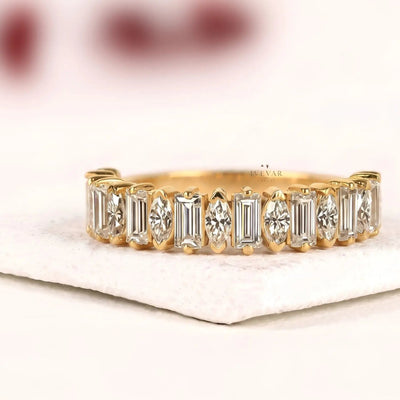
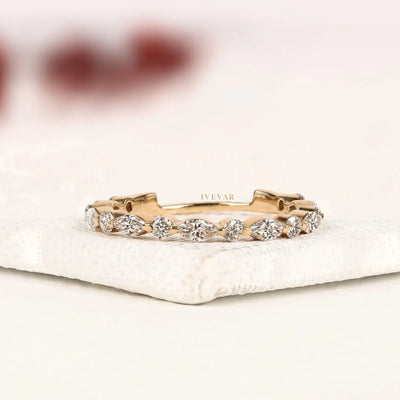
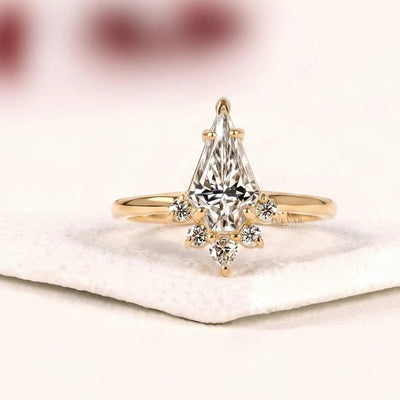
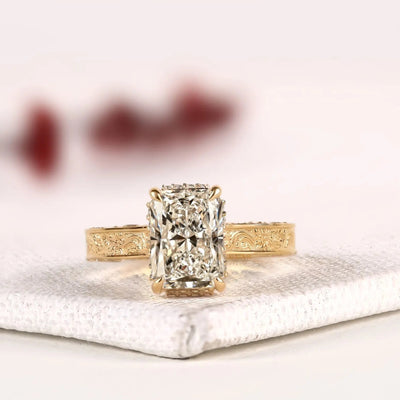
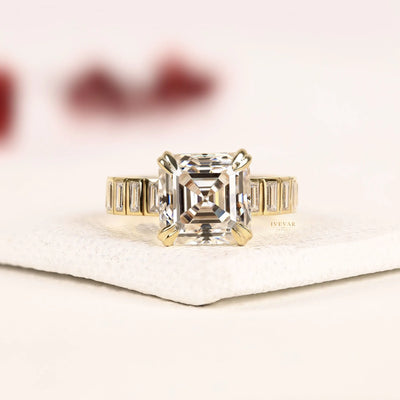
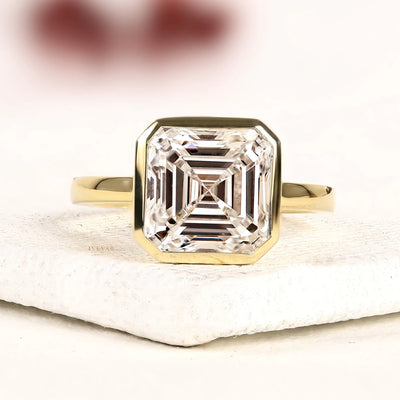
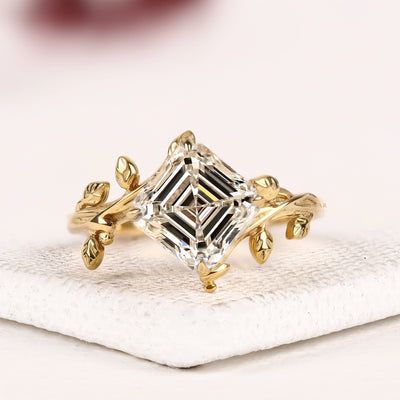
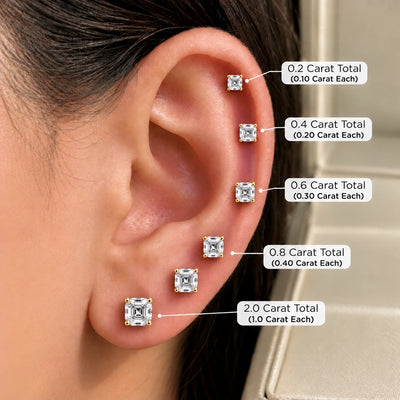
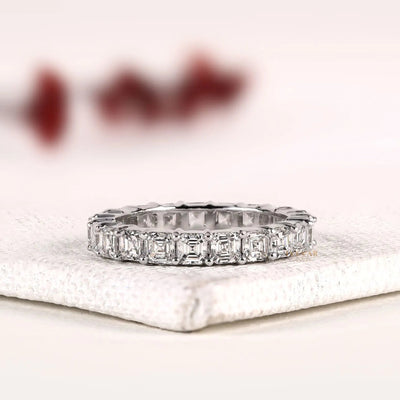
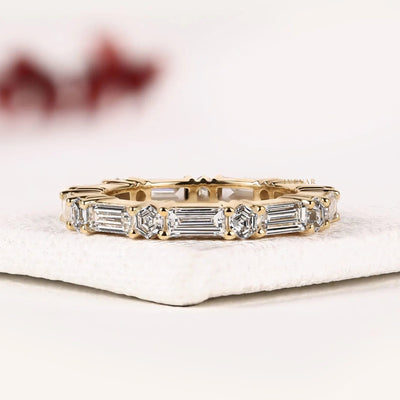
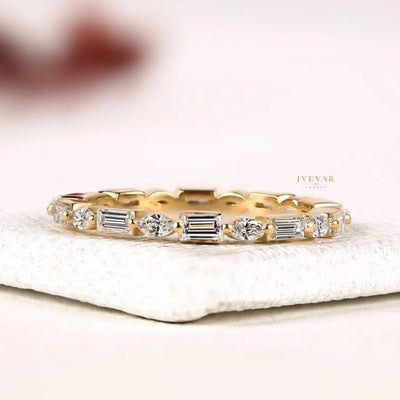
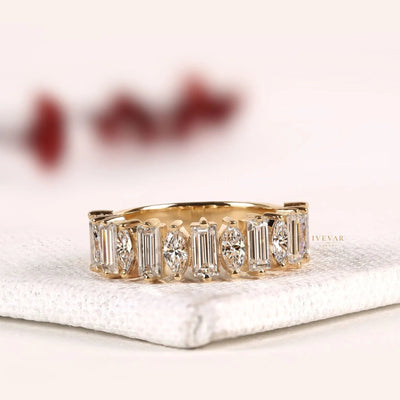
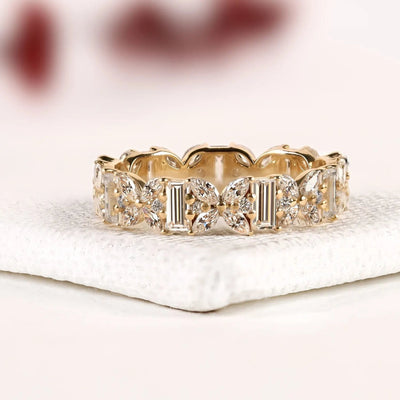
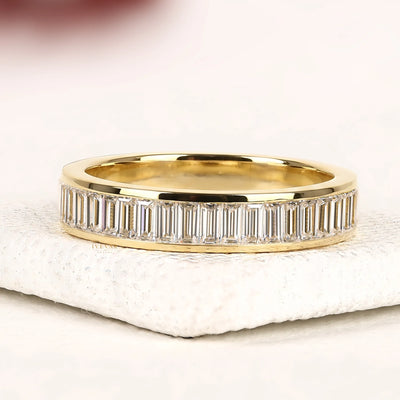
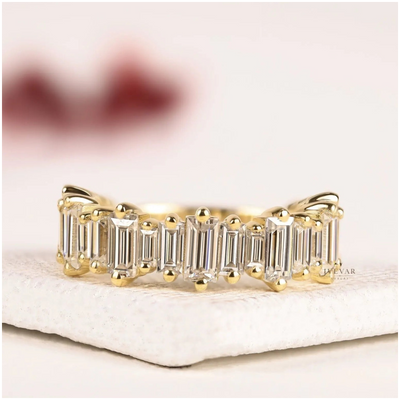
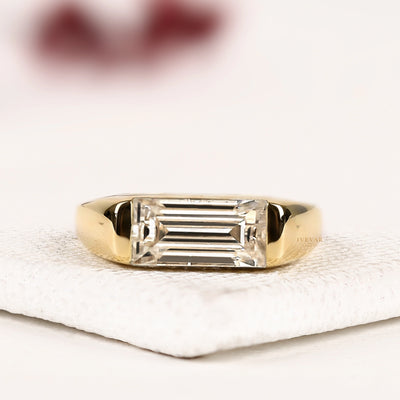
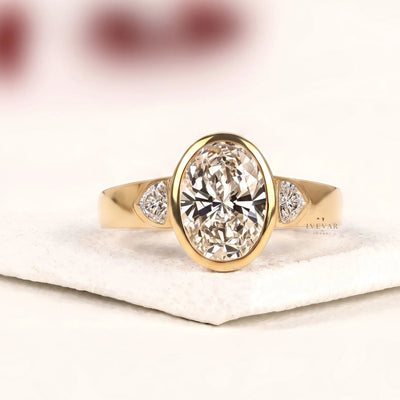
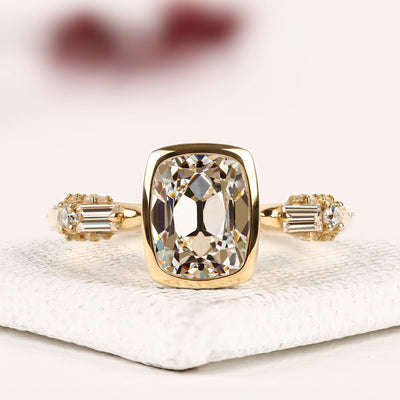
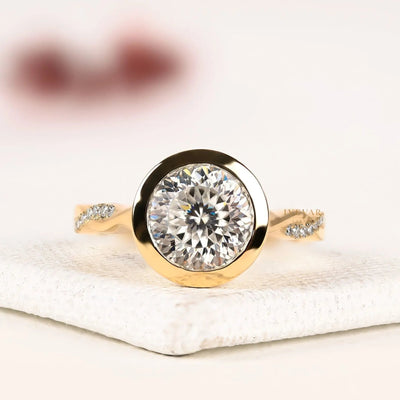
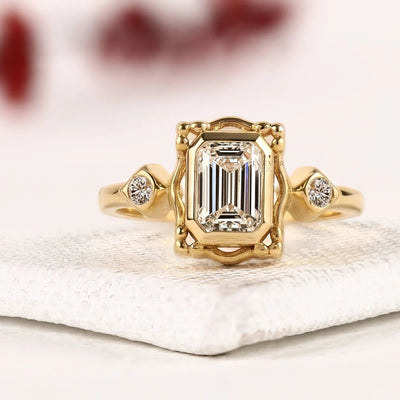
Shop the styles in this guide



Why Some Pieces Have No Stamp
- Size: very small or delicate items may lack space.
- Resizing: sizing work may have removed an old stamp from the bottom of a band.
- Age: antique or handmade pieces sometimes were never stamped.
- Wear: decades of polishing can erase shallow marks.
- Design: some makers record metal details on the invoice or certificate instead of marking very thin pieces.
An unmarked piece is not automatically fake, and a marked piece is not automatically genuine. When in doubt, a professional test settles the question.
How to Check a Piece Step by Step
Whether you are sorting an inherited jewelry box or checking a new purchase, this routine takes a few minutes and answers most questions.
- Clean the piece: remove dirt and lotion so marks are visible.
- Find the stamps: check inside the band, the clasp, the post or the bail, using a 10x loupe and good light.
- Read the purity mark: match it against the tables above, and note any letters such as GP, GF or HGE that indicate a coating.
- Look for a maker's mark: a logo or initials beside the purity mark makes the stamp more trustworthy.
- Check for wear: look at edges and high points for a different coloured metal showing through.
- Compare with paperwork: match the stamp and any diamond inscription to your invoice and grading report.
- Test if unsure: ask a jeweler to confirm the metal with acid testing or an XRF analyzer.
Why Stamps Matter for Insurance and Resale
Purity marks are not just for curiosity. They affect what your jewelry is worth on paper and how easily you can prove it.
- Insurance: insurers and appraisers rely on metal purity, stone details and certificates to value a piece. Clear stamps and matching paperwork make appraisals straightforward.
- Resale and exchange: buyers of precious metal pay according to verified purity, so a clear hallmark makes any future sale or exchange simpler.
- Repairs: a jeweler needs to know the exact karat to match solder and replacement parts so repairs blend in.
- Heirlooms: clear marks help future generations understand what they have inherited.
Keep invoices, grading reports and photos of each piece together, and note the stamps you can see. It takes minutes and saves real trouble later.
Adding Your Own Engraving
The inside of a ring band is also where personal engravings go: initials, a date, coordinates or a short phrase. Engraving is usually placed beside the purity stamp rather than over it, so the metal mark stays readable. If you are ordering a wedding band, plan the engraving with the stamp position in mind. See our wedding band engraving ideas for inspiration.
Stamped Jewelry at Ivevar
We craft in solid 10K, 14K and 18K gold and 925 sterling silver in our Surat workshop, and clearly describe every material on each product page. Our lab grown diamonds, many with IGI certificates, and our moissanite stones are set in genuine precious metal, and our custom jewelry service and virtual appointments let you confirm metal, karat and engraving details before your piece is made.
Every piece ships free worldwide and comes with 30-day easy returns. Browse moissanite wedding bands, lab grown diamond wedding bands or moissanite engagement rings.
Shop Moissanite Bands
 Curved Wishbone BandShop Now
 Bezel Half Eternity BandShop Now
 Heart Bezel Eternity BandShop Now
 Cluster Eternity BandShop Now
 Double Band Pear HaloShop Now
 Double Band Cushion RingShop Now
Swipe to see more → | View moissanite wedding bands
Frequently Asked Questions
What does 585 mean on jewelry?
14K gold (58.5% pure gold). It is the most common gold mark on European and Indian 14K jewelry.
What does 925 mean?
Sterling silver, 92.5% pure silver, with the rest usually copper for strength.
What does 750 mean?
18K gold, 75% pure gold.
What does 916 mean on gold?
22K gold, about 91.6% pure gold. It is widely used in traditional Indian jewelry.
What does GP mean?
Gold plated: a thin gold layer over a base metal, not solid gold.
What does CTW mean on a ring?
Carat total weight: the combined weight of every stone in the piece, not just the centre stone.
Is a stamp proof of authenticity?
Not always; buy from trusted sellers and test if unsure. An official hallmark from an independent assay system is stronger evidence than a maker's stamp alone.
What does 375 mean on gold?
9 karat gold, 37.5% pure gold. It is common in the UK but less usual elsewhere, where 10K is typically the lowest karat sold as solid gold.
Is moissanite marked differently from diamond?
Some makers stamp "MOI" or a similar code inside the band to show the stones are moissanite. Moissanite is a separate gemstone, not a type of diamond, so honest marking and product descriptions keep that clear.
How do I check a BIS hallmark?
Look for the BIS logo, the purity grade such as 18K750 and the six-character HUID code. The HUID can be verified against the official BIS records, which confirms the piece was hallmarked.
The Bottom Line
Stamps reveal metal purity at a glance. Learn the common marks, check them with a loupe, and buy from sellers who describe materials clearly.
Related Guides

Author Bio
Aumsri Pradhan
Founder, Ivevar Luxury
Aumsri Pradhan is the founder of Ivevar Luxury, a Surat-based fine jewelry brand that designs and handcrafts lab grown diamond and moissanite jewelry in its own workshop. She leads the brand's design and customer experience, from engagement rings and bridal sets to custom pieces made to each client's story. Through the Ivevar blog, she shares practical guidance on lab grown diamonds, moissanite, diamond grading and ring design to help buyers choose with confidence.


