

 Engagement Rings
 Anniversary Rings
 Solitaire Rings
 Halo Rings
 Toi Moi Rings
 Three Stone Rings
 Nature Inspired Rings
 Rose Cut Rings
 Fancy Color Rings
 Antique Cut Rings
 Wedding Rings
 Wedding Band Rings
 Exclusive Lab Grown Diamond Rings
 All Lab Grown Diamond Ring
 Engagement Rings
 Three Stone Rings
 Fancy Color Rings
 Antique Cut Rings
 Daily Wear Rings
 Wedding Band Rings
 Exclusive Moissanite Rings
 Earrings
 Bracelet
 Pendant
 Necklace
 Men's Ring
 Bridal Sets
 Rings
 Earrings
 Tennis chain
 Cuban Chains
 Custom Pendant
 Custom Ring
 Custom Teeth Grillz
 Round
 Oval
 Cushion
 Marquise
 Pear
 Emerald
 Heart
 Princess
 Rose Cut
 Radiant
 Antique Cut
 Brooch
 Cufflink
 Keychain
 Unique Products
 +91-9265051773
 Virtual Appointment
 log in




Short answer: The Mohs hardness scale ranks minerals from 1 (talc, softest) to 10 (diamond, hardest) by their resistance to scratching. For jewelry you wear every day, especially rings, choose stones rated 8 or higher: diamond (10), moissanite (about 9.25), sapphire and ruby (9) and topaz (8). Softer stones such as opal, pearl and emerald need more careful wear. Hardness is not the same as toughness, which measures resistance to chipping, so the setting you choose matters as much as the number.
Hardness is one of the simplest ways to predict how a gemstone will look after years of wear. A hard stone keeps its crisp facet edges and mirror polish; a soft one slowly picks up fine scratches that turn its surface hazy. If you are choosing an engagement ring, a daily-wear band or a gift that should last, understanding the Mohs scale helps you pick a stone that suits the way you actually live.
This guide explains how the scale works, why the number 7 is the real dividing line for jewelry, how hardness differs from toughness and stability, and which stones and metals fit each type of piece. It also covers practical care habits that keep even the hardest gems looking their best.
What Is the Mohs Hardness Scale?
The Mohs scale was created by the German mineralogist Friedrich Mohs in the early nineteenth century as a quick field test for identifying minerals. It is a relative scale: each mineral can scratch the ones below it and can be scratched by the ones above it. It does not measure how much harder one mineral is than another, only the order.
The ten reference minerals are:
- Talc: so soft you can mark it with a fingernail.
- Gypsum: also scratched by a fingernail.
- Calcite: scratched by a copper coin.
- Fluorite: scratched easily by a steel knife.
- Apatite: scratched by a steel knife with some effort.
- Orthoclase feldspar: scratches ordinary window glass.
- Quartz: scratches glass and steel easily.
- Topaz: scratches quartz.
- Corundum: the mineral family of sapphire and ruby.
- Diamond: the hardest natural material; only another diamond can scratch it.
Every gemstone is placed on the scale by comparison with these minerals. Some gems have a range rather than a single number, because natural variation in composition or the direction of the test can change the result slightly.
The Scale Is Not Linear
The gaps between numbers are uneven. The step from corundum (9) to diamond (10) is far larger than the step from talc (1) to gypsum (2). On absolute hardness tests, diamond is several times harder than sapphire, even though the numbers are only one apart. In practice this means a stone at 9.25, such as moissanite, sits much closer to sapphire than to diamond in true hardness, but it still performs extremely well in daily wear.
Mohs Hardness of Popular Gemstones
The table below lists the stones and metals you are most likely to see in fine jewelry, with a practical verdict on whether each one suits an everyday ring.
| Gem or metal | Mohs hardness | Everyday ring? |
|---|---|---|
| Diamond (natural or lab grown) | 10 | Excellent |
| Moissanite | About 9.25 | Excellent |
| Sapphire and ruby | 9 | Excellent |
| Cubic zirconia | About 8 to 8.5 | Fair; scratches over time |
| Topaz and spinel | 8 | Good |
| Emerald, aquamarine | 7.5 to 8 | Good with care |
| Quartz (amethyst, citrine) | 7 | Fair |
| Garnet | About 6.5 to 7.5 | Fair |
| Tanzanite | 6 to 7 | Occasional wear |
| Opal | 5.5 to 6.5 | Occasional wear |
| Pearl | 2.5 to 4.5 | Special occasions |
| Gold and silver | 2.5 to 3 | Soft; alloyed for strength |
| Platinum | About 4 to 4.5 | Durable, dense metal |
Lab grown diamonds sit at exactly the same 10 as mined diamonds, because they are the same material: pure crystallized carbon with the same structure. A lab grown diamond grown by CVD or HPHT is chemically, physically and optically identical to a mined one, so its scratch resistance is identical too.
Why 7 Matters
Household dust contains tiny particles of quartz, which rates 7 on the Mohs scale. Every time dust settles on a ring and you wipe it, rub your hands together or brush against a surface, those particles act like very fine sandpaper.
- Stones below 7: are slowly scratched by everyday dust, so their polish dulls and facet edges soften over months and years.
- Stones at 7: are roughly matched with dust, so they wear gradually and benefit from periodic repolishing.
- Stones at 8 and above: resist dust scratches, so they stay crisp and bright for decades with simple cleaning.
This is why jewelers often recommend 8 as the practical minimum for a ring worn every day, and why diamond, moissanite and sapphire dominate engagement rings. Earrings and pendants avoid most of this contact, so softer stones last much longer in those pieces.
Tip: Wipe jewelry with a soft, damp cloth rather than a dry tissue. A dry wipe drags dust across the surface, which is exactly how softer stones get scratched.
Hardness vs Toughness vs Stability
Gemologists judge durability on three separate properties. A stone can score well on one and poorly on another, so it helps to look at all three before choosing.
- Hardness: resistance to scratching. This is what the Mohs scale measures.
- Toughness: resistance to chipping and breaking. Diamond is hard but has cleavage planes, so it can chip if struck hard at a weak angle.
- Stability: resistance to heat, light, chemicals and changes in humidity. Opal and pearl, for example, are sensitive to heat and chemicals.
Why Toughness Surprises People
Many buyers assume the hardest stone is also the strongest. It is not that simple. Jade, for instance, is only around 6 to 7 on the Mohs scale, yet it is famously tough because its interlocking fibrous structure resists breaking. Diamond, by contrast, can split along its cleavage planes if it takes a sharp knock on a thin edge such as a marquise or pear point.
Emerald is a good example of a stone that is reasonably hard but not very tough. Most emeralds contain natural inclusions, and many are treated with oil to improve clarity. Those inclusions make the stone more brittle, so emerald rings are best set in protective styles and worn with care.
Where Moissanite Fits
Moissanite combines high hardness (about 9.25) with good toughness and excellent stability, which is why it is such a practical choice for everyday rings. It is a separate gemstone made of silicon carbide, not a type of diamond, and it has its own optical character: a refractive index of about 2.65 compared with diamond's 2.42, which gives it strong fiery flashes.
| Stone | Hardness | Toughness | Stability |
|---|---|---|---|
| Diamond | Highest (10) | Good; can cleave | Excellent |
| Moissanite | Very high (9.25) | Good | Excellent |
| Sapphire, ruby | Very high (9) | Excellent | Excellent |
| Emerald | High (7.5 to 8) | Fair to poor | Fair; avoid heat and solvents |
| Opal | Moderate (5.5 to 6.5) | Fair to poor | Poor; sensitive to heat and dryness |
| Pearl | Low (2.5 to 4.5) | Fair | Poor; harmed by acids and cosmetics |
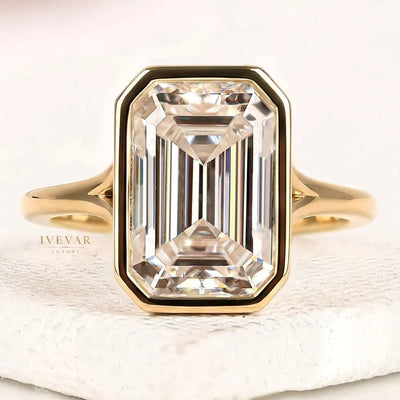
 Shown: Asscher Cut Moissanite Infinity Twist Engagement Ring
Choosing Stones by Use
Where a piece sits on your body decides how much contact it gets. Match the stone's durability to that exposure.
- Engagement and daily rings: diamond, moissanite, sapphire and ruby. Hands touch everything, so rings need the highest hardness and good toughness.
- Wedding and eternity bands: the same hard stones, ideally in channel or low pave settings, because bands rub against the engagement ring and other surfaces.
- Earrings and pendants: almost any gem, since they face less impact and little abrasion.
- Bracelets: harder stones, since wrists bump desks, door frames and car doors often.
- Men's rings and hip hop pieces: hard stones in sturdy settings, because they often see heavier use.
If you love a softer stone, you do not have to give it up. Wear it as a pendant or earrings, or choose a ring style that shields it, and save the most demanding daily role for a harder gem. For a ring you plan to wear every day without thinking about it, browse our lab grown daily wear rings or moissanite daily wear rings.
How Settings Protect Softer or Brittle Stones
The setting can make a big difference to how a stone survives daily life. A hard stone in an exposed setting can still chip, while a softer stone in a protective setting can last for years.
- Bezel settings: a rim of metal wraps the stone's edge, guarding the girdle against knocks. Ideal for active lifestyles and for brittle stones.
- Halo settings: a ring of small stones around the centre adds a buffer, though the small stones themselves need checking.
- Prongs on points: pear, marquise and princess shapes have sharp corners that can chip; V-prongs or claw tips over the points protect them.
- Low profiles: a stone that sits closer to the finger catches less on clothing and surfaces than a tall cathedral setting.
- Six prongs instead of four: extra prongs add security and spread the load if one bends.
Even diamond benefits from these choices. A diamond will not scratch from daily wear, but a sharp point in an open setting can still chip after a hard knock.
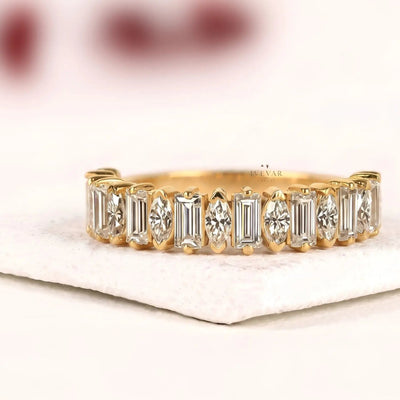
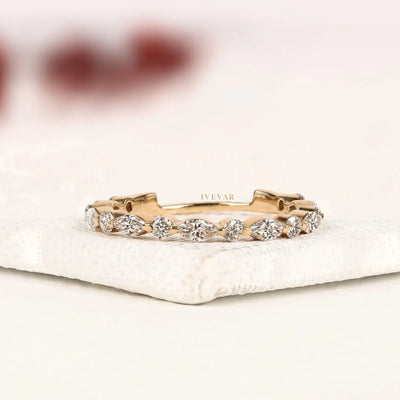
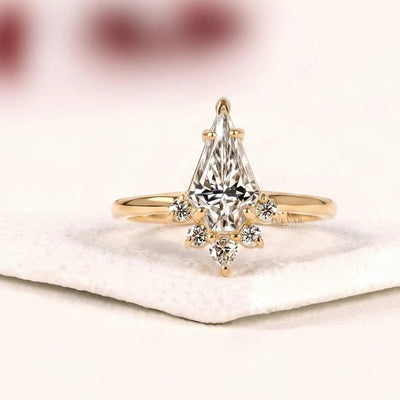
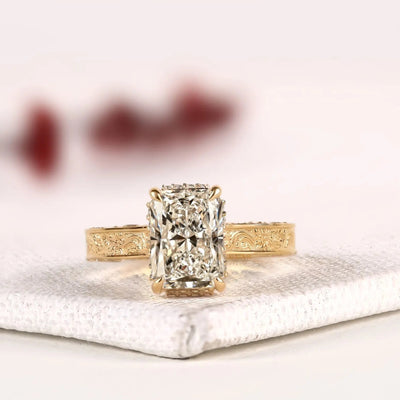
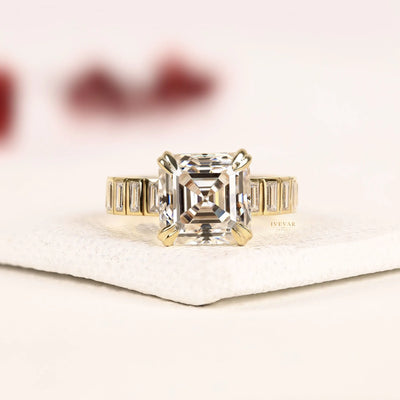
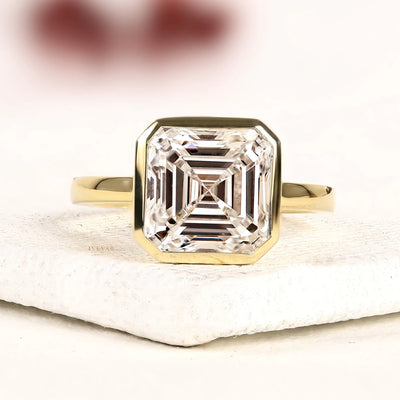
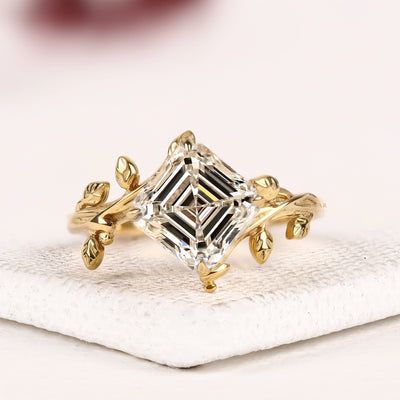
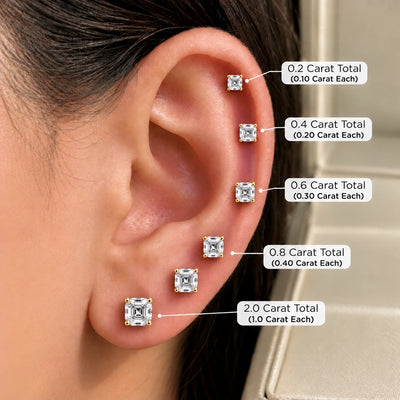
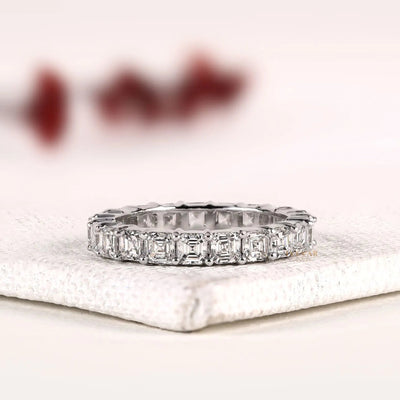
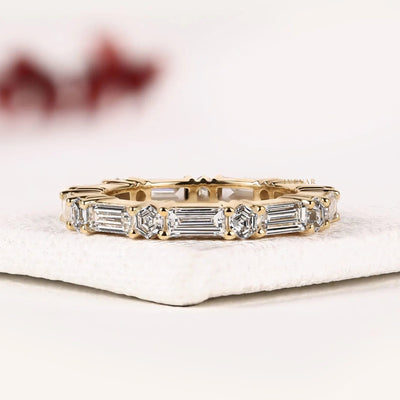
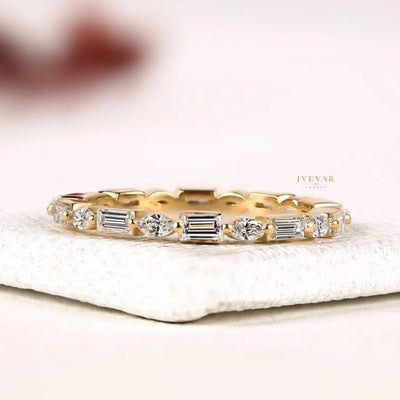
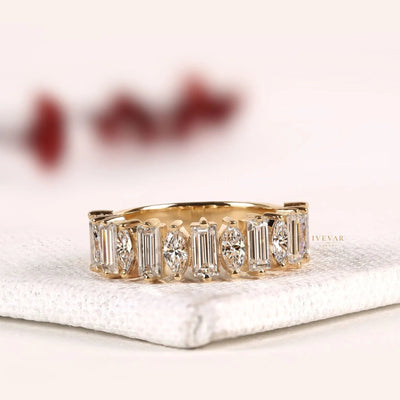
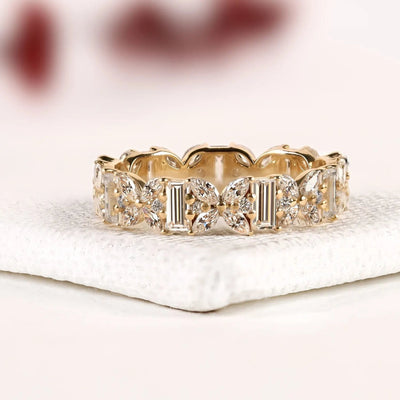
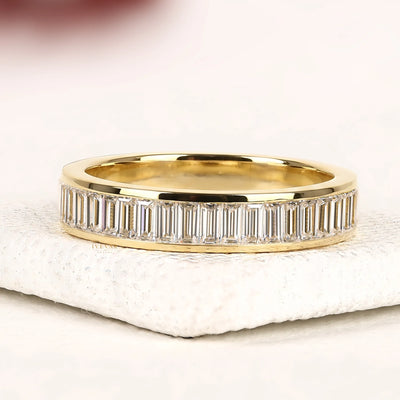
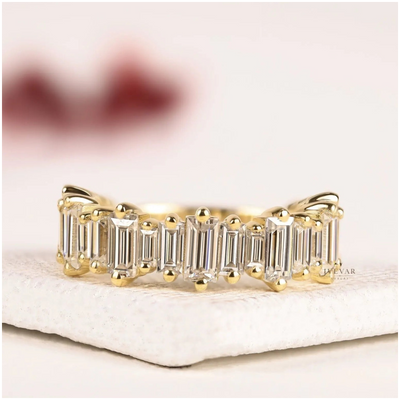
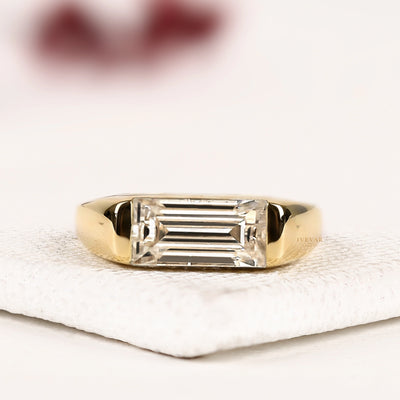
Shop the styles in this guide



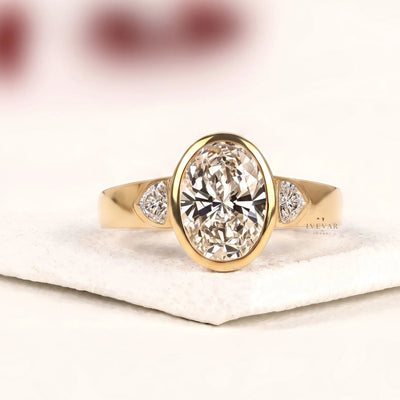
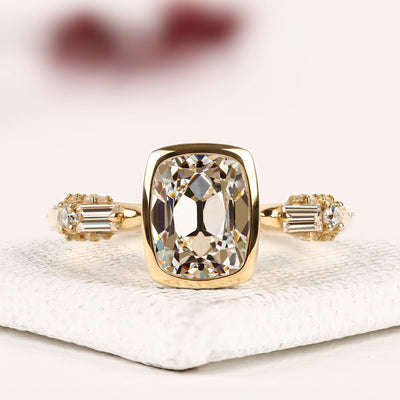
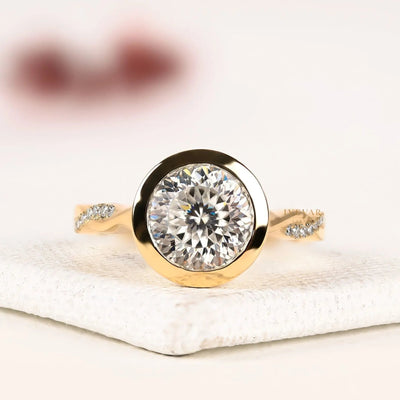
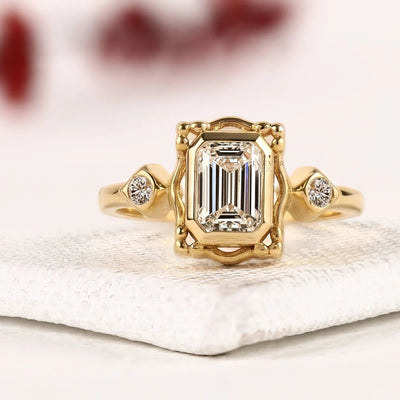
Metal Hardness and Why It Matters
Precious metals are far softer than gemstones. Pure gold and pure silver sit around 2.5 to 3 on the Mohs scale, which is why they are alloyed with other metals for jewelry. Platinum is somewhat harder and much denser.
- 10K gold: contains the least gold and the most alloy, so it is the most scratch resistant gold option.
- 14K gold: a popular balance of durability and rich colour for everyday rings.
- 18K gold: richer colour and higher gold content, but softer and more prone to scratches and wear.
- Platinum: does not lose much metal when scratched; the metal is displaced, forming a soft satin patina.
- Sterling silver: soft and prone to scratches and tarnish, best for fashion and occasional pieces.
Metal will always show wear before a diamond or moissanite does. Light scratches on a band are normal and can be polished away by a jeweler. The more important point is that prongs, which are thin, can wear down over many years and should be checked.
Caring for Jewelry by Hardness
Hardness also affects how you store and clean your pieces. A diamond can scratch every other stone in your jewelry box, and so can moissanite and sapphire.
- Store separately: keep each piece in its own pouch or a lined compartment so harder stones do not scratch softer ones or gold.
- Clean gently: warm water, a few drops of mild soap and a soft brush suit diamond, moissanite and sapphire.
- Skip harsh methods for soft stones: ultrasonic and steam cleaners can damage opal, pearl, emerald and treated stones.
- Remove for heavy tasks: take rings off for the gym, gardening, moving furniture and cleaning with chemicals.
- Put jewelry on last: apply lotion, perfume and hairspray first, especially with pearls and opals.
- Check settings: have prongs and clasps inspected periodically, since metal wears even when stones do not.
Tip: Never toss a diamond or moissanite ring into the same pouch as pearl earrings or a gold chain. The harder stone will scratch them, even though it stays perfect itself.
Testing Hardness at Home: Don't
You may see advice online about scratching a stone on glass to test whether it is a diamond. Please avoid it. Many stones, including moissanite, sapphire, topaz, quartz and cubic zirconia, will also scratch glass, so the test proves very little. Worse, it can chip the girdle or damage the polish of the stone you are testing.
Professional gemologists identify stones with refractive index readings, thermal and electrical conductivity testers, magnification and spectroscopy, not with scratch tests. If you want to confirm what a stone is, ask a qualified jeweler or rely on a grading report. Many of our lab grown diamonds come with IGI certificates, and IGI and GIA both grade lab grown diamonds.
Durable Jewelry at Ivevar
We use lab grown diamonds, moissanite and sapphires, all 9 or higher on the Mohs scale, in pieces handcrafted in our Surat workshop in 10K, 14K and 18K gold. That means the stones you choose from us are built for everyday life. If you want a specific setting style for an active lifestyle, our custom jewelry service and virtual appointments let you talk through bezel, low-profile or protective prong options before anything is made.
Every piece ships worldwide with free shipping and 30-day easy returns. Browse moissanite engagement rings, explore our lab grown diamond engagement rings, or see lab grown wedding bands designed for daily wear.
Shop Durable Moissanite Rings
 Asscher Infinity TwistShop Now
 Abstract Open Loop RingShop Now
 Art Deco Lotus RingShop Now
 Art Deco Cluster RingShop Now
 Crossover Pave RingShop Now
 Double Halo Round RingShop Now
Swipe to see more → | View moissanite engagement rings
Frequently Asked Questions
What is the hardest gemstone?
Diamond, at 10 on the Mohs scale. Lab grown and mined diamonds are equally hard because they are the same material. Only another diamond can scratch a diamond.
How hard is moissanite?
About 9.25, second only to diamond among popular jewelry stones. It is harder than sapphire and ruby, and it resists everyday scratches extremely well.
Can a diamond scratch?
Only another diamond can scratch it, but it can chip if hit hard at a weak point, such as a thin girdle or the tip of a pear or marquise shape.
Is emerald good for an engagement ring?
It can be, with protective settings such as a bezel or halo and gentle wear. Emerald is reasonably hard but brittle, so it needs more care than diamond, moissanite or sapphire.
Is the Mohs scale linear?
No. It only shows order. Diamond is many times harder than corundum, even though the numbers are only one apart.
What Mohs rating do I need for an everyday ring?
Aim for 8 or higher, and ideally 9 or above for a ring you never take off. Diamond, moissanite, sapphire and ruby are the safest choices.
Does cubic zirconia scratch?
Yes, over time. At around 8 to 8.5 it resists dust, but it is softer than moissanite and diamond, and its surface tends to look duller with years of wear.
Why does my gold ring scratch while the stone does not?
Gold is much softer than any gemstone, at around 2.5 to 3 on the Mohs scale even when alloyed. Light scratches on the band are normal and can be polished out.
Can I clean all my gemstones the same way?
No. Diamond, moissanite and sapphire tolerate warm soapy water and a soft brush. Opal, pearl and emerald need gentler care and should stay away from ultrasonic cleaners.
The Bottom Line
For everyday rings, choose stones rated 8 or higher, and remember that toughness and setting matter too. Diamond and moissanite give you the best combination of scratch resistance and lasting brilliance, while softer gems are lovely in earrings and pendants where they face less wear.
Related Guides
Author Bio
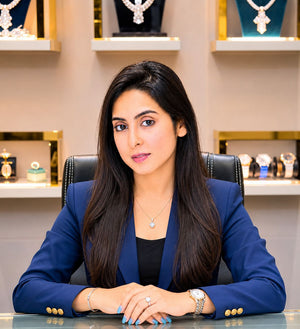
Aumsri Pradhan
Founder, Ivevar Luxury
Aumsri Pradhan is the founder of Ivevar Luxury, a Surat-based fine jewelry brand that designs and handcrafts lab grown diamond and moissanite jewelry in its own workshop. She leads the brand's design and customer experience, from engagement rings and bridal sets to custom pieces made to each client's story. Through the Ivevar blog, she shares practical guidance on lab grown diamonds, moissanite, diamond grading and ring design to help buyers choose with confidence.


