

 Engagement Rings
 Anniversary Rings
 Solitaire Rings
 Halo Rings
 Toi Moi Rings
 Three Stone Rings
 Nature Inspired Rings
 Rose Cut Rings
 Fancy Color Rings
 Antique Cut Rings
 Wedding Rings
 Wedding Band Rings
 Exclusive Lab Grown Diamond Rings
 All Lab Grown Diamond Ring
 Engagement Rings
 Three Stone Rings
 Fancy Color Rings
 Antique Cut Rings
 Daily Wear Rings
 Wedding Band Rings
 Exclusive Moissanite Rings
 Earrings
 Bracelet
 Pendant
 Necklace
 Men's Ring
 Bridal Sets
 Rings
 Earrings
 Tennis chain
 Cuban Chains
 Custom Pendant
 Custom Ring
 Custom Teeth Grillz
 Round
 Oval
 Cushion
 Marquise
 Pear
 Emerald
 Heart
 Princess
 Rose Cut
 Radiant
 Antique Cut
 Brooch
 Cufflink
 Keychain
 Unique Products
 +91-9265051773
 Virtual Appointment
 log in




Short answer: A ring has a few key parts: the shank or band (the circle around your finger), the shoulders (where the band meets the top), the head (the part that holds the center stone, usually with prongs or a bezel), the gallery (the side profile under the stone), the basket (the support structure under the stone) and the bridge (the section under the head that rests above the finger). Knowing these terms makes it easier to describe the ring you want and understand repairs.
Jewelers use specific words for every part of a ring. When you know them, you can explain exactly what you like ("a tapered shank with a hidden halo in the gallery"), compare designs accurately, and understand what a jeweler means when they talk about worn prongs or a thin shank.
This guide walks through each part from the top of the ring to the bottom, then covers band styles, profiles, decorative details, metals, comfort and care. It applies to engagement rings, wedding bands and everyday rings alike, whether they hold a lab grown diamond, moissanite or no stone at all.
Parts of a Ring
| Part | What it is | Why it matters |
|---|---|---|
| Shank (band) | The circle of metal around the finger | Width and profile affect comfort |
| Shoulders | Upper sides of the band near the stone | Often decorated with pave or side stones |
| Head | The setting that holds the center stone | Prongs or bezel determine security |
| Prongs | Metal claws gripping the stone | Need yearly checks for wear |
| Gallery | Side view beneath the stone | Can hide a halo or decorative detail |
| Basket | Supporting frame under the stone | Lets light in and holds structure |
| Bridge | Under the head, above the finger | Affects how flush a band sits |
| Sizing area | Bottom of the band | Where resizing is done |
The Top of the Ring: Head, Prongs and Center Stone
The head
The head is the part that holds the center stone. It is often made separately and then attached to the shank, which is why jewelers can sometimes replace a worn head without remaking the whole ring. The head decides how high the stone sits, how much light reaches it and how protected it is.
Prongs
Prongs are the small metal claws that fold over the edge of the stone. Most heads have four or six. Four prongs show more of the stone; six give extra grip and a rounder look. Pointed shapes like pear, marquise and princess cuts are best protected with V-shaped prongs at the tips. Prongs wear down slowly with daily use, so they need a check once a year.
Bezel
Instead of prongs, some heads use a bezel: a thin rim of metal that wraps around the stone. It is the most secure way to hold a stone and gives a smooth, modern look. To compare all the options, read our guide to ring setting types.
Shoulders
The shoulders are where the band rises to meet the head. They can be plain for a clean look, set with pave to lead the eye toward the center stone, or shaped into a cathedral arch that lifts the head. Because the shoulders frame the center stone, they change the feel of a ring more than most people expect.
Halo
A halo is a ring of small stones around the center stone, sitting at the same level as the head. It makes the center look larger and adds extra sparkle. Halos are usually pave set, so they share the same care needs as pave bands: gentle cleaning and a yearly check for loose stones.
Under the Stone: Gallery, Basket and Bridge
These parts are mostly seen from the side, but they shape both the look and the comfort of the ring.
- Gallery: the side profile of the ring beneath the stone. It can be plain, open, pierced with a pattern, or set with small stones. A detailed gallery is a lovely surprise that is visible when your hand is turned.
- Basket: the frame of metal under the stone that connects the prongs. An open basket lets more light reach the stone, while a solid one gives more support.
- Bridge: the part of the ring directly under the head that sits above your finger. Its shape decides whether a wedding band can sit flush against the engagement ring.
- Peekaboo stones: small stones set into the gallery or bridge, often in a contrasting colour, that show only from the side.
Tip: If you plan to wear a wedding band beside your engagement ring, ask about the bridge and gallery height. A low bridge lets a straight band sit flush; a tall cathedral gallery may need a curved or notched band.
Band Styles
The shank is the largest part of the ring, and its shape changes the whole character of the design.
- Straight: classic and pairs with any wedding band.
- Split shank: the band divides as it reaches the head.
- Tapered: narrows toward the stone to make it look larger.
- Cathedral: arches rise to support the head.
- Bypass: ends wrap past each other.
- Twisted: two strands of metal, plain or set with stones, wind around each other.
- Knife edge: the top of the band rises to a fine ridge for a sleek look.
- Nature inspired: leaves, vines and branches shaped into the band for an organic feel.
Choosing a band style
A straight band is the most versatile: it suits every center stone and lets any wedding band sit beside it. A tapered band narrows as it approaches the head, so the center stone looks larger by contrast. A split shank divides into two strands near the head, adding width and presence without making the whole band heavy, and it suits larger center stones and halos. A bypass or swirl band wraps around the stone, giving a softer, flowing look that works especially well with toi et moi designs.
Consider how the style will pair with a wedding band. Straight and tapered bands pair easily. Split shanks, bypass shapes and cathedral arches can leave gaps beside a straight band, so many people choose a matching curved band or a bridal set designed to fit together.
 Shown: Art Deco Milgrain Radiant Cut Hidden Halo Lab Diamond Ring
Band Profiles
The profile is the shape of the band when you look at a cross-section, as if you cut through it. It has a big effect on comfort.
- Flat: modern and clean.
- Court or comfort fit: rounded inside for easy wear.
- Knife edge: a sharp ridge on top for a sleek look.
- D-shape: rounded on the outside and flat on the inside, a classic wedding band shape.
- Euro shank: a squared-off bottom that helps a top-heavy ring stay upright on the finger.
| Profile | How it feels | Best for |
|---|---|---|
| Flat | Clean edges; can feel snug on wide bands | Modern and minimalist styles |
| Comfort fit | Smooth inside; slides over the knuckle easily | Wide bands and daily wear |
| D-shape | Rounded outside, flat inside | Classic wedding bands |
| Knife edge | Light and sleek | Solitaires and stacking rings |
| Euro shank | Stable; resists spinning | Rings with large center stones |
Band Width and Thickness
Two measurements describe the band: width (how wide it looks from the top) and thickness (how deep the metal is from the outside to the inside). Both matter.
- Width: thin bands of about 1.5 to 2.5 mm make a center stone look larger and suit slim fingers. Wider bands of 4 mm and up feel bold and are common in men's rings.
- Thickness: a band that is too thin can bend out of shape over time, especially in softer 18K gold. A solid, well-proportioned band keeps its round shape and holds stones securely.
- Fit: wide bands cover more skin and feel snugger, so you may need to go up a quarter to half a size.
Men's rings usually have wider, thicker shanks and simpler heads, often with flush or channel-set stones that sit level with the metal. If you are shopping for him, our lab grown men's rings show how width and profile change the look.
Decorative Details
- Milgrain: tiny metal beads along edges.
- Hidden halo: stones under the center stone.
- Engraving: patterns or messages on the band.
- Peekaboo stones: small stones set in the gallery.
- Filigree: fine, lace-like openwork in the metal, often seen in vintage-style rings.
- Pave shoulders: small stones set into the shoulders to lead the eye toward the center stone.
- Side stones: larger accent stones beside the center, as in a three stone ring.
- Two-tone metal: for example, white gold prongs on a yellow gold band.
Milgrain and hidden halos up close
Milgrain is made by rolling a special tool along the edge of the metal to press in a line of tiny beads. It softens the edges and gives a vintage, Art Deco feel, as in the ring shown above. A hidden halo is a ring of small stones set around the base of the head, under the center stone. From the top it is invisible; from the side it adds a flash of sparkle that surprises people when your hand moves.
A few well-chosen details give a ring personality. Too many can compete with the center stone, so pick one or two you really love.
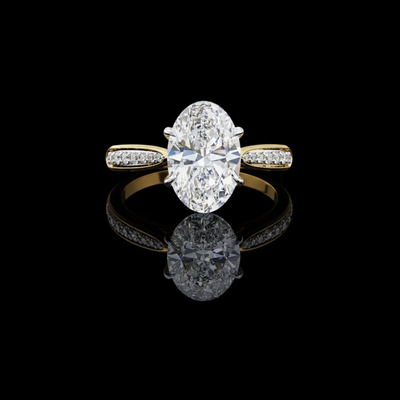
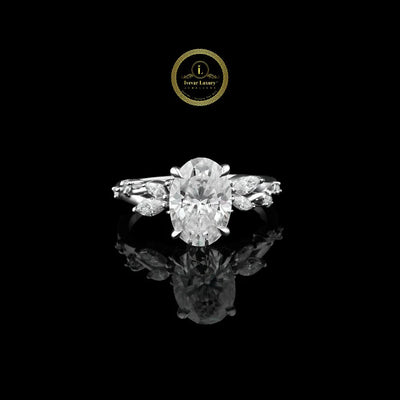
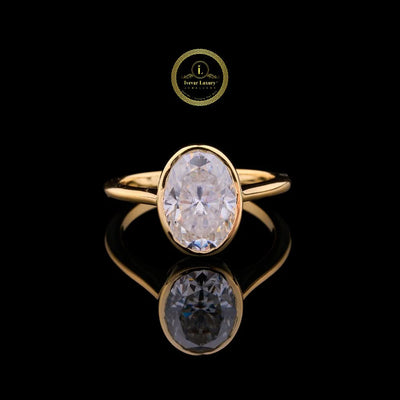
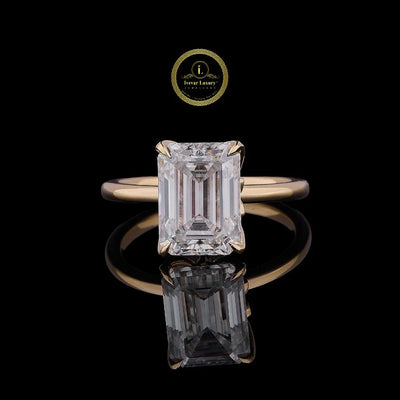
Shop the styles in this guide








Ring Metals and What They Mean for Each Part
The metal affects colour, durability and how each part wears over time.
| Metal | Look | What to know |
|---|---|---|
| 10K gold | Slightly paler colour | Hardest of the three; good for everyday rings |
| 14K gold | Rich colour | A popular balance of colour and durability |
| 18K gold | Deepest colour | Softer; prongs and thin bands need more care |
| White gold | Bright white (rhodium plated) | Plating is refreshed over time |
Gold comes in yellow, white and rose. Yellow and rose gold keep their colour all the way through. White gold is usually plated with rhodium for its bright finish, and the plating gradually wears, especially on the bottom of the shank where the ring touches surfaces most.
Which Parts Wear and Need Care
Every part of a ring handles daily wear differently. Knowing where to look helps you catch small issues early.
- Prongs: the tips wear and can bend. Check that none look flat or catch on fabric.
- Bottom of the shank: it takes the most knocks and can thin over many years.
- Pave and small stones: a hard knock can loosen them. Look for gaps.
- Gallery and basket: these collect dirt and lotion, which dulls the center stone. Clean them with a soft toothbrush and warm, soapy water.
- Plating: white gold rhodium wears gradually and can be renewed.
The sizing area
The bottom of the shank is kept plain on most rings so it can be adjusted if needed. This is why full eternity bands, with stones all the way around, are usually difficult to resize. If you are unsure of your size, a design with a plain lower band gives you more flexibility.
Have your ring checked by a jeweler once a year, and clean it at home about once a week.
Using These Terms to Describe a Custom Ring
When you design a ring, the right words save time and avoid misunderstandings. Work from the top down:
- Center stone: stone type, shape and size, for example a lab grown oval or a moissanite cushion.
- Head: four prongs, six prongs, V-prongs or bezel; high or low profile.
- Halo or gallery details: no halo, a halo, a hidden halo or peekaboo stones.
- Shoulders: plain, pave or side stones.
- Shank: straight, tapered, split, twisted or cathedral; width and profile.
- Metal: 10K, 14K or 18K gold in yellow, white or rose.
- Finishing touches: milgrain, engraving or two-tone metal.
Even a simple sentence like "a six-prong round solitaire on a 2 mm tapered comfort fit band in 14K yellow gold, with a hidden halo" tells a jeweler almost everything they need. Explore our lab grown solitaire rings and nature inspired engagement rings for ideas.
Custom Rings at Ivevar
We design and handcraft every part of the ring in our Surat workshop, and custom changes are welcome. Choose lab grown diamonds (many with IGI certificates) or moissanite, in 10K, 14K or 18K gold, and book a virtual appointment if you want to talk through the details. Every ring ships worldwide with free shipping and 30-day easy returns. Read how a custom engagement ring is made, or browse our lab grown engagement rings.
Shop Rings With Beautiful Details
 Milgrain Radiant RingShop Now
 Asscher Leaf Band RingShop Now
 Bezel Hidden Halo OvalShop Now
 Bezel Emerald Side StonesShop Now
 Bezel Three Stone CushionShop Now
 Curved Oval Bridal SetShop Now
Swipe to see more → | View all engagement rings
Frequently Asked Questions
What is the shank of a ring?
The band that goes around the finger. It runs from the shoulders on one side, under the finger, to the shoulders on the other.
What is the head of a ring?
The setting that holds the center stone, using prongs, a bezel or another method.
What is a ring gallery?
The side profile beneath the stone. It may be plain, pierced, patterned or set with small stones.
What is a split shank?
A band that divides into two as it meets the head.
Where is a ring resized?
At the bottom of the band, which is why that area is usually left plain.
What is the difference between the basket and the gallery?
The basket is the metal frame that holds the stone from below. The gallery is the side view of the whole area under the stone, which includes the basket and any decoration around it.
What are the shoulders of a ring?
The upper parts of the band on either side of the head. They are often set with pave or side stones to add sparkle.
Why does my ring keep spinning?
A top-heavy head on a round, thin shank tends to rotate. A snugger size or a band with a squared-off euro shank helps keep it upright.
What is a euro shank?
A band with a squared-off lower section. The flat sides help a ring with a heavy head stay upright and stop it from spinning on the finger.
Can I change one part of my ring later?
Often yes. Jewelers can replace a worn head, retip prongs or add a matching band, though major changes to the shank are easier to plan when the ring is first made.
The Bottom Line
Knowing the parts of a ring helps you choose, customize and care for it with confidence. Start with the head and center stone, then choose the shoulders, shank style and profile that suit your hand and your routine, and finish with the details that make the ring feel like yours.
Related Guides

Author Bio
Aumsri Pradhan
Founder, Ivevar Luxury
Aumsri Pradhan is the founder of Ivevar Luxury, a Surat-based fine jewelry brand that designs and handcrafts lab grown diamond and moissanite jewelry in its own workshop. She leads the brand's design and customer experience, from engagement rings and bridal sets to custom pieces made to each client's story. Through the Ivevar blog, she shares practical guidance on lab grown diamonds, moissanite, diamond grading and ring design to help buyers choose with confidence.


