

 Engagement Rings
 Anniversary Rings
 Solitaire Rings
 Halo Rings
 Toi Moi Rings
 Three Stone Rings
 Nature Inspired Rings
 Rose Cut Rings
 Fancy Color Rings
 Antique Cut Rings
 Wedding Rings
 Wedding Band Rings
 Exclusive Lab Grown Diamond Rings
 All Lab Grown Diamond Ring
 Engagement Rings
 Three Stone Rings
 Fancy Color Rings
 Antique Cut Rings
 Daily Wear Rings
 Wedding Band Rings
 Exclusive Moissanite Rings
 Earrings
 Bracelet
 Pendant
 Necklace
 Men's Ring
 Bridal Sets
 Rings
 Earrings
 Tennis chain
 Cuban Chains
 Custom Pendant
 Custom Ring
 Custom Teeth Grillz
 Round
 Oval
 Cushion
 Marquise
 Pear
 Emerald
 Heart
 Princess
 Rose Cut
 Radiant
 Antique Cut
 Brooch
 Cufflink
 Keychain
 Unique Products
 +91-9265051773
 Virtual Appointment
 log in




Short answer: The main ring setting types are prong (metal claws hold the stone for maximum light and sparkle), bezel (a metal rim surrounds the stone for the most security), channel (stones sit in a groove between two metal walls), pave (many tiny stones held by small beads of metal), halo (small stones frame the center), tension (the stone appears held by pressure) and cathedral (arches lift the center stone). Prong is the classic choice; bezel and channel suit active lifestyles.
The setting affects how your ring looks, how secure the stone is and how easy it is to clean. It also decides how high the stone sits, whether a wedding band will sit flush against it, and how much upkeep the ring needs over the years. Two rings with identical diamonds can look completely different just because of the setting.
This guide explains each setting type in plain terms, compares them side by side, shows which settings suit which stone shapes and lifestyles, and covers care for each style, so you can choose with confidence. Everything here applies to both lab grown diamonds and moissanite.
Ring Settings Compared
| Setting | Sparkle | Security | Best for |
|---|---|---|---|
| Prong (4 or 6) | Highest | Good | Classic solitaires |
| Bezel | Good | Highest | Active lifestyles, nurses, athletes |
| Partial bezel | Very good | Very good | Balance of sparkle and protection |
| Channel | Good | Very high | Wedding bands, side stones |
| Pave | Very high | Good | Sparkly bands and halos |
| Halo | Very high | Good | More size and sparkle |
| Tension | High | Moderate | Modern, minimalist style |
| Cathedral | High | Good | Elegant lifted look |
Prong Settings
Prongs are small metal claws that rise from the head of the ring and fold over the edge of the stone. Because so little metal touches the stone, light can enter from the sides as well as the top, which is why prong settings deliver the most sparkle.
Four prongs show more of the stone; six prongs add security and a rounder look. Claw, round and V-prongs (for pointed shapes) are common variations.
- Four prongs: a clean, open look that lets the stone's outline show. On a round stone the shape can look slightly square.
- Six prongs: more grip and a rounder silhouette. If one prong is damaged, five still hold the stone.
- Claw prongs: pointed tips that look delicate and show slightly more of the stone.
- Round prongs: rounded tips that feel smooth and are less likely to snag clothing.
- V-prongs: wrap the fragile points of pear, marquise, heart and princess cuts to protect them from chips.
- Double prongs: two thin prongs at each position for extra security with a decorative look.
Prong metal and colour
Prongs can be made in the same metal as the band or in a contrasting one. White gold prongs on a yellow or rose gold band are a popular choice with colourless stones, because the white metal blends into the stone while the band keeps its warm colour. Yellow gold prongs give a warmer, vintage feel. In 18K gold, prongs are a little softer than in 10K or 14K, so yearly checks matter even more.
Prongs need a yearly check, because they wear slowly with daily use. A classic lab grown solitaire ring in a four- or six-prong head remains the most popular way to show off a single stone.
Bezel Settings
A full bezel wraps the entire stone in metal, protecting edges from knocks. It gives a sleek, modern look and is the most practical for hands-on work.
Because the metal covers the girdle completely, nothing sticks up to snag on gloves, hair or knitwear. A bezel also makes a stone look slightly larger, since the metal rim extends the outline. The trade-off is that less light enters from the sides, so a bezel-set stone shows a little less sparkle than the same stone in prongs. With high-brilliance stones like well-cut lab diamonds and moissanite, the difference is modest.
Partial bezel
A partial or half bezel covers only two sides of the stone, leaving the others open. It protects the most vulnerable edges while letting in more light, making it a good middle ground between prongs and a full bezel.
Bezel edge styles
Bezels come in several finishes. A thin, knife-edge bezel keeps the look light and modern. A thicker bezel feels bold and protective. A bezel with milgrain, a row of tiny metal beads along the edge, gives a vintage touch. The bezel can also be shaped to follow any stone, from round and oval to hexagon and marquise, which makes it one of the most versatile settings for unusual shapes.
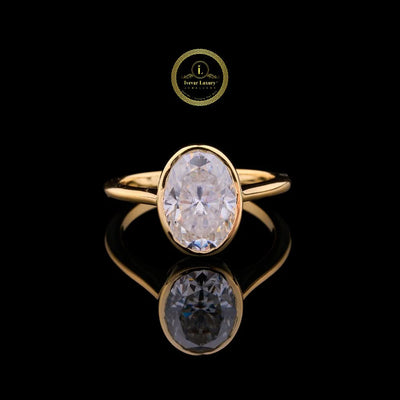
 Shown: Bezel Setting Oval Cut Lab Diamond Solitaire Ring
Channel and Pave Settings
Channel settings hold stones between two metal walls, so nothing snags. Pave uses tiny beads of metal to hold many small stones for a "paved" sparkle. Read channel vs pave vs prong.
Channel
Stones sit side by side in a groove, held at their edges by the metal walls. The surface is smooth, which makes channel settings ideal for wedding bands, men's rings and anyone who works with their hands. Round, princess and baguette stones are the most common choices. Dirt can gather along the walls, so brush lengthwise when cleaning.
Pave and micro pave
Small stones are set very close together and held by tiny beads or prongs of metal, so the surface looks covered in sparkle. Micro pave uses even smaller stones for a finer look. Pave adds brilliance to bands, halos and shoulders without adding much height. It needs gentle cleaning and a yearly check, since tiny stones can loosen if the band is knocked hard.
| Feature | Channel | Pave |
|---|---|---|
| Look | Smooth, continuous row | Surface covered in small sparkles |
| Snagging | Very unlikely | Possible on clothing if beads wear |
| Durability | Very high | Good with care |
| Best for | Everyday bands, men's rings | Halos, shoulders, delicate bands |
Halo, Cathedral and Tension Settings
- Halo: a frame of small stones that makes the center look larger.
- Cathedral: arches of metal lift the center stone gracefully.
- Tension: the stone appears suspended between the band ends.
Halo
A halo surrounds the center stone with a ring of small pave stones. It makes the center look noticeably bigger and adds extra sparkle around it. A hidden halo places the small stones under the center stone, visible only from the side, for a subtler touch. A double halo adds a second ring for even more presence. Browse our lab grown halo rings to see the effect.
A halo is a smart way to get more presence from a modest center stone. Keep in mind that it adds many small stones to care for, and the halo usually needs a matching curved or straight band designed to sit beside it. Halo shapes usually follow the center stone, but a round halo around a cushion or a pear can create an interesting contrast.
Cathedral
Arches of metal rise from the band to support the head, like the arches of a cathedral. The look is elegant and traditional, and it lifts the stone so it catches more light. Cathedral settings sit higher, so check that a wedding band will pair well.
Tension and tension-style
In a true tension setting, the band is precisely shaped so that it squeezes the stone between its ends. Most rings sold as tension-style use small hidden supports for added security while keeping the floating look. It suits hard stones like diamond (10 on the Mohs scale) and moissanite (9.25), but it is harder to resize and has slightly lower security than prongs or a bezel.
Other Popular Settings
- Three stone: a center stone with a smaller stone on each side, often said to represent past, present and future. See our lab grown three stone rings.
- Toi et moi: two stones side by side, often in different shapes, for a personal, modern look.
- Cluster: several small stones grouped to look like one larger stone or a flower shape.
- Flush or gypsy: the stone is set into a drilled hole so its table sits level with the band. Very secure and common on men's rings.
- Bar: stones held between vertical bars of metal, a cross between channel and prong styles.
- Eternity: stones set continuously around the band, either all the way (full) or across the top (half).
Combining settings
Many rings mix two or more settings. A prong-set center stone on a pave band is one of the most common designs. A bezel center with a channel-set band gives a smooth, secure ring with a row of sparkle. A hidden halo under a solitaire adds a surprise when the ring is seen from the side. When you look at a ring, name the setting of the center stone first, then the band, and you will quickly understand how it is built and how to care for it.
High vs Low Profile Settings
The height of the setting matters as much as the type. A high-profile setting lifts the stone well above the band, while a low-profile setting keeps it close to the finger.
| Profile | Advantages | Things to consider |
|---|---|---|
| High profile | More light from the sides; classic, eye-catching look | More likely to knock or snag; band may not sit flush |
| Low profile | Secure, practical, easy to wear under gloves | Slightly less light from the sides |
If you plan to wear a wedding band next to your engagement ring, ask whether the band will sit flush. Cathedral and high-profile heads often leave a small gap, which some people like and others fix with a curved or notched band.
Shop the styles in this guide








Matching the Setting to the Stone Shape
- Round: works with every setting. Six prongs or a halo emphasize its circular outline.
- Oval and cushion: four or six prongs, halo or bezel all suit them well.
- Pear, marquise and heart: choose V-prongs or a bezel to protect the points.
- Princess: four V-prongs at the corners protect its sharp edges.
- Emerald and Asscher: four prongs or a bezel show off the clean step-cut facets. Busy pave can distract from them.
- Baguette: perfect for channel settings and as side stones.
Tip: If you love a pointed shape but lead a busy life, a bezel or V-prong setting gives you the look you want with much better protection against chips.
How to Choose
- Maximum sparkle: prong or halo.
- Active life: bezel or channel.
- Low maintenance: bezel or plain band.
- Modern look: bezel, tension or split shank.
- Vintage look: halo with milgrain edges, or a cathedral setting.
- Bigger-looking center: halo, or thin claw prongs that show the full outline.
Settings by lifestyle
| Lifestyle | Good setting choices | Why |
|---|---|---|
| Hands-on work, gym, sport | Low bezel, channel, flush | Smooth surfaces and protected edges |
| Office and everyday wear | Four or six prongs, partial bezel, pave band | Balance of sparkle and comfort |
| Special occasions | Halo, cathedral, three stone | Maximum presence and sparkle |
| Low maintenance | Bezel, plain band solitaire | Few small stones to check or clean |
Think about how you use your hands each day. If you type, cook, garden or work out often, a lower setting with protected edges will be more comfortable. If the ring is mostly for special occasions, you can lean toward a taller, more open design.
Questions to ask before you choose
- How often will I wear it? Daily rings benefit from lower, more protected settings.
- Will I add a wedding band? Check how the band will sit next to the head before you decide.
- What shape is my stone? Pointed shapes need protected tips.
- How much upkeep am I happy with? More small stones mean more cleaning and checks.
- Which look do I love? Practicality matters, but you should also feel excited every time you look at your hand.
Caring for Each Setting
Every setting can last for decades with the right care. Clean all settings with warm water, mild dish soap and a soft toothbrush. Then follow these extra tips:
- Prong: check for bent or flattened prongs and have them inspected once a year.
- Bezel: brush around the rim where dirt collects; bezels rarely need repairs.
- Pave and halo: use the softest brush, avoid ultrasonic cleaners on fine pave, and check for missing stones.
- Channel: brush along the channel and watch for any stone that looks tilted.
- Tension: avoid hard knocks on the sides of the ring, and get it checked if the stone ever seems to move.
Settings at Ivevar
We hand-set every stone in our Surat workshop, from classic prongs to bezels and channels. Choose from lab grown diamonds (many with IGI certificates) or moissanite, in 10K, 14K or 18K gold, and ask about custom settings or a virtual appointment if you want help comparing styles. Every ring ships worldwide with free shipping and 30-day easy returns. Read bezel set rings for active lifestyles, or browse our lab grown engagement rings and moissanite engagement rings.
Shop Bezel and Channel Set Rings
 Bezel Oval SolitaireShop Now
 Bezel Set Oval RingShop Now
 Bezel Round Twisted PaveShop Now
 Bezel Cushion SolitaireShop Now
 Bezel Marquise Split ShankShop Now
 Asscher Channel Set RingShop Now
Swipe to see more → | View all engagement rings
Frequently Asked Questions
What is the most secure ring setting?
A full bezel. The metal rim wraps the whole stone and protects its edges from knocks.
Which setting sparkles most?
Prong settings, especially with a halo or pave band.
4 prongs or 6 prongs?
4 shows more stone; 6 adds security.
Is pave hard to maintain?
It needs regular cleaning and yearly checks.
What is a V-prong?
A V-shaped prong that protects the points of pear, marquise and princess cuts.
Does a bezel make a diamond look smaller?
Usually the opposite. The metal rim extends the stone's outline, so it can look slightly larger face-up, though it shows a little less side sparkle.
Which setting is best for a nurse, doctor or athlete?
A low-profile bezel or channel setting. Both have smooth surfaces that do not catch on gloves or equipment.
Can I change the setting later?
Often yes. A loose stone can usually be reset into a new head or a new ring entirely, which is a popular way to update a ring for an anniversary.
What is the difference between a setting and a mounting?
The setting is the method used to hold the stone, such as prongs or a bezel. The mounting is the whole metal ring, including the band and head, before or after the stone is added.
Are moissanite and lab diamonds set the same way?
Yes. Both are hard enough for any setting style, so you can choose prongs, bezel, halo, pave or tension for either stone.
The Bottom Line
Choose prongs for sparkle, bezels for security, channels for smooth bands, and halos or pave for extra brilliance. Then match the height and the prong style to your stone shape and your daily routine, and the ring will look beautiful and stay secure for years.
Related Guides

Author Bio
Aumsri Pradhan
Founder, Ivevar Luxury
Aumsri Pradhan is the founder of Ivevar Luxury, a Surat-based fine jewelry brand that designs and handcrafts lab grown diamond and moissanite jewelry in its own workshop. She leads the brand's design and customer experience, from engagement rings and bridal sets to custom pieces made to each client's story. Through the Ivevar blog, she shares practical guidance on lab grown diamonds, moissanite, diamond grading and ring design to help buyers choose with confidence.


