

 Engagement Rings
 Anniversary Rings
 Solitaire Rings
 Halo Rings
 Toi Moi Rings
 Three Stone Rings
 Nature Inspired Rings
 Rose Cut Rings
 Fancy Color Rings
 Antique Cut Rings
 Wedding Rings
 Wedding Band Rings
 Exclusive Lab Grown Diamond Rings
 All Lab Grown Diamond Ring
 Engagement Rings
 Three Stone Rings
 Fancy Color Rings
 Antique Cut Rings
 Daily Wear Rings
 Wedding Band Rings
 Exclusive Moissanite Rings
 Earrings
 Bracelet
 Pendant
 Necklace
 Men's Ring
 Bridal Sets
 Rings
 Earrings
 Tennis chain
 Cuban Chains
 Custom Pendant
 Custom Ring
 Custom Teeth Grillz
 Round
 Oval
 Cushion
 Marquise
 Pear
 Emerald
 Heart
 Princess
 Rose Cut
 Radiant
 Antique Cut
 Brooch
 Cufflink
 Keychain
 Unique Products
 +91-9265051773
 Virtual Appointment
 log in




Short answer: Surat, in the state of Gujarat, India, is known as the diamond capital of the world. The city cuts and polishes the large majority of the world's diamonds, often cited at around 90% by number, and India has become one of the world's leading producers of lab grown diamonds. Surat's generations of skilled cutters, modern laser and CAD technology, and complete jewelry supply chain make it a global center for both natural and lab grown diamonds.
If you own a diamond, there is a good chance it passed through Surat at some point. A stone may be mined in Africa, Russia or Canada, or grown in a reactor, but the work that turns a rough crystal into a sparkling gem very often happens here.
This guide explains how a port city on India's west coast became the center of the diamond world, what actually happens in its workshops, how it shaped the lab grown diamond market, and what all of this means when you are choosing a ring or a pair of earrings.
Surat at a Glance
| Fact | Why it matters |
|---|---|
| Global cutting and polishing hub | Most of the world's diamonds are cut here |
| Lab grown diamond growth | CVD growing and cutting centers |
| Skilled workforce | Generations of cutters, setters and designers |
| Modern technology | Laser planning, automated cutting and CAD design |
| Complete supply chain | Rough, cutting, grading and jewelry making in one city |
A Short History
Surat has been a trading city for centuries. Sitting near the mouth of the Tapi River on the Gulf of Khambhat, it was one of the busiest ports of the Mughal era, handling textiles, spices and precious goods bound for the Middle East, Africa and Europe. European trading companies set up warehouses here, and the city earned a reputation as a place where merchants from many countries did business.
India's own diamond history is far older. For most of recorded history, India was the world's main known source of diamonds, and famous stones such as the Koh-i-Noor came from Indian mines. That long familiarity with diamonds, combined with a strong merchant culture in Gujarat, laid the groundwork for what came next.
From small workshops to a global center
From the mid 20th century, family workshops in Surat began specializing in cutting small diamonds. These were stones that larger cutting centers often found too small or too labor-intensive to process profitably. Surat's workshops made a business of exactly that work, and as demand grew, so did the number of cutters, polishers and traders in the city.
Over the following decades, Surat moved up the value chain. Workshops that started with tiny melee stones began cutting larger and finer diamonds, and the city became the place where a huge share of the world's rough was sent to be finished. Today Surat combines traditional hand skills with advanced technology, and it has its own diamond trading bourse alongside the established trading networks in Mumbai.
Why Gujarat?
- Merchant tradition: Gujarati trading families have long been involved in gems, textiles and finance, with networks that stretch across the world's major diamond markets.
- Skills passed down: Cutting is learned on the job. When one generation of cutters trains the next, expertise stays in the city and keeps deepening.
- Clustering: When rough suppliers, cutters, tool makers, graders and jewelers all work within a short distance of each other, every step moves faster.
What Happens in a Surat Diamond Workshop
Turning a rough crystal into a finished gem is a careful, step-by-step process. The basic stages are the same whether the diamond was mined or grown in a lab.
- Mapping and planning: The rough stone is scanned to create a 3D model. Software and an experienced planner decide which shape and size will give the best result from that particular crystal, working around inclusions and the stone's natural form.
- Sawing or cleaving: The rough is divided along the planned lines. Today this is usually done with lasers, which allow precise cuts with less waste.
- Bruting: For round diamonds, the stone is shaped into its basic outline by turning it against another diamond or with a laser.
- Faceting and polishing: Facets are ground and polished on a spinning wheel coated with diamond powder. This is the stage that creates sparkle, and it takes the most skill. Small changes in angle affect how much light the stone returns.
- Final inspection: The finished diamond is cleaned, checked for symmetry and polish, and sorted. Many stones are then sent to a grading laboratory such as IGI or GIA for a report.
Only diamond can cut diamond. At 10 on the Mohs scale, it is the hardest natural material, so polishing wheels are coated with diamond powder. That is one reason skilled cutting is so valuable: the work is slow, and mistakes cost weight that cannot be put back.
Technology Meets Hand Skill
Surat's workshops are not just rooms of people at polishing wheels. Modern cutting relies on technology at almost every step, and the city's manufacturers adopted it early.
- 3D scanning: Maps the outside and inside of a rough stone so planners can see inclusions before cutting.
- Laser sawing: Cuts rough precisely and allows shapes that would be hard to achieve by hand alone.
- Automated polishing: Machines can handle repetitive facets on small stones, freeing skilled polishers for the difficult work.
- CAD jewelry design: Jewelry designers model a ring on screen, check proportions and stone fit, and produce a precise wax or resin model for casting.
Technology does not replace the cutter's eye. A planner still decides how to balance size against brilliance, and a polisher still judges the final finish. The combination of machines and experience is what keeps quality consistent.
Surat and Lab Grown Diamonds
As lab grown diamonds rose in popularity, Surat's cutters and manufacturers expanded into growing and polishing them. This makes the city central to the affordable, high-quality lab grown diamonds many buyers choose today. Read the history of lab grown diamonds.
Lab grown diamonds are real diamonds. They are chemically, physically and optically the same as mined diamonds, made of carbon arranged in the same crystal structure. The difference is origin: they are grown in a controlled environment instead of being formed deep underground.
CVD and HPHT
There are two main growing methods. CVD (chemical vapor deposition) builds a diamond layer by layer from a carbon-rich gas onto a thin diamond seed. HPHT (high pressure, high temperature) recreates the intense pressure and heat of the earth's mantle in a press. Both produce real diamond, and both kinds of rough need exactly the same cutting and polishing as mined rough. For a detailed comparison, see our guide to CVD vs HPHT.
Because Surat already had the cutting skills and the infrastructure, it was well placed to process lab grown rough at scale. Growing, cutting, grading and setting can all happen in the same region, which helps keep lab grown diamonds affordable. You can browse finished stones and jewelry in our lab grown diamond collection.
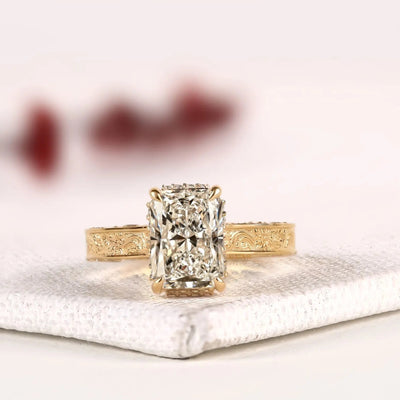
 Shown: Radiant Cut Moissanite Cathedral Filigree Engagement Ring
Natural, Lab Grown and Moissanite: What Surat Cuts
Surat workshops handle more than one kind of stone. It helps to know how they differ before you shop.
| Feature | Mined diamond | Lab grown diamond | Moissanite |
|---|---|---|---|
| What it is | Carbon crystal formed underground | Same carbon crystal, grown by CVD or HPHT | Silicon carbide, a different gem |
| Mohs hardness | 10 | 10 | 9.25 |
| Refractive index | About 2.42 | About 2.42 | About 2.65, more rainbow fire |
| Grading | GIA, IGI and other labs | IGI and GIA grade lab diamonds | Not graded on the diamond scale |
| Relative cost | Highest | Lower | Lowest |
Moissanite is not a diamond. It is a separate gemstone with its own look: slightly more colorful flashes and a very high hardness that makes it a practical everyday stone. Many people choose it for engagement rings, and you can see examples in our moissanite jewelry collection.
Why Small Stones Matter: Surat's Melee Expertise
Surat built its reputation on small diamonds, and those stones are still everywhere in fine jewelry. Small round diamonds, called melee, are the sparkle in a halo, the row of stones along a pave band, the pattern in an eternity ring and the clusters in earrings and pendants.
Melee is demanding work. Each tiny stone still needs dozens of facets, and in a pave band they all have to match in size, color and brightness. One dull or off-color stone in a row of bright ones is easy to spot, even if the center stone is perfect.
- Matching: Good makers sort small stones carefully so a halo or band looks even from every angle.
- Calibration: Stones of a consistent diameter sit level in their settings and hold more securely.
- Cut quality: Well-cut melee adds real brilliance to a ring. Poorly cut melee can make an otherwise lovely piece look flat.
When you compare rings with side stones, look closely at the small diamonds as well as the center. Ask what kind of stones are used for the accents, whether they are lab grown diamond or moissanite, and whether they are matched to the center for color. For bands set with stones all the way around, see our lab diamond eternity rings.
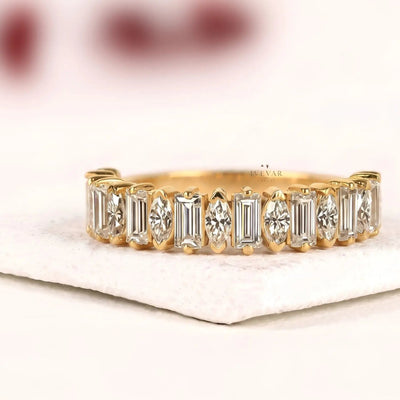
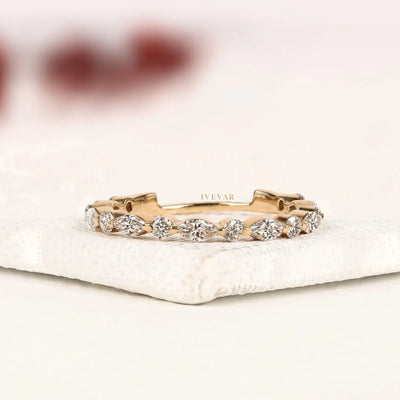
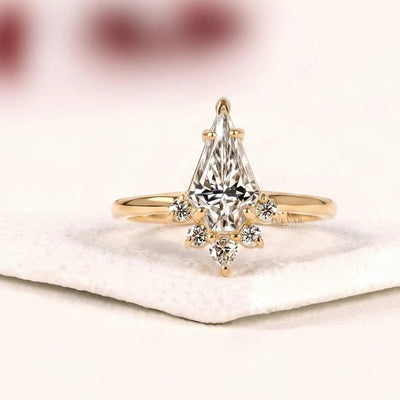
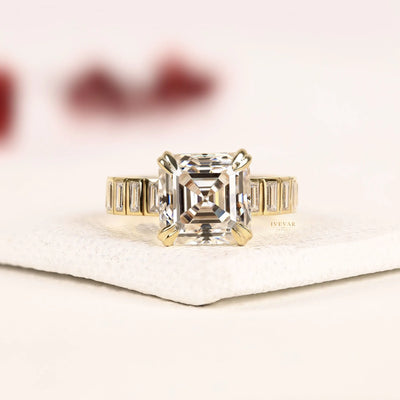
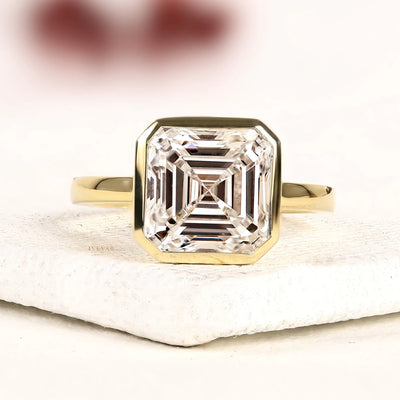
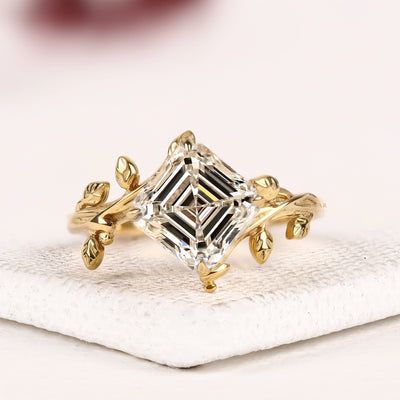
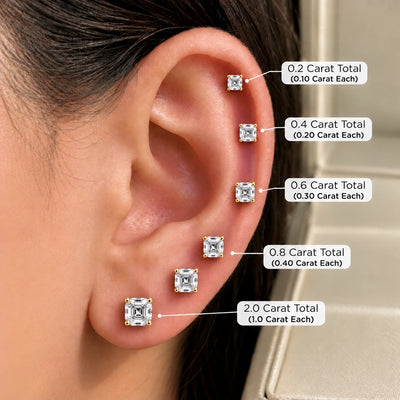
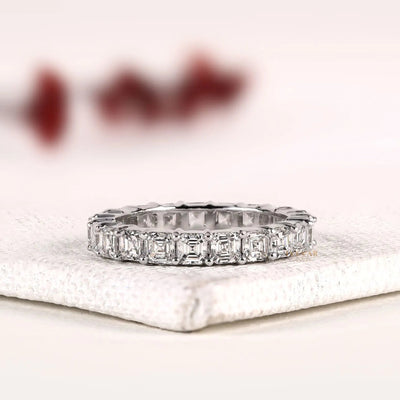
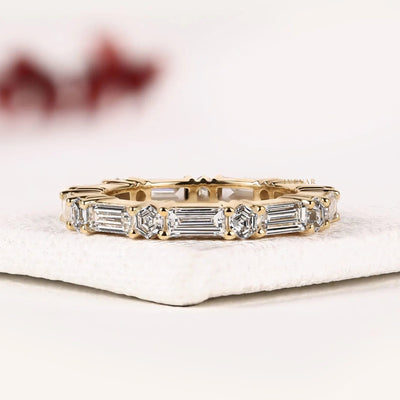
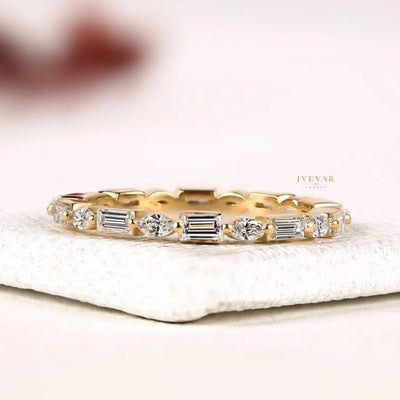
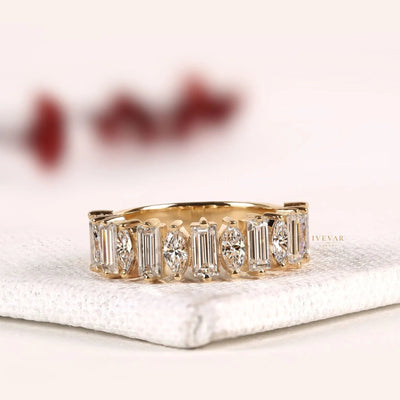
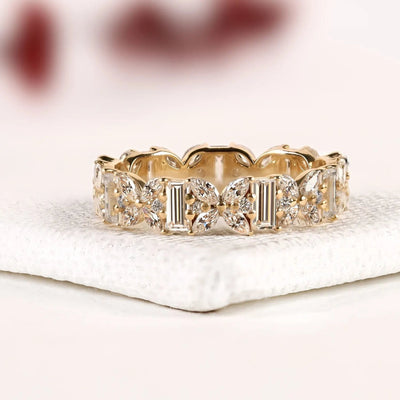
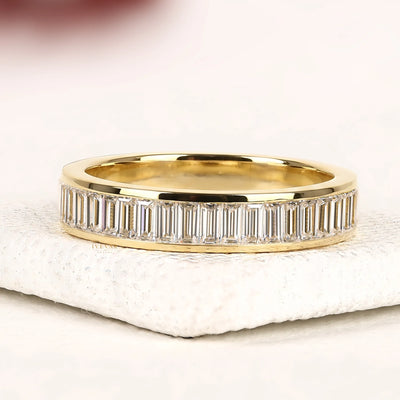
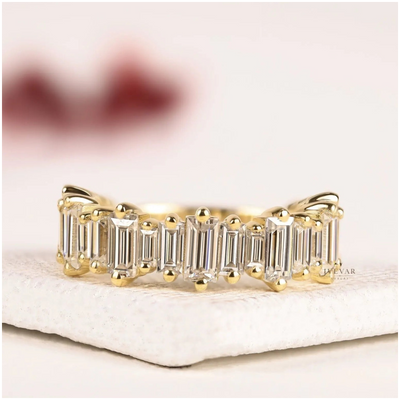
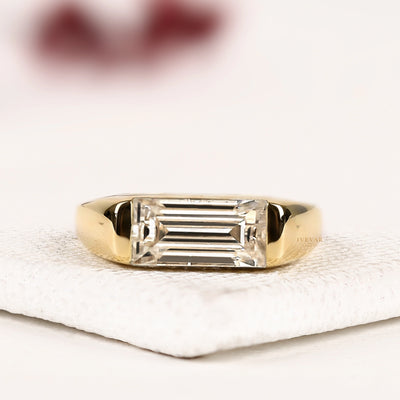
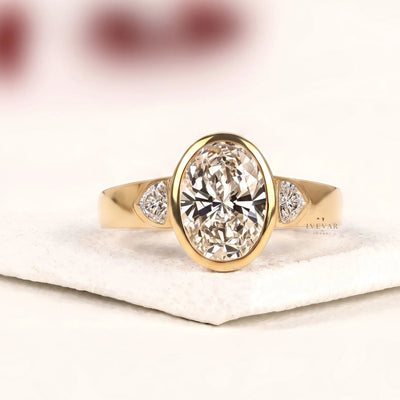
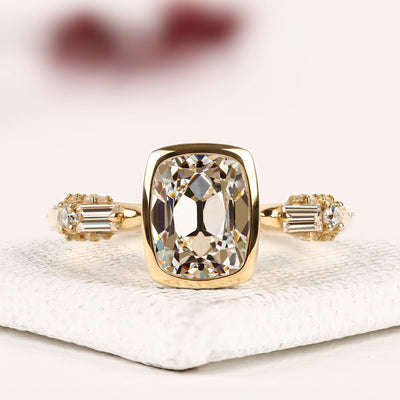
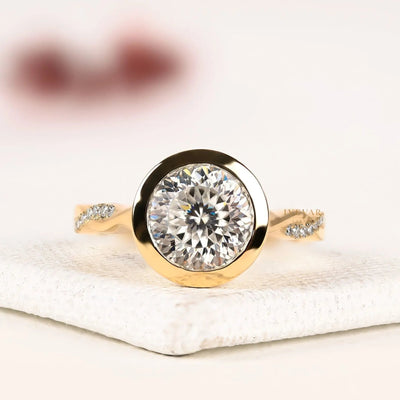
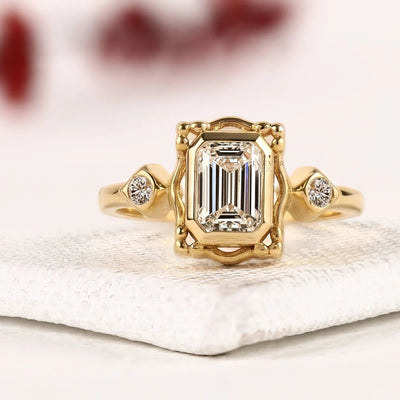
Shop the styles in this guide



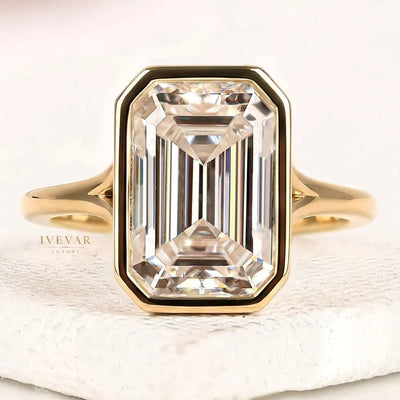
What Surat Craftsmanship Means for You
- Precision cutting: well-proportioned stones with strong sparkle. Cut quality has the biggest effect on how bright a diamond looks, more than color or clarity.
- Skilled setting: secure prongs, pave and bezels. Small stones in a pave band need careful, even setting so they sit level and stay put.
- Value: buying from a maker cuts out middlemen. Every handoff between cutter, wholesaler, distributor and retailer adds cost.
- Custom work: designers and setters can bring unique ideas to life, from a modified band width to a hidden halo or engraved gallery.
Tip: Wherever a diamond was cut, judge it by its report and by how it looks. For a lab grown diamond over a fraction of a carat, ask for an IGI or GIA grading report and check that the report number matches the inscription on the stone's girdle.
How to Judge Quality, Wherever It Was Made
Surat produces everything from mass-market stones to exceptional ones. The city's name alone is not a quality grade, so use the same checks you would apply to any diamond.
Check the 4Cs
- Cut: For round diamonds, look for an Excellent or Ideal cut grade. For fancy shapes, judge symmetry and light return by eye or video.
- Color: Near-colorless grades such as G to H look white in most settings, especially in yellow or rose gold.
- Clarity: VS1 to VS2 diamonds usually look clean to the naked eye. You rarely need to pay for flawless.
- Carat: Weight, not size. Two stones of the same weight can look different if one is cut deep.
Check the setting
Look at the prongs: they should be even, smooth and sitting snugly over the stone. Pave stones should be level with each other. The underside of the ring, called the gallery, should be cleanly finished. These details show the care that went into the piece and affect how long it lasts.
Made in Surat by Ivevar
Ivevar is based in Surat. We design, cast, set and polish every piece in our own workshop, then ship directly to customers worldwide with free shipping and 30-day easy returns. Learn about our founder and read how fine jewelry is made.
Our jewelry is made with lab grown diamonds, many with IGI certificates, and with moissanite, in 10K, 14K and 18K gold. Because the work happens under one roof, we can also take on custom requests and walk you through options in a virtual appointment, showing stones and settings on camera before anything is made.
From order to doorstep
- Design: You choose a design or share your own idea. For custom pieces, we prepare a CAD model for approval.
- Casting: The ring is cast in your chosen gold and cleaned up by hand.
- Setting: Stones are set and the prongs or bezels are finished.
- Polishing and checks: The piece is polished, inspected and packed.
- Shipping: Your order ships directly from Surat with free worldwide delivery.
Buying from a Surat Maker: Pros and Watch-Outs
| Advantage | What to check |
|---|---|
| Fewer middlemen, better value | That stone details and metal purity are clearly stated |
| Direct access to the people who make the piece | How easy it is to reach them with questions |
| Custom design is practical | Whether you approve a CAD or render before production |
| Wide choice of stones and shapes | Grading reports for larger lab diamonds |
| International shipping | Delivery terms, duties in your country and the return policy |
Tip: Ask for a short video of your finished piece before it ships. A ring under natural daylight tells you more about sparkle and finish than any product photo.
Shop Surat-Crafted Rings
 Radiant Cathedral FiligreeShop Now
 Vintage Oval FiligreeShop Now
 Elongated Cushion Leaf RingShop Now
 Halo Marquise RingShop Now
 Black and White Toi et MoiShop Now
 Snake Pear RingShop Now
Swipe to see more → | View moissanite engagement rings
Want a diamond rather than moissanite? Explore our lab diamond engagement rings, all made in our Surat workshop, or browse the wider range of lab grown diamond rings for everyday and special occasions.
Frequently Asked Questions
Why is Surat called the diamond city?
Because it cuts and polishes most of the world's diamonds. Rough stones from many countries, and lab grown rough, are sent to Surat to be shaped into finished gems.
Are lab grown diamonds made in India?
Yes. India is a leading producer and cutter of lab grown diamonds, using both CVD and HPHT growing methods.
Is Surat jewelry good quality?
Surat is home to highly skilled cutters and setters, but quality depends on the maker. Check grading reports, metal stamps and the finish of the setting.
Does buying from Surat save money?
Buying from a maker can reduce middleman costs, since the piece does not pass through several wholesalers and distributors before it reaches you.
Are diamonds cut in Surat mined or lab grown?
Both. The same skills and equipment are used for mined and lab grown rough, and many workshops handle both.
Is a lab grown diamond cut in Surat a real diamond?
Yes. Lab grown diamonds are chemically, physically and optically the same as mined diamonds. Where a diamond is cut does not change what it is.
Is moissanite the same as a diamond?
No. Moissanite is silicon carbide, a separate gemstone. It rates 9.25 on the Mohs scale and shows more colorful fire than diamond.
Where is Ivevar based?
In Surat, Gujarat, India. We ship to customers worldwide with free shipping and 30-day easy returns.
The Bottom Line
Surat is the heart of the diamond world, blending centuries of trading history with modern cutting technology. It finishes most of the world's diamonds, leads in lab grown diamond production and has a complete jewelry supply chain within one city. Buying from a Surat maker connects you to that craftsmanship directly, as long as you still check the stone, the report and the setting with care.
Related Guides
Author Bio
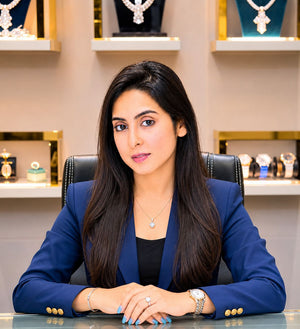
Aumsri Pradhan
Founder, Ivevar Luxury
Aumsri Pradhan is the founder of Ivevar Luxury, a Surat-based fine jewelry brand that designs and handcrafts lab grown diamond and moissanite jewelry in its own workshop. She leads the brand's design and customer experience, from engagement rings and bridal sets to custom pieces made to each client's story. Through the Ivevar blog, she shares practical guidance on lab grown diamonds, moissanite, diamond grading and ring design to help buyers choose with confidence.


