

 Engagement Rings
 Anniversary Rings
 Solitaire Rings
 Halo Rings
 Toi Moi Rings
 Three Stone Rings
 Nature Inspired Rings
 Rose Cut Rings
 Fancy Color Rings
 Antique Cut Rings
 Wedding Rings
 Wedding Band Rings
 Exclusive Lab Grown Diamond Rings
 All Lab Grown Diamond Ring
 Engagement Rings
 Three Stone Rings
 Fancy Color Rings
 Antique Cut Rings
 Daily Wear Rings
 Wedding Band Rings
 Exclusive Moissanite Rings
 Earrings
 Bracelet
 Pendant
 Necklace
 Men's Ring
 Bridal Sets
 Rings
 Earrings
 Tennis chain
 Cuban Chains
 Custom Pendant
 Custom Ring
 Custom Teeth Grillz
 Round
 Oval
 Cushion
 Marquise
 Pear
 Emerald
 Heart
 Princess
 Rose Cut
 Radiant
 Antique Cut
 Brooch
 Cufflink
 Keychain
 Unique Products
 +91-9265051773
 Virtual Appointment
 log in




Short answer: Fine jewelry is usually made in six stages: design (sketch and CAD model), wax or resin printing (a 3D model of the piece), casting (molten gold or another precious metal poured into a mold made from the model), filing and assembly (cleaning, soldering and shaping), stone setting (securing each stone by hand under magnification) and finishing (polishing, plating and quality checks). A handcrafted ring usually takes about 2 to 4 weeks from design to delivery.
Every ring you wear goes through many skilled hands. A design starts as an idea, becomes a digital model, turns into wax, then into metal, and only at the very end receives its stones and its shine. Each step affects how the finished piece looks, how comfortable it feels and how long it lasts.
Knowing the process helps you ask better questions when you buy, spot good craftsmanship, and understand why a custom piece takes a few weeks rather than a few days. Here is how fine jewelry is made, step by step.
The Jewelry Making Process
Most fine jewelry, from a simple solitaire to a detailed halo ring, follows the same basic path. The table below shows the six main stages and why each one matters.
| Stage | What happens | Why it matters |
|---|---|---|
| 1. Design | Sketch and CAD (computer-aided design) model | Sets proportions, stone sizes and comfort |
| 2. 3D printing | Wax or resin model printed from CAD | Allows a physical preview |
| 3. Casting | Lost-wax casting in gold, platinum or silver | Creates the metal piece |
| 4. Clean-up and assembly | Filing, soldering heads and shanks, sizing | Structure and fit |
| 5. Stone setting | Prongs, bezels, pave or channels set by hand | Security and sparkle |
| 6. Finishing | Polishing, rhodium plating, engraving, inspection | Final shine and quality |
Some pieces skip or repeat steps. A plain wedding band has no stone setting. A complex ring may be cast in several parts and assembled later. But nearly every piece of fine jewelry passes through these stages in this order.
Design and CAD
Every piece begins with a design. For a ready-made style, the design is already finished and tested. For a custom piece, it starts with a conversation about what you want: the stone shape, the band style, the metal color and how you will wear it.
From sketch to digital model
A designer often starts with a hand sketch or reference photos, then builds the piece in CAD software. CAD lets the designer set exact measurements: band width and thickness, prong size, the height of the setting and the precise seat for each stone. Small changes, such as lowering a head so a ring snags less, can be tested on screen before any metal is used.
Why good design is about more than looks
- Comfort: a band that is too thin can bend, while one that is too thick can feel heavy. Inside edges are often rounded for a comfort fit.
- Stone security: prongs and bezels must be thick enough to hold the stone for years of wear.
- Proportions: the center stone, halo and band need to look balanced on the hand.
- Wearability: a very high setting shows off the stone but catches on clothing more easily.
For custom orders, you usually see CAD renderings before production starts. This is the best moment to request changes, because once the piece is cast, major edits become difficult.
Tip: When you review a CAD rendering, ask for the band width and thickness in millimeters and a side view of the setting height. Those numbers tell you more about everyday comfort than a front-facing image does.
Wax or Resin Printing
Once the design is approved, the CAD file is sent to a high-resolution 3D printer. The printer builds the piece in castable wax or resin, layer by thin layer. The result is an exact physical copy of the ring, ready to be turned into metal.
Before 3D printing became common, jewelers carved wax models by hand. Hand carving is still used for some artistic pieces, but printing allows extremely fine details, such as tiny pave seats, filigree and engraved patterns, to be reproduced accurately.
The printed model also gives the workshop a chance to check scale and proportions in real life. Some workshops can share a photo of the printed model, or a resin prototype to try on, before casting.
Lost-Wax Casting Explained
Lost-wax casting is the method used for most fine jewelry today, and its basic idea is thousands of years old.
- Spruing: the wax or resin model is attached to a wax "tree" by small channels called sprues. Several pieces can be cast on one tree.
- Investing: the tree is placed in a flask and surrounded by investment, a fine plaster-like material that sets hard.
- Burnout: the flask is heated in a kiln. The model melts or burns away, leaving a hollow mold in the exact shape of the piece.
- Pouring: molten metal is poured, spun or vacuum-drawn into the mold so it fills every detail.
- Quenching and break-out: once cooled, the investment is broken away to reveal the raw metal piece, still attached to its sprues.
The raw casting looks nothing like the finished ring. It is dull, rough and covered in tiny marks. That is normal: the next stages turn it into jewelry.
 Shown: Floral Inspired Cluster Lab Diamond Engagement Ring
Gold alloys and casting
Pure gold is too soft for everyday jewelry, so it is mixed with other metals to make an alloy. The karat tells you how much gold is in it:
| Karat | Gold content | Everyday feel |
|---|---|---|
| 10K | About 41.7% gold | Hardest and most scratch-resistant of the three; paler color |
| 14K | About 58.3% gold | A popular balance of color, strength and value |
| 18K | 75% gold | Richer color and a more luxurious feel; slightly softer |
The other metals in the alloy also set the color. Copper adds warmth for rose gold, while metals such as nickel or palladium help create white gold. Ivevar crafts in 10K, 14K and 18K gold, so you can choose the balance of color and durability that suits you.
Clean-Up and Assembly
After casting, a bench jeweler cuts the piece off its sprue and starts refining it by hand. This stage is where a lot of the real quality is decided.
- Filing and sanding: removes sprue marks and smooths rough surfaces, inside and out.
- Soldering: joins separate parts, such as a head (the part that holds the center stone) to a shank (the band). Clean solder joints should be almost invisible.
- Sizing: the band is adjusted to your ring size on a ring mandrel.
- Checking symmetry: prongs are straightened, edges are trued and the piece is checked from every angle.
Careful clean-up makes a ring comfortable and helps later steps go well. A setter cannot secure a stone properly in a seat that is uneven or a prong that is out of line.
Sourcing and Matching the Stones
While the metal is being cast and cleaned, the stones are chosen. This happens in parallel, and it matters just as much as the metalwork.
Lab grown diamonds
Lab grown diamonds are grown from a small diamond seed using one of two methods. CVD (chemical vapor deposition) builds the crystal layer by layer from a carbon-rich gas. HPHT (high pressure, high temperature) recreates the intense pressure and heat found deep in the earth. Either way, the rough crystal is then cut and polished by skilled cutters, just like a mined diamond.
Larger center stones are often graded by an independent lab such as IGI or GIA. The report records the 4Cs (cut, color, clarity and carat) and usually a laser inscription number on the stone's girdle, so you can match the stone to its certificate.
Moissanite
Moissanite is silicon carbide, a different gemstone from diamond. It is created in a lab, then cut and polished. Its refractive index of about 2.65 is higher than diamond's 2.42, which is why moissanite shows strong, colorful flashes of light, often called fire.
Matching small stones
For pave, halos and eternity bands, the workshop sorts small stones by size and color so they look uniform side by side. A single stone that is slightly warmer or smaller than its neighbors can stand out, so careful matching is a quiet sign of quality.
Stone Setting: The Most Skilled Step
Setters work under microscopes to raise, shape and tighten tiny beads or prongs over each stone. Pave and micro pave pieces can have dozens or hundreds of stones, each set individually.
The setter first cuts a precise seat for each stone so it sits level and secure. The stone is placed, then the metal is pushed, bent or burnished over its edge to lock it in. The goal is a stone that cannot move, sits straight and shows as much light as possible.
Common setting styles
| Setting | How it holds the stone | Best for |
|---|---|---|
| Prong | Metal claws grip the stone | Solitaires and maximum sparkle |
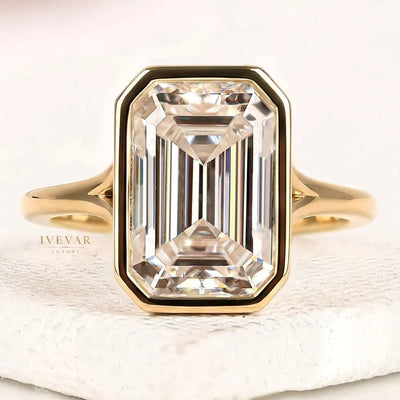
| Bezel | A metal rim wraps the stone's edge | Active lifestyles and a modern look |
| Pave and micro pave | Tiny beads of metal hold small stones close together | Bands and halos with continuous sparkle |
| Channel | Stones sit in a groove between two metal walls | Smooth, snag-free bands |
Diamond and moissanite are well suited to hand setting because they are very hard: diamond is 10 on the Mohs scale and moissanite is 9.25. Softer gemstones need gentler handling because they can chip under pressure. Lab grown diamonds are chemically, physically and optically the same as mined diamonds, so they are set in exactly the same way.
Learn more in our guide to ring setting types.
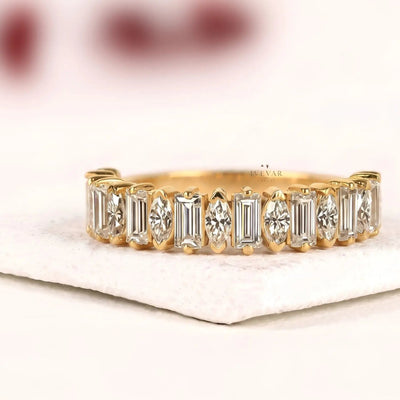
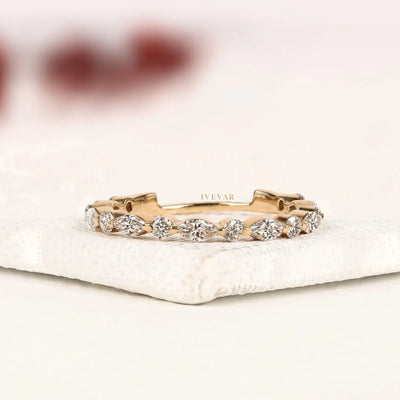
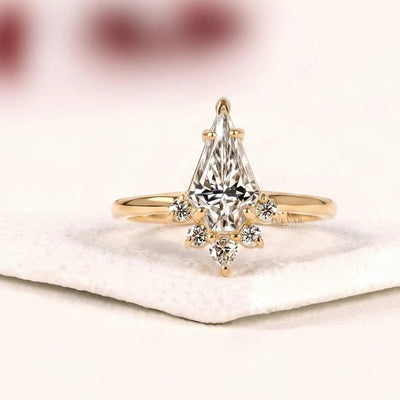
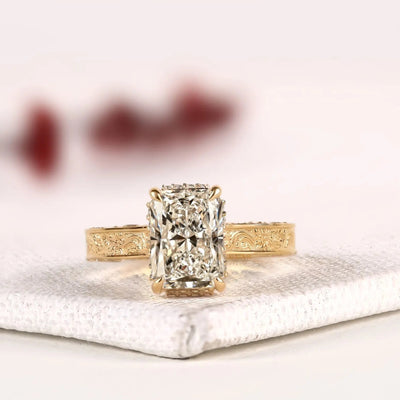
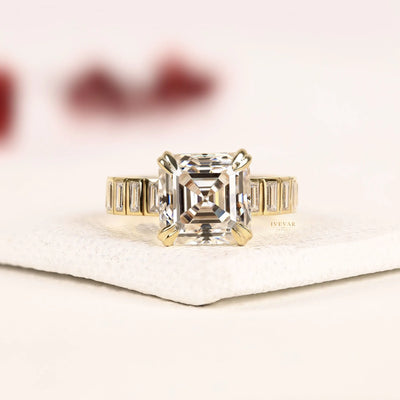
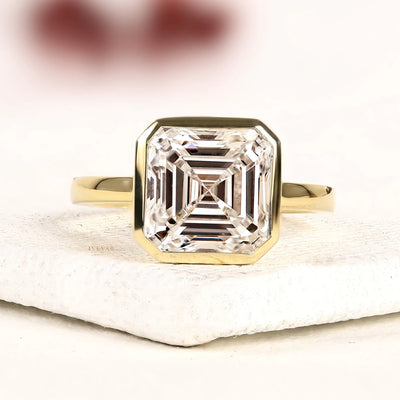
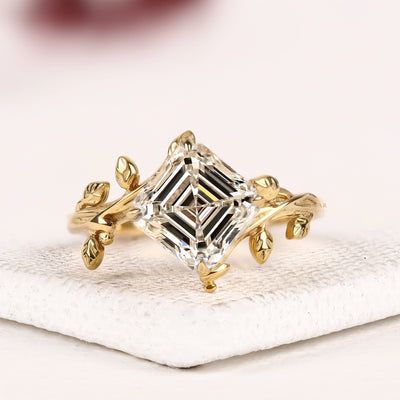
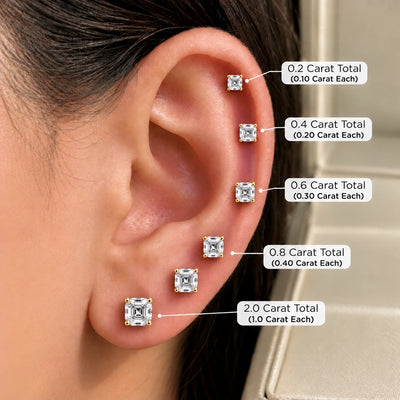
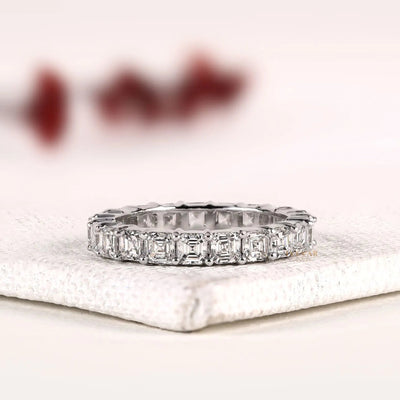
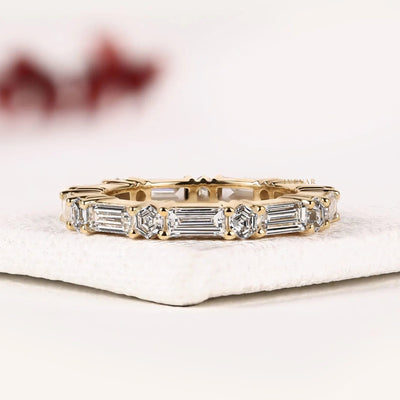
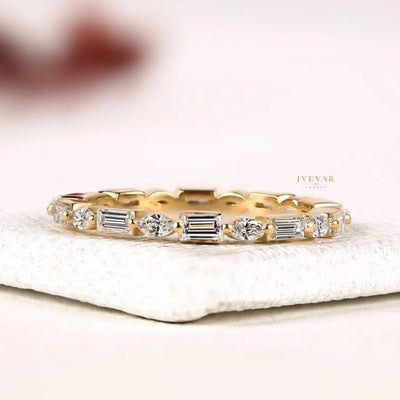
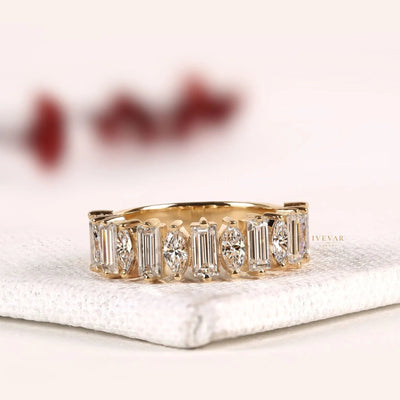
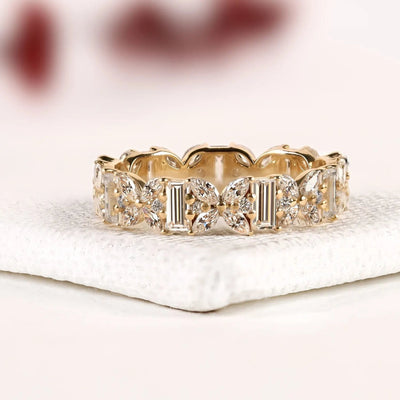
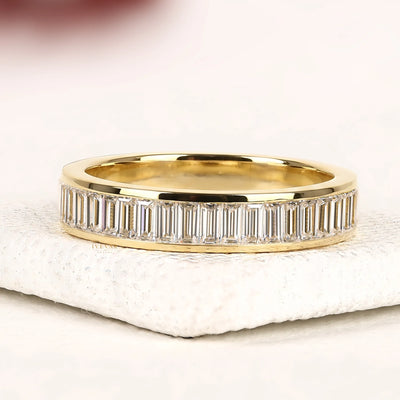
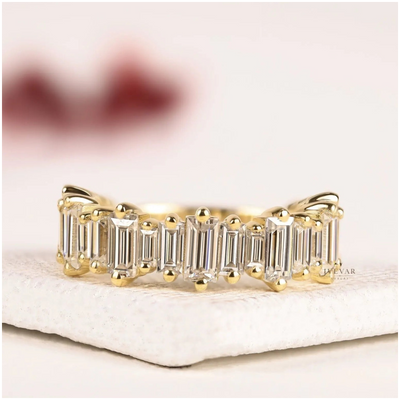
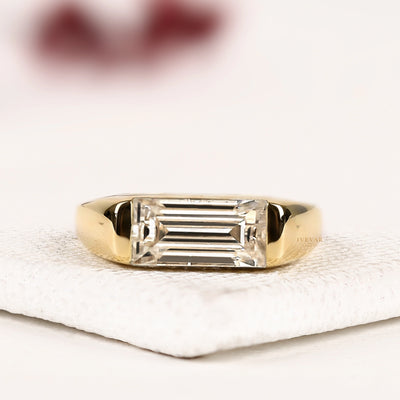
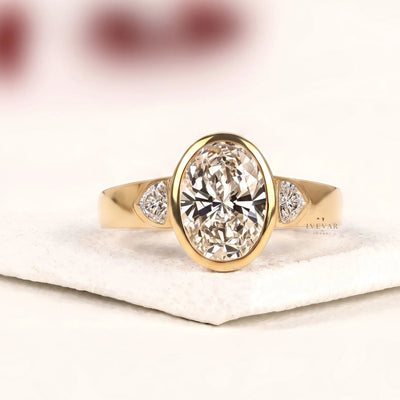
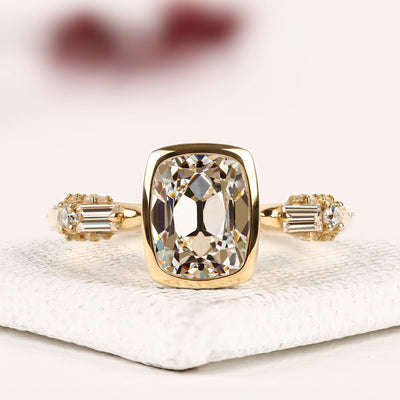
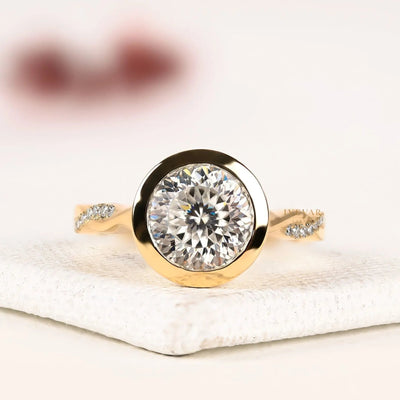
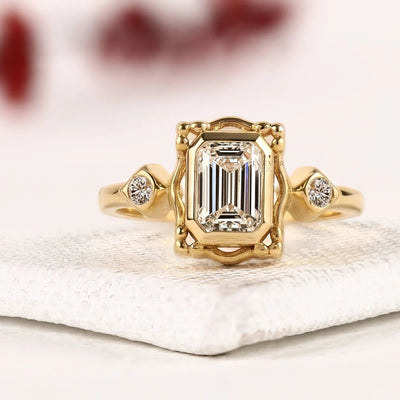
Shop the styles in this guide



Polishing and Finishing
Once the stones are in, the piece is polished to its final shine. Polishing usually moves from coarse to fine compounds, using small wheels, brushes and buffs to reach into every corner without loosening any stones.
Finishing options
- High polish: the classic mirror shine.
- Matte or brushed: a soft, satin texture that hides small scratches.
- Hammered: a textured, handmade look.
- Rhodium plating: a thin layer of rhodium gives white gold a bright white color. It wears over time and can be reapplied.
- Engraving: names, dates or patterns, done by hand or laser.
Final quality checks
Before a piece is packed, it should be inspected under magnification. Good workshops check that every stone is secure, prongs are smooth and do not snag, the ring size is correct, the hallmark or metal stamp is present, and the surface is free from tool marks. Any grading certificate is matched to its stone at this point too.
After it reaches you
Craftsmanship continues to matter long after delivery. Even the best-made ring wears with daily use: prongs slowly thin, polish dulls and rhodium on white gold fades. Clean everyday pieces gently at home with warm water and mild soap, and have a jeweler check prongs and settings about once or twice a year. A well-made piece that is looked after can be worn for decades and passed down.
Handmade vs Mass Produced
Both handcrafted and mass-produced jewelry may start with CAD and casting. The difference lies in how much skilled handwork goes into each piece afterward.
- Handcrafted: more attention to detail, custom options, tighter settings.
- Mass produced: lower cost, less personalization, variable quality.
How to spot good craftsmanship
- Run a finger around the prongs: they should feel smooth, not sharp or catchy.
- Look at the underside: the gallery and inside of the band should be as neatly finished as the top.
- Check that stones sit level: a tilted center stone suggests a rushed setting.
- Look for even pave: small stones should line up evenly with consistent beads.
- Feel the inside edge: a rounded, comfortable edge shows care for everyday wear.
How Long Does It Take?
Timing depends on how complex the design is, how many stones need setting and whether the piece is already designed.
- Ready designs: often 1 to 2 weeks to make and ship.
- Custom designs: usually 2 to 4 weeks after design approval.
Design changes, extra CAD revisions or detailed micro pave work can add time. If you need a piece for a specific date, such as a proposal or wedding, start early and mention the date when you order.
Read how a custom engagement ring is made and our order process.
Handcrafted at Ivevar
Every Ivevar piece is designed, cast, set and polished in our own workshop in Surat, India, one of the world's great diamond centers. We work with lab grown diamonds, many with IGI certificates, and moissanite, set in 10K, 14K or 18K gold. If you want something unique, our custom jewelry service takes you from idea to CAD to finished piece, and you can book a virtual appointment to talk it through. Every piece ships free worldwide and comes with 30-day easy returns. Meet our founder.
Explore our lab diamond engagement rings, moissanite engagement rings and lab grown diamond fine jewelry.
Shop Handcrafted Floral Rings
 Floral Cluster RingShop Now
 Marquise Curved HaloShop Now
 Blossom Halo RingShop Now
 Floral Leaf Pave RingShop Now
 Nature Floral RingShop Now
 Floral Bypass BandShop Now
Swipe to see more → | View nature inspired rings
Frequently Asked Questions
What is lost-wax casting?
A method where a wax or resin model is surrounded by investment, burned away in a kiln, and replaced by molten metal poured into the hollow mold it leaves behind.
Is CAD jewelry still handmade?
Yes. CAD designs the model; casting clean-up, assembly, stone setting and finishing are done by hand by skilled jewelers.
How long does it take to make a ring?
About 1 to 4 weeks depending on complexity. Ready designs are quicker; custom designs usually take 2 to 4 weeks after you approve the CAD.
Who sets the stones?
Specialist stone setters working under magnification. Setting is one of the most skilled steps, especially for pave and micro pave.
Can I see my design before it is made?
Yes, custom orders usually include a CAD rendering for approval, and changes are easiest to make at that stage.
Are lab grown diamonds set differently from mined diamonds?
No. Lab grown diamonds have the same chemical, physical and optical properties as mined diamonds, so they are cut and set the same way.
Why does white gold need rhodium plating?
White gold alloys have a slight warm tint. Rhodium plating gives a bright white finish, and it can be reapplied when it wears.
Which gold karat is best for an everyday ring?
14K is a popular balance of color and durability. 10K is the most scratch-resistant, and 18K has the richest color but is a little softer.
The Bottom Line
From CAD to casting to hand setting, fine jewelry takes skill and time. Knowing the process helps you appreciate quality craftsmanship, ask the right questions and choose a piece that is built to last.
Related Guides

Author Bio
Aumsri Pradhan
Founder, Ivevar Luxury
Aumsri Pradhan is the founder of Ivevar Luxury, a Surat-based fine jewelry brand that designs and handcrafts lab grown diamond and moissanite jewelry in its own workshop. She leads the brand's design and customer experience, from engagement rings and bridal sets to custom pieces made to each client's story. Through the Ivevar blog, she shares practical guidance on lab grown diamonds, moissanite, diamond grading and ring design to help buyers choose with confidence.


