

 Engagement Rings
 Anniversary Rings
 Solitaire Rings
 Halo Rings
 Toi Moi Rings
 Three Stone Rings
 Nature Inspired Rings
 Rose Cut Rings
 Fancy Color Rings
 Antique Cut Rings
 Wedding Rings
 Wedding Band Rings
 Exclusive Lab Grown Diamond Rings
 All Lab Grown Diamond Ring
 Engagement Rings
 Three Stone Rings
 Fancy Color Rings
 Antique Cut Rings
 Daily Wear Rings
 Wedding Band Rings
 Exclusive Moissanite Rings
 Earrings
 Bracelet
 Pendant
 Necklace
 Men's Ring
 Bridal Sets
 Rings
 Earrings
 Tennis chain
 Cuban Chains
 Custom Pendant
 Custom Ring
 Custom Teeth Grillz
 Round
 Oval
 Cushion
 Marquise
 Pear
 Emerald
 Heart
 Princess
 Rose Cut
 Radiant
 Antique Cut
 Brooch
 Cufflink
 Keychain
 Unique Products
 +91-9265051773
 Virtual Appointment
 log in




Short answer: D, E and F are the three "colorless" diamond grades, the top of the D to Z scale. The differences between them are so small that they are usually only visible to a trained grader comparing stones side by side under controlled lighting. Once set in a ring, D, E and F all look icy white. Choose D for the ultimate, E for nearly identical beauty at a small saving, and F for the best value in the colorless range.
Color is the second most visible of the 4Cs after cut, and the top three grades are where buyers most often overthink it. A D color diamond sounds far grander than an F, yet you would struggle to tell them apart across a dinner table. This guide explains how color grading works, what really separates D, E and F, when the top grade is worth it, and how shape, metal and lab grown pricing change the smart choice.
D vs E vs F at a Glance
| D | E | F | |
|---|---|---|---|
| Category | Colorless (top) | Colorless | Colorless |
| Visible difference to the eye | None once set | None once set | None once set |
| Detectable by | A trained grader, side by side, under controlled light | ||
| Price | Highest | Slightly lower | Best colorless value |
| Best metal | 14K or 18K white gold shows off the icy white | ||
The D to Z Color Scale Explained
For white diamonds, "color" really means the absence of color. Most diamonds contain traces of nitrogen that give a faint yellow or brown tint. The less tint, the higher the grade. GIA created the D to Z scale, and IGI and other major labs use the same letters, so a D means the same thing on any reputable report.
| Grades | Category | What you see once set |
|---|---|---|
| D, E, F | Colorless | Icy white |
| G, H, I, J | Near colorless | White; J can look slightly warm in white gold |
| K, L, M | Faint | Noticeably warm |
| N to R | Very light | Visible yellow or brown |
| S to Z | Light | Clear yellow or brown |
Beyond Z, a diamond with strong, attractive color becomes a fancy color diamond, which is graded on a different scale.
How Color Is Graded
Understanding the grading process explains why D, E and F look the same in real life. Graders work in very controlled conditions designed to reveal the faintest tint:
- Face down: the loose diamond is placed upside down on a white tray, so the grader looks through the side of the pavilion, where body color is easiest to see and sparkle does not distract.
- Standard lighting: grading uses a neutral, daylight-equivalent light in a viewing box that blocks other light.
- Master stones: the diamond is compared against a set of reference stones of known grade. It is assigned the grade of the master it matches or falls just below.
In everyday life, you view a diamond face up, set in metal, under mixed lighting and while it is sparkling. All of those hide the tiny tint differences that separate D, E and F on the grading bench.
D, E and F: What Separates Them
D color
D is the top of the scale: no detectable color at all, even to an expert using master stones. It is the purest white a diamond can be. D color is prized by collectors and by buyers who simply want the very best.
E color
E has a minute trace of color that only an expert grader can detect in a face-down comparison. Face up and set, an E is indistinguishable from a D. It is a favorite for buyers who want top-tier color without paying the full premium for the letter D.
F color
F has a slightly larger trace of color than E, still only detectable by a trained grader. It is the last grade in the colorless category and offers the best value for a truly colorless stone.
Tip: If you are choosing between two stones and one is a D with an average cut while the other is an F with an excellent cut, choose the F. Cut controls brightness and sparkle, which you see every day; the color difference you will never see.
Is Colorless Worth It?
For white metal settings and larger stones, colorless grades keep the look crisp. For yellow or rose gold, near-colorless G to H grades also look white and save money. Read is G color good enough?
Think about where you will see the difference. In a large center stone set in white gold, a colorless grade keeps the stone matching the bright metal. In a pair of stud earrings or a pendant seen from a distance, near-colorless stones look just as white. In a pavé band, small accent stones are usually graded as a range, and a near-colorless range matches a colorless center perfectly well.
- Choose D, E or F if: you want a large center stone in white gold, you love an icy look, or you will always know the letter and want it to be the best.
- Consider G or H if: your setting is yellow or rose gold, the stone is under one carat, or you would rather put the budget into size or cut.
 Shown: 0.41 Ct Pear Shape E Color VS1 Lab Grown Diamond
Color by Shape
- Round: hides color best; F or G is plenty.
- Pear, oval, marquise: color can gather at the points; E to F is a sweet spot.
- Emerald and Asscher: show color more; D to F recommended.
- Cushion and radiant: deep, brilliant-style faceting can hold a little more body color than a round, so F or better keeps them crisp in white gold.
- Princess: color can show slightly at the corners; F or G works well for most sizes.
Why the difference? Round brilliants return so much light to the eye that faint tint is masked. Step cuts like emerald and Asscher have broad, open facets that act like windows into the stone, so body color is easier to see. Elongated shapes tend to concentrate color at their tips, where the stone is deepest relative to its width. If you love the clean lines of an emerald cut, browse our emerald cut lab diamonds and favor D to F.
How Metal and Setting Affect Color
The metal around a diamond reflects into it. That makes metal choice as important as the letter on the report.
- White gold: bright and cool, it shows off a colorless stone and can make any warmth in lower grades more noticeable. This is where D to F earns its keep.
- Yellow gold: warm metal reflects into the diamond and makes every grade look a little warmer. Many people set G or H stones in yellow gold with excellent results, since the gold sets the tone.
- Rose gold: similar to yellow gold. A colorless stone looks crisp against the pink metal, but a near-colorless stone looks just as good.
- Two-tone: a yellow or rose gold band with white gold prongs or head lets a colorless diamond sit against white metal while you enjoy a warm band.
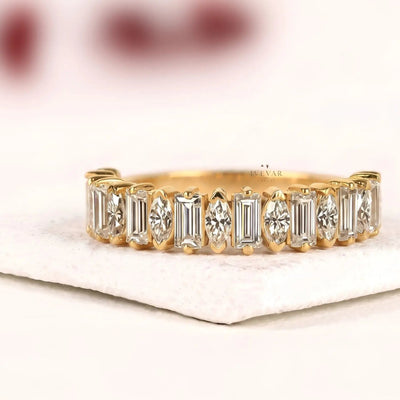
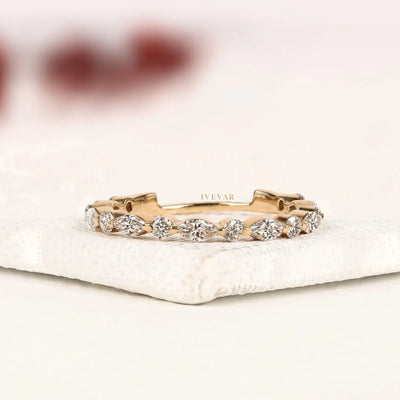
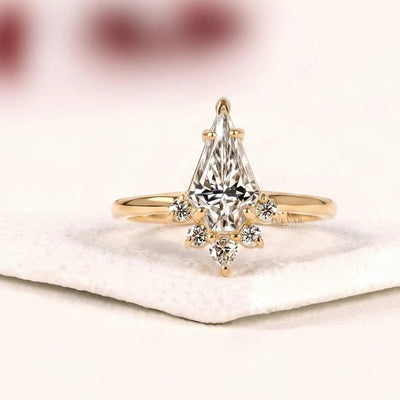
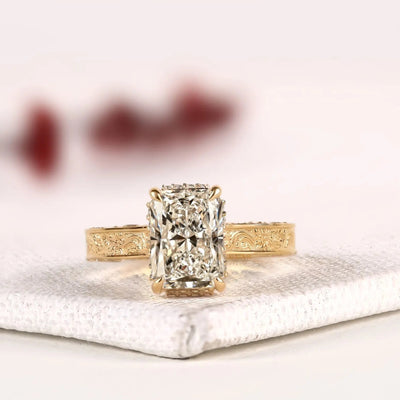
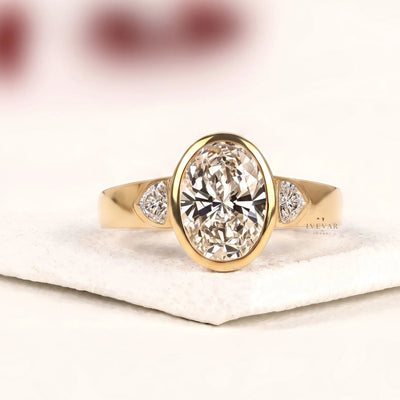
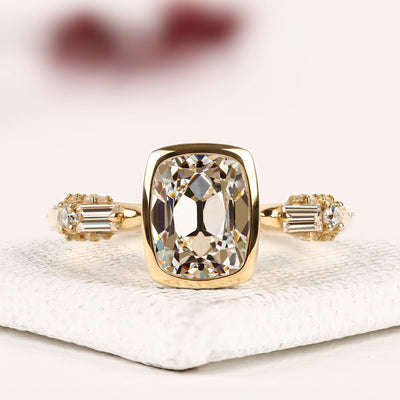
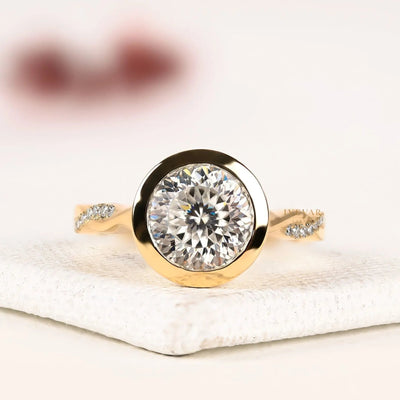
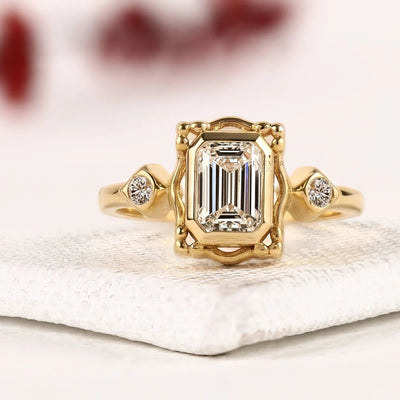
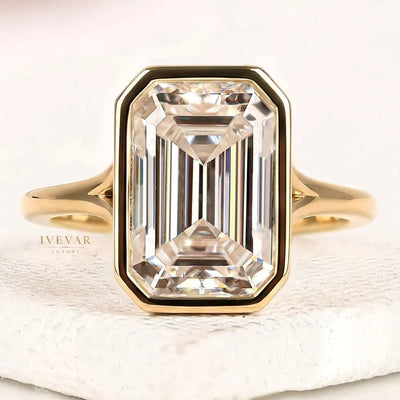
Ivevar makes rings in 10K, 14K and 18K gold in white, yellow and rose. Browse our solitaire rings to see how a single colorless stone looks in each metal.
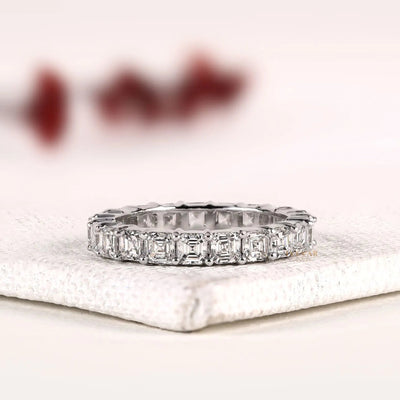
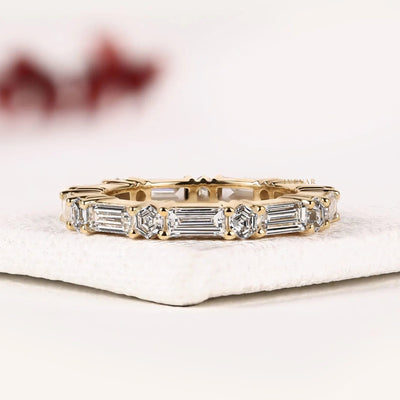
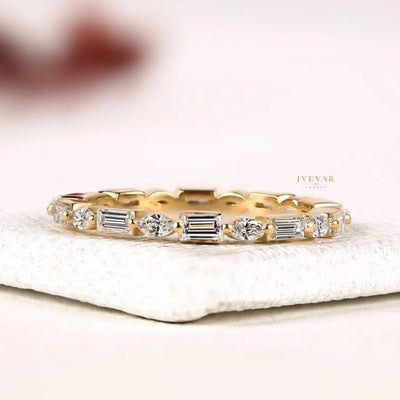
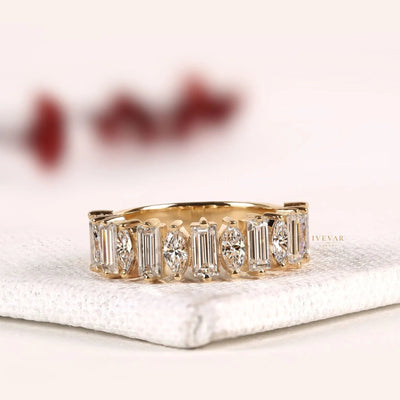
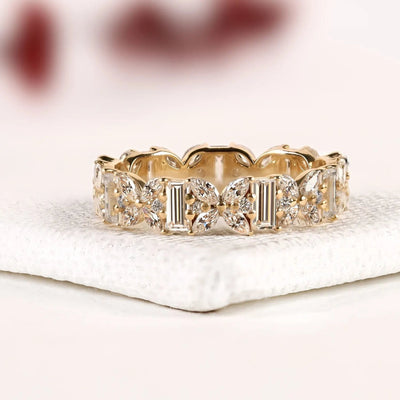
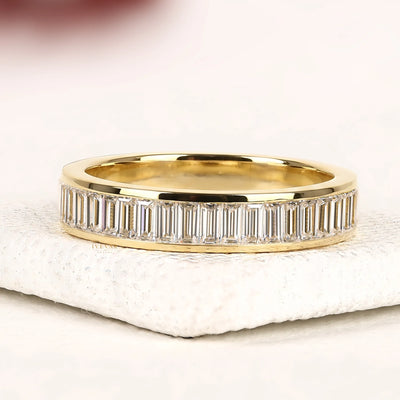
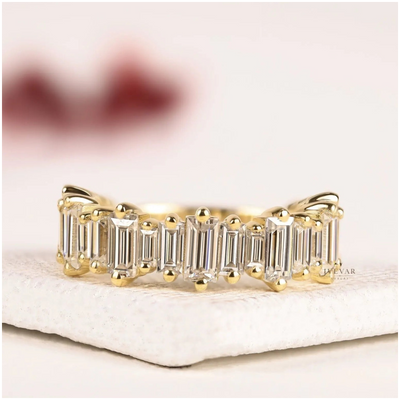
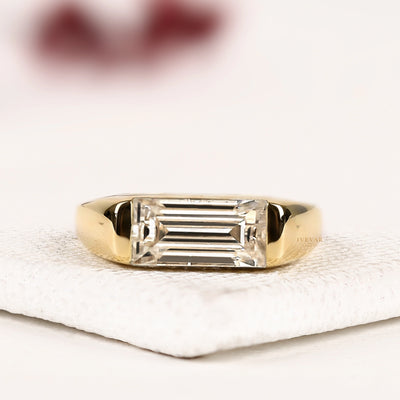
Shop the styles in this guide
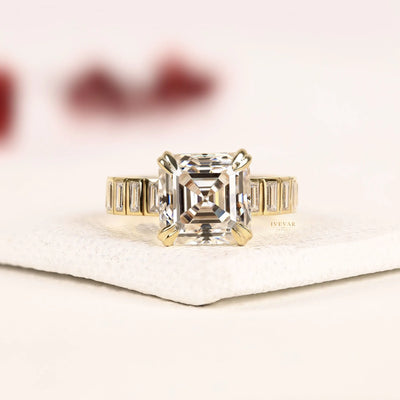
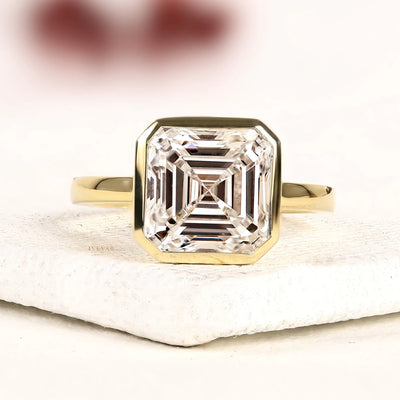
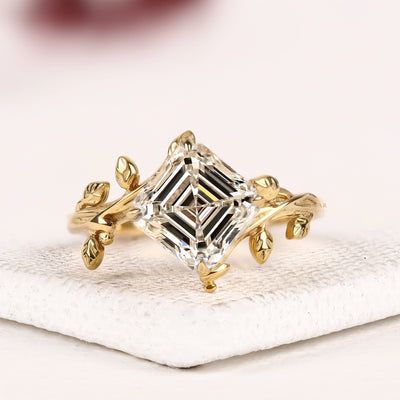
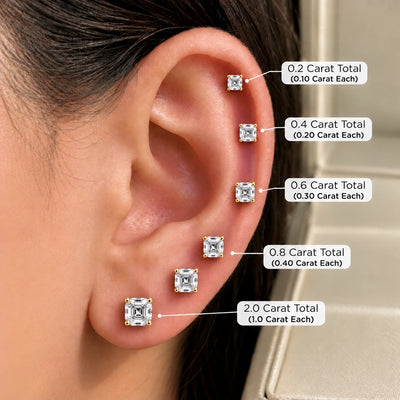



Color, Carat Size and Jewelry Type
The same color grade can look different depending on how big the stone is and how the piece is worn. Matching the grade to the jewelry is one of the easiest ways to spend wisely.
Larger stones show more color
Light travels a longer path through a bigger diamond, so any tint has more chance to build up. In a small stone, the gap between F and H is almost impossible to see. In a stone of two carats or more, especially in white gold, the jump from near-colorless to colorless becomes easier to appreciate. That is why D to F makes the most sense for larger center stones.
Engagement rings
The center stone is seen up close every day, often next to white metal. If your budget allows, a colorless grade keeps it bright and crisp. If you are choosing between size and color, remember that a larger F or G often makes more impact than a smaller D.
Earrings and pendants
Studs and pendants are viewed from further away and usually in smaller sizes. Near-colorless stones look white at that distance, though if you want earrings to match a colorless engagement ring exactly, an F pair is a sensible choice.
Bands and accent stones
Small stones in eternity bands, halos and pavé are usually graded as a color range rather than a single letter. A colorless or high near-colorless range keeps them looking uniform next to a D to F center stone. Browse our eternity rings for bands that pair well with a colorless solitaire.
Lab Grown Color: What to Know
Lab grown diamonds are chemically, physically and optically the same as mined diamonds and are graded on the same D to Z scale by labs such as IGI and GIA. A D color lab diamond is just as colorless as a D color mined diamond.
Why D to F is more accessible in lab grown
In mined diamonds, colorless stones are rare, and price climbs steeply from F to E to D. Lab grown diamonds are grown in controlled conditions by HPHT or CVD, and colorless stones are far easier to source. The price gap between D, E and F is smaller, so many buyers who would settle for G or H in a mined diamond can choose colorless in lab grown.
Post-growth treatment
Some CVD diamonds receive a post-growth heat treatment to improve their color. This is a standard, permanent process, and reputable reports note it. It does not change the diamond's durability or how you care for it.
Fluorescence
Fluorescence is a glow some diamonds show under ultraviolet light, such as sunlight or a black light. Reports list it as none, faint, medium, strong or very strong. In colorless grades, none or faint is the usual choice. In rare cases, strong fluorescence can make a stone look slightly hazy in daylight, so it is worth checking a video if the report shows strong.
A Practical Buying Checklist
- Start with cut: pick an excellent or ideal cut first; it matters more than any color step.
- Pick your metal: white gold points toward D to F; yellow or rose gold opens up G and H.
- Factor in shape: step cuts and large elongated shapes favor higher color.
- Check the report: confirm the color grade, fluorescence and any treatment on the IGI or GIA certificate, and match the report number.
- Watch a video: look at the stone face up in natural light, the way you will actually see it.
- Balance the budget: if D pushes you below your target size, an E or F of the right size will look better on the hand.
Keeping a colorless diamond looking white
A diamond's color grade never changes, but everyday life can dull its look. Hand cream, soap and skin oils build up a film on the underside of the stone, which blocks light and can make even a D look slightly grey or warm. Soak the ring in warm water with a little mild soap, brush gently behind the stone with a soft toothbrush, rinse and dry. A quick clean every week or two keeps a colorless diamond looking the way it did on day one.
Tip: Comparing a colorless lab diamond with moissanite? Moissanite is a separate gemstone, not a diamond, rated 9.25 on the Mohs scale against diamond's 10. Its higher refractive index, about 2.65 versus 2.42, gives more rainbow fire, while a D to F diamond gives a crisper white sparkle.
Colorless Lab Diamonds at Ivevar
Lab grown diamonds make D, E and F grades far more affordable. We hand-set them in our Surat workshop, and every order ships free worldwide and comes with 30-day easy returns. Browse pear lab diamonds and all loose lab diamonds.
Many of our lab diamonds come with IGI certificates, and we also make custom jewelry, so you can choose a specific D, E or F stone and have it set in the design you want. If you would like to compare stones before deciding, book a virtual appointment and we will show you options on video. You can also browse our lab diamond engagement rings for ready designs.
Shop D, E and F Lab Diamonds
 0.38 Ct D VS1 PearShop Now
 0.41 Ct E VS1 PearShop Now
 0.42 Ct E VS1 PearShop Now
 0.44 Ct E VS1 PearShop Now
 0.45 Ct E VS1 PearShop Now
 0.51 Ct F VVS2 PearShop Now
Swipe to see more → | View pear lab diamonds
Frequently Asked Questions
Can you see the difference between D and F?
Not once set; only side by side under lab lighting, viewed face down by a trained grader.
Is F color good?
Yes, it is colorless. F is the last grade in the colorless range and looks icy white in any setting, including white gold, where tint is easiest to notice. For most buyers it is the sweet spot between top color and sensible value.
Which colorless grade is best value?
F. It gives you a truly colorless stone at the lowest price in the D to F range.
Does metal affect color?
Yes; yellow gold can make any grade look warmer. White gold shows off colorless grades best.
Do lab diamonds come in D color?
Yes, often at accessible prices. They are graded on the same scale as mined diamonds.
Is E color worth it over F?
Only if you want a step closer to the top grade for your own peace of mind. The two look the same once set, so most buyers put the difference toward cut or size.
Should I choose D color for an emerald cut?
D to F is recommended for emerald and Asscher cuts because their open facets show color more. D is lovely but F already looks crisp.
Does fluorescence affect D, E or F diamonds?
Usually not. Most colorless stones have none or faint fluorescence. In rare cases strong fluorescence can cause a slight haze, so check a video if the report lists it.
Is G color noticeably different from F?
Not to most people once set. G is the top of the near-colorless range and is a popular value choice, especially in yellow or rose gold.
The Bottom Line
D, E and F all look icy white once set. Choose F for value, D for bragging rights, and E for a balance of both. Put cut first, match the grade to your metal and shape, and you will have a stone that looks flawlessly white for life.
Related Guides
Author Bio
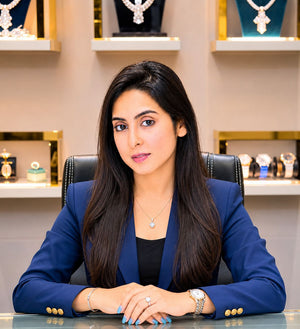
Aumsri Pradhan
Founder, Ivevar Luxury
Aumsri Pradhan is the founder of Ivevar Luxury, a Surat-based fine jewelry brand that designs and handcrafts lab grown diamond and moissanite jewelry in its own workshop. She leads the brand's design and customer experience, from engagement rings and bridal sets to custom pieces made to each client's story. Through the Ivevar blog, she shares practical guidance on lab grown diamonds, moissanite, diamond grading and ring design to help buyers choose with confidence.

SI1 vs VS1 Diamond Clarity

Custom vs Ready-Made Rings

Black Diamonds vs White Diamonds

