Engagement Rings
 Anniversary Rings
 Solitaire Rings
 Halo Rings
 Toi Moi Rings
 Three Stone Rings
 Nature Inspired Rings
 Rose Cut Rings
 Fancy Color Rings
 Antique Cut Rings
 Wedding Rings
 Wedding Band Rings
 Exclusive Lab Grown Diamond Rings
 All Lab Grown Diamond Ring
 Engagement Rings
 Three Stone Rings
 Fancy Color Rings
 Antique Cut Rings
 Daily Wear Rings
 Wedding Band Rings
 Exclusive Moissanite Rings
 Earrings
 Bracelet
 Pendant
 Necklace
 Men's Ring
 Bridal Sets
 Rings
Rings
 Earrings
 Tennis chain
 Cuban Chains
 Custom Pendant
 Custom Ring
 Custom Teeth Grillz
 Round
Round
 Oval
Oval
 Cushion
 Marquise
 Pear
Pear
 Emerald
 Heart
Heart
 Princess
 Rose Cut
 Radiant
 Antique Cut
 Brooch
 Cufflink
 Keychain
 Unique Products
 +91 9265051773
 Virtual Appointment
 log in



Quick answer: Cut is the most important grade for a lab grown diamond's sparkle. For round diamonds, choose the top cut grade on the report (Ideal or Excellent), with Excellent polish and symmetry. Fancy shapes like ovals and pears usually do not get an overall cut grade, so judge them by polish, symmetry, proportions and how they look in photos or video.
Cut is not the shape of a diamond; it is how well its facets are angled and finished to reflect light. Here is how to read cut grades and pick a stone that truly shines.
Why Cut Matters Most
A diamond's sparkle comes from light entering the top, bouncing off the facets inside, and returning to your eye. When the angles are right, you see brightness, fire (flashes of color) and scintillation (sparkle as it moves). When a diamond is cut too deep or too shallow, light leaks out the bottom or sides, and the stone can look dull or dark even with top color and clarity.
Cut Grades on a Lab Grown Diamond Report
| Grade | What it means | Our advice |
|---|---|---|
| Ideal / Excellent | Top light performance and proportions | Choose this for rounds |
| Very Good | Slightly less light return | Fine for budget or small stones |
| Good | Noticeably less sparkle | Usually not recommended |
| Fair / Poor | Light leaks out; dull appearance | Avoid |
Grading labs use slightly different names for their top grades. What matters is choosing the highest cut grade the lab offers, not the exact word.
Polish and Symmetry
Every report also grades polish (how smooth the facet surfaces are) and symmetry (how precisely the facets line up). Aim for Excellent in both. Together with the cut grade, these are often called "triple excellent" for round diamonds.
How to Judge Fancy Shape Cuts
Ovals, pears, marquise, cushions, emeralds and radiants rarely receive an overall cut grade, because there is no single ideal set of proportions for them. Instead, check:
- Polish and symmetry: Excellent or Very Good.
- Bow tie: in ovals, pears and marquise, look for a light, faint bow tie rather than a dark band across the center.
- Length-to-width ratio: choose an outline you like; for ovals, 1.35 to 1.50 is popular.
- Depth: very deep stones look smaller for their weight; very shallow stones can look glassy.
- Real photos or video: the most honest check of sparkle.
 Shown: Oval Lab Grown Diamond Solitaire Pendant with Four Prong Side Loops
Round Diamond Proportions at a Glance
If you like to check the numbers on a round brilliant, many top-performing stones fall roughly within these ranges. They are a guide, not a rule.
| Measurement | Typical strong range |
|---|---|
| Table | about 54% to 58% |
| Total depth | about 59% to 62.5% |
| Girdle | thin to medium, not extremely thick |
| Culet | none or pointed |
Is Cut Different for Lab Grown Diamonds?
No. Lab grown diamonds are cut and polished with the same tools and graded on the same standards as mined diamonds. The good news is that lower lab grown prices make it easier to afford a top cut grade without compromising elsewhere.
Cut Quality at Ivevar
Surat, where our workshop is based, is one of the world's main diamond-cutting centers. We choose stones for how they perform in real light and handcraft each setting to show them off. Every piece ships free worldwide, with 30-day easy returns. Explore our lab grown diamond pendants and loose lab grown diamonds.
Shop Lab Grown Diamond Pendants
 Oval Solitaire PendantShop Now
 Princess Solitaire PendantShop Now
 Emerald Cut Solitaire PendantShop Now
 Heart Halo Pendant NecklaceShop Now
 Open Circle Halo PendantShop Now
 Teardrop Halo Lariat NecklaceShop Now
Swipe to see more → | View all pendants
Frequently Asked Questions
Is Ideal cut better than Excellent?
Both are top grades. Different labs name their highest grade differently; choose the top grade the report offers.
Is Very Good cut acceptable?
For small stones or tight budgets, yes. For a center stone, we recommend the top cut grade whenever possible.
Why does my oval not have a cut grade?
Most labs do not give overall cut grades to fancy shapes. Use polish, symmetry, proportions and real images instead.
Can a better cut make a diamond look bigger?
Yes. A well-proportioned stone spreads its weight across the face-up area and looks brighter, which makes it look larger.
The Bottom Line
Cut decides how your lab grown diamond sparkles. Choose the top cut grade for rounds, Excellent polish and symmetry for every shape, and trust real photos and video when judging fancy shapes.
Related Guides
- How to buy a lab grown diamond: a simple buying guide
- Diamond shapes guide
- Styling lab grown diamond pendants
Author Bio
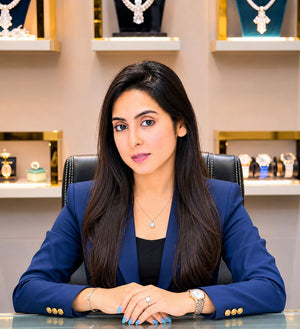
Aumsri Pradhan
Founder, Ivevar Luxury
Aumsri Pradhan is the founder of Ivevar Luxury, a Surat-based fine jewelry brand that designs and handcrafts lab grown diamond and moissanite jewelry in its own workshop. She leads the brand's design and customer experience, from engagement rings and bridal sets to custom pieces made to each client's story. Through the Ivevar blog, she shares practical guidance on lab grown diamonds, moissanite, diamond grading and ring design to help buyers choose with confidence.