

 Engagement Rings
 Anniversary Rings
 Solitaire Rings
 Halo Rings
 Toi Moi Rings
 Three Stone Rings
 Nature Inspired Rings
 Rose Cut Rings
 Fancy Color Rings
 Antique Cut Rings
 Wedding Rings
 Wedding Band Rings
 Exclusive Lab Grown Diamond Rings
 All Lab Grown Diamond Ring
 Engagement Rings
 Three Stone Rings
 Fancy Color Rings
 Antique Cut Rings
 Daily Wear Rings
 Wedding Band Rings
 Exclusive Moissanite Rings
 Earrings
 Bracelet
 Pendant
 Necklace
 Men's Ring
 Bridal Sets
 Rings
 Earrings
 Tennis chain
 Cuban Chains
 Custom Pendant
 Custom Ring
 Custom Teeth Grillz
 Round
 Oval
 Cushion
 Marquise
 Pear
 Emerald
 Heart
 Princess
 Rose Cut
 Radiant
 Antique Cut
 Brooch
 Cufflink
 Keychain
 Unique Products
 +91-9265051773
 Virtual Appointment
 log in




Short answer: Radiant and princess cuts are both brilliant-faceted square or rectangular shapes. The key difference is the corners: radiants have trimmed (beveled) corners, which makes them more durable and easier to set, while princess cuts have sharp pointed corners that need V-prongs or protective settings. Radiants come in square and rectangular versions with lively, crushed-ice sparkle; princess cuts are almost always square, with crisp, bold brilliance, and are often a little more affordable per carat.
If you love clean lines but still want plenty of sparkle, radiant and princess are the two shapes to compare. Both combine a geometric outline with brilliant-style faceting, so they flash and glitter rather than showing the calm "hall of mirrors" look of an emerald or Asscher cut. From across a room they can look similar. Up close, and over years of wear, the differences start to matter.
This guide covers how each shape is cut, how they sparkle, how they look on the hand, how they hold up to daily life, which settings suit them and how to buy each one well, so you can choose the right one with confidence.
Radiant vs Princess at a Glance
| Feature | Radiant | Princess |
|---|---|---|
| Corners | Trimmed | Sharp points |
| Outline | Square or rectangle | Mostly square |
| Sparkle | Crushed-ice, lively | Crisp, bold |
| Durability | More chip-resistant | Corners need protection |
| Typical ratio range | 1.00 to 1.05 (square) or 1.20 to 1.35 (rectangle) | 1.00 to 1.05 |
| Price per carat | Moderate | Often a little lower |
| Style | Modern-vintage blend | Clean, contemporary |
The short version: radiant is the more flexible, more forgiving shape; princess is the sharper, more graphic one, and often the better value.
How Each Shape Is Cut
The princess cut
A princess cut is a square brilliant. Seen from above it has four straight sides and four pointed corners. Its pavilion (the underside) is cut with long, chevron-shaped facets that reach from the girdle to the culet, which gives the princess its distinctive cross or "X" pattern of light when you look down into it. It was developed as a square alternative to the round brilliant, and it remains one of the most popular non-round shapes for engagement rings.
The radiant cut
A radiant cut combines the straight-sided, trimmed-corner outline of an emerald cut with brilliant-style faceting on both the crown and the pavilion. The result is a square or rectangle with clipped corners and a dense pattern of small facets. That faceting breaks light into lots of small sparkles, which is why radiants are often described as having a "crushed ice" look.
Put simply: a princess is a square brilliant with sharp corners, and a radiant is a square or rectangular brilliant with its corners cut off. That one difference drives most of the practical trade-offs below.
Sparkle and Light Performance
Both shapes are brilliant cuts, so both sparkle strongly. The character of the sparkle is different, though.
- Princess: tends to show larger, bolder flashes and a crisp cross pattern. It looks sharp and modern.
- Radiant: tends to show many smaller, busier sparkles spread across the stone. It looks lively and glittery.
- Deeper radiants: can show more of the crushed-ice effect; shallower ones can show larger flashes, closer to a princess.
Lighting changes the effect too. Under bright, direct light such as spotlights or sunshine, both shapes throw sharp flashes of white and colored light. In soft, diffused office light, the radiant's many small facets keep it twinkling, while a princess shows its bold cross pattern more clearly. Neither shape looks dull in everyday conditions, provided it is well cut and kept clean.
Neither is "better"; it comes down to whether you prefer bold, defined flashes or a soft, shimmering glitter. Watching a video of each stone as it moves is the best way to tell which you prefer.
Tip: Fancy shapes like radiant and princess do not have a single standard cut grade the way rounds do. Use the grading report for the basics, then judge the sparkle with your own eyes on video or in person.
Shape, Ratio and Face-Up Size
The length-to-width ratio decides whether a stone looks square or rectangular. It is the length divided by the width.
| Ratio | Radiant look | Princess look |
|---|---|---|
| 1.00 to 1.05 | Square radiant | Classic square princess |
| 1.05 to 1.15 | Slightly rectangular | Looks slightly off-square |
| 1.20 to 1.35 | Classic rectangular radiant | Rarely cut this way |
| Above 1.35 | Long, elegant rectangle | Not typical |
This is one of the radiant's biggest advantages: you can choose a square or an elongated outline. Rectangular radiants are especially popular because they lengthen the finger and look larger from the top.
On face-up size, both shapes carry a fair amount of their weight in the pavilion, so a square radiant or princess tends to look a little smaller from above than a round or an oval of the same carat weight. A rectangular radiant spreads further along the finger and so looks bigger than a square one. If visible size matters most, compare stones by their millimetre measurements, not their carat weight.
How Each Looks on the Hand
A square princess sits compact and centred on the finger. Its straight edges and sharp corners give it a tailored, architectural feel that suits people who like minimal, modern jewelry. Because its outline is square, it does not lengthen the finger, but it looks bold and confident, especially on medium to longer fingers.
A radiant can play either role. A square radiant looks similar to a princess at a glance, but the clipped corners soften the outline slightly and give it a hint of vintage character. A rectangular radiant behaves more like an emerald or an elongated cushion: it draws the eye along the finger, flatters shorter fingers and gives more visible coverage.
- Shorter fingers: a rectangular radiant with a ratio of about 1.20 or more adds length.
- Slender fingers: a square princess or square radiant looks balanced without overwhelming the hand.
- Wider hands: a larger rectangular radiant tends to look more in proportion than a small square stone.
- East-west: a rectangular radiant set sideways across the finger is a modern, low-profile option.
Durability and Setting
Radiant corners are cut back, so they are less likely to chip and can be held with standard prongs. Princess corners are the stone's weakest point and should be covered with V-prongs or a bezel. Both work beautifully in halos and pavé settings.
It helps to understand why. A diamond is the hardest natural material, 10 on the Mohs scale, so it resists scratches extremely well. But hardness is not toughness. A sharp, thin corner can chip if it takes a hard knock at the wrong angle. A princess has four such corners. A radiant trims them away, so there is no thin point to catch.
- Princess settings: four V-prongs (or claw prongs that fully cover each corner), a bezel, or a channel setting for smaller stones.
- Radiant settings: four or six prongs, a bezel, or a halo. V-prongs are not required.
- Everyday wear: both are suitable once properly set; radiant is simply more forgiving.
Popular setting styles
- Solitaire: shows off the outline. For a princess, look for prongs that wrap each corner.
- Halo: a square or rectangular halo makes either shape look larger and adds sparkle. For a princess, the halo also shields the corners.
- Hidden halo: a row of small stones beneath the centre adds side sparkle while keeping a clean top view.
- Three stone: a radiant with tapered baguettes or trapezoids, or a princess with two smaller princess cuts, creates a balanced geometric look.
Caring for both shapes
Clean either stone every week or two with warm water, a drop of mild soap and a soft brush, paying attention to the underside where lotion and oil collect. Have the prongs checked once or twice a year; for a princess, pay particular attention to the corner prongs, since a lifted prong leaves a point exposed. Take your ring off for the gym, gardening and heavy cleaning.
 Shown: 0.31 Ct Radiant Shape D Color VVS1 Lab Grown Diamond
Wedding bands and stacking
Both shapes have straight sides, so both sit neatly beside straight wedding bands, which is a real advantage over pear, marquise or heart shapes. A princess in a low setting pairs especially well with channel-set princess bands for a clean, geometric stack. A rectangular radiant suits both straight bands and eternity bands, and looks striking with tapered baguette side stones.
Color and Clarity
The 4Cs apply to both shapes, but each has its quirks.
Color
Radiants are known for intensifying color, which is great news for fancy colored diamonds such as yellow or pink, and is one reason radiants are a favourite shape for colored stones. For a white diamond, it means a radiant can show a hint of warmth a little more readily than some other shapes, especially at the corners. If you want an icy look in white gold, the colorless to near-colorless range is a safe choice. Princess cuts also show a little color at the corners. In yellow or rose gold, the warm metal hides slight tint for either shape.
Clarity
Both brilliant patterns are good at hiding small inclusions, so eye-clean is the realistic target for both. With a princess, check that there are no feathers or chips near the corners, because those are the most exposed areas. Radiants, with their busy faceting, are often very forgiving of small inclusions.
Certification
For lab grown diamonds, a report from IGI or GIA confirms color, clarity, measurements, and polish and symmetry grades, and it makes comparing stones much easier.
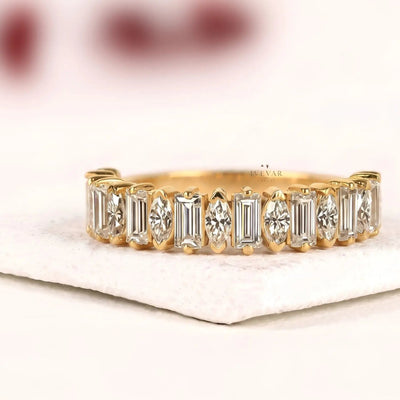
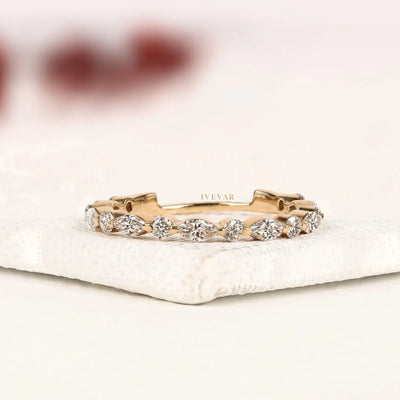
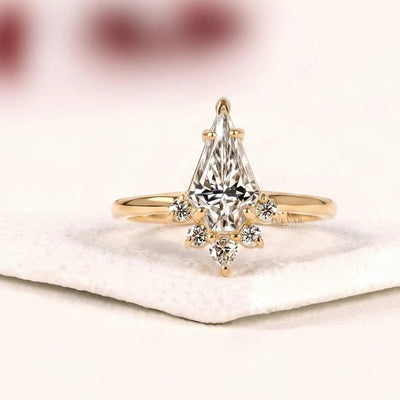
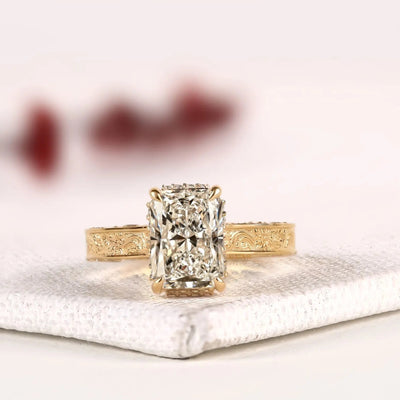
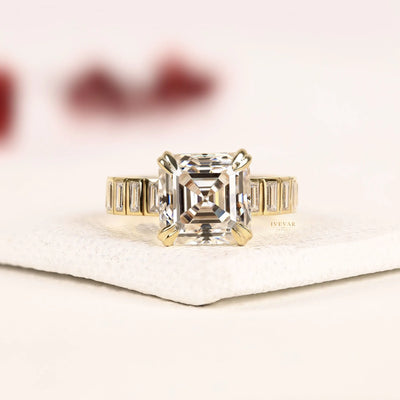
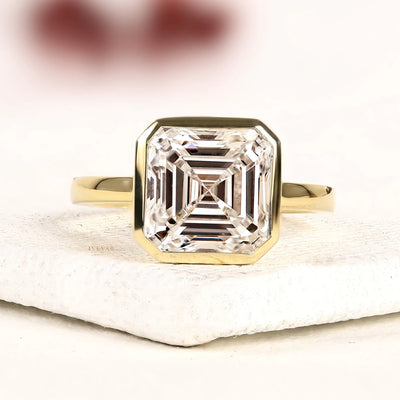
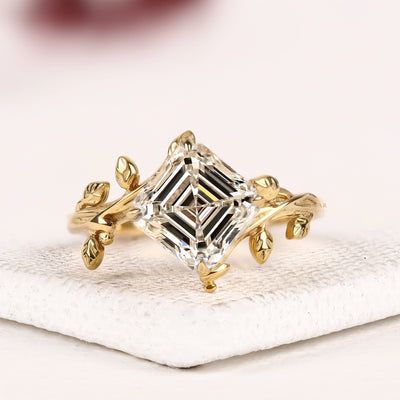
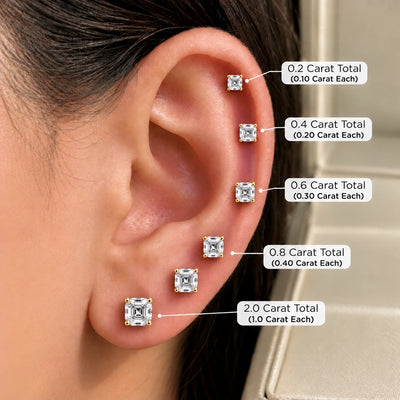
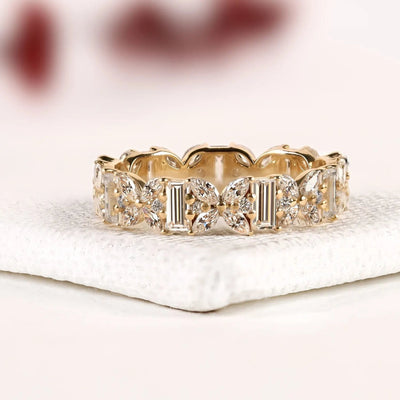
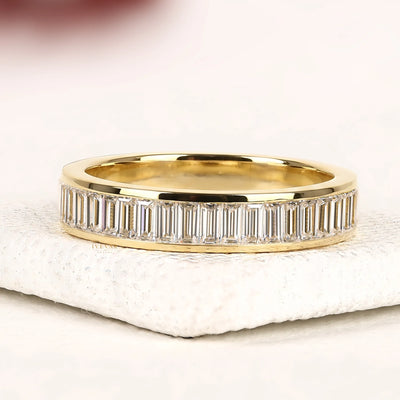
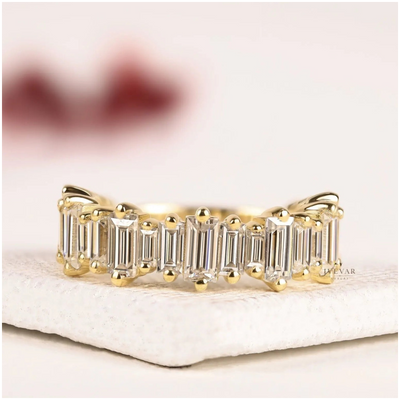
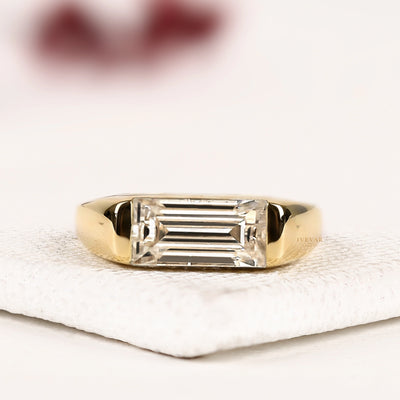
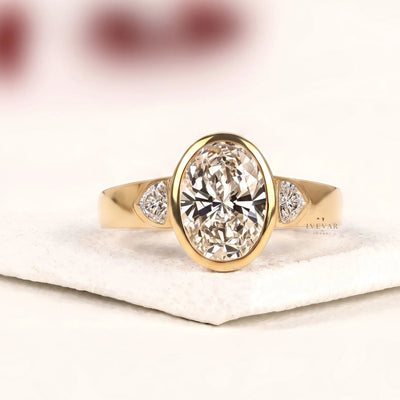
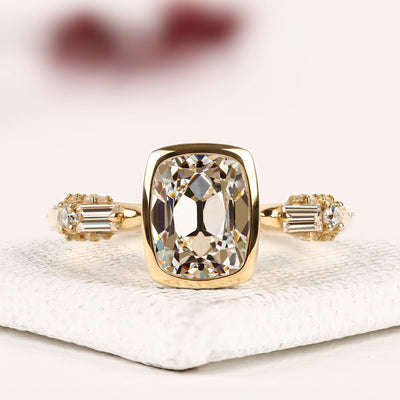
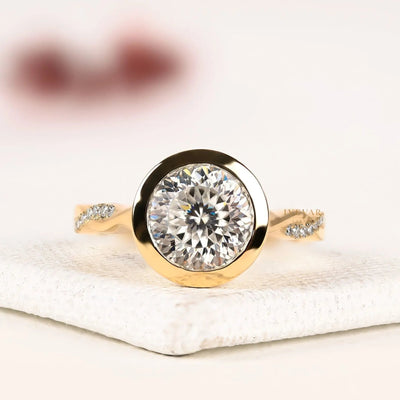
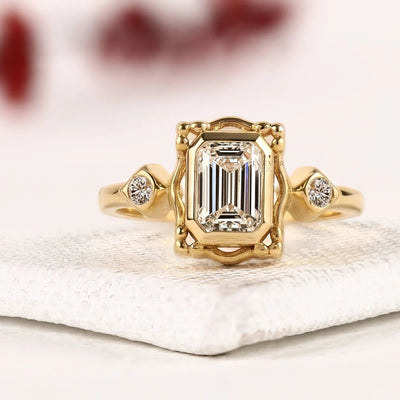
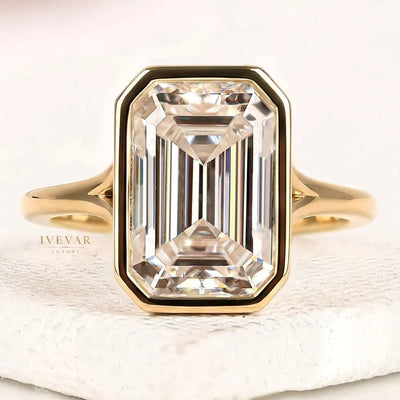
Shop the styles in this guide
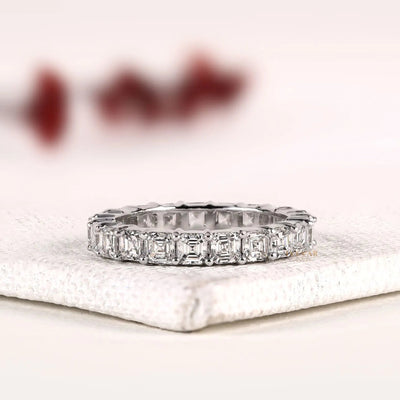
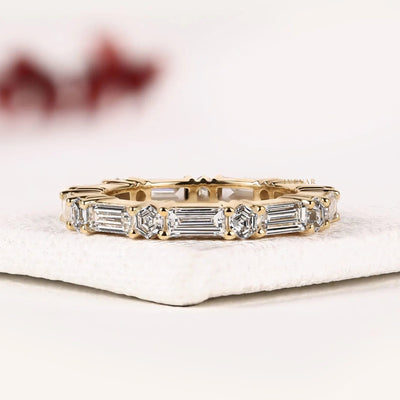
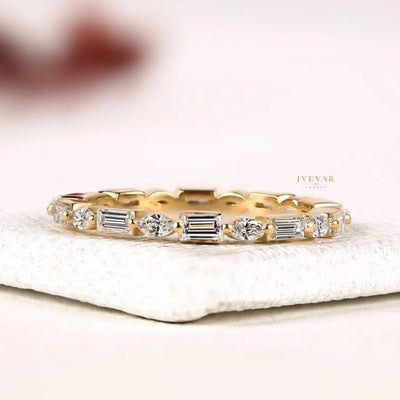
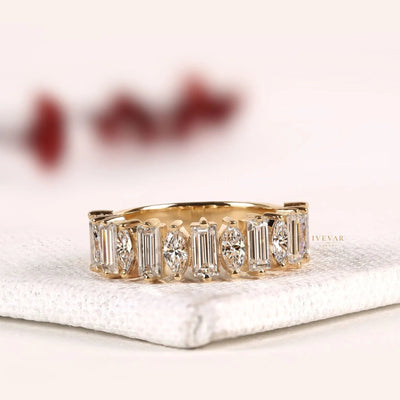



Lab Grown Diamond or Moissanite?
Both shapes are available in lab grown diamond and in moissanite. Lab grown diamonds are real diamonds, grown by CVD or HPHT, and are chemically, physically and optically the same as mined diamonds. Moissanite is a different gemstone, silicon carbide, with a Mohs hardness of 9.25 and a refractive index of about 2.65 compared with about 2.42 for diamond.
| Factor | Lab grown diamond | Moissanite |
|---|---|---|
| What it is | Real diamond | Silicon carbide, not a diamond |
| Hardness | 10 | 9.25 |
| Sparkle | Classic white brilliance with fire | More rainbow fire |
| Grading | IGI or GIA reports | Not graded on the diamond scale |
In a radiant, moissanite's extra fire adds to the already busy, glittering look; in a princess it creates bold rainbow flashes. If you want classic diamond brilliance, lab grown is the natural choice. Explore moissanite radiants and moissanite princess cuts to compare.
Getting the Best Value
- Choose the outline first: decide square or rectangle before anything else. If you want a rectangle, radiant is the clear choice.
- Princess for value: princess cuts are often a little more affordable per carat than radiants of similar quality, so they can stretch a budget.
- Radiant for size: a rectangular radiant looks bigger on the finger than a square stone of the same weight.
- Be practical on clarity: both shapes hide small inclusions well. Eye-clean is enough.
- Match color to metal: in yellow or rose gold you can choose a slightly lower color grade without it showing.
- Budget for protection: for a princess, make sure the setting includes proper corner protection.
Which Should You Choose?
- Radiant: active lifestyles, a preference for rectangles, crushed-ice sparkle and fancy colored stones.
- Princess: a crisp square look, value for money, modern style and neat channel-set stacks.
- Best for hands-on work: radiant, thanks to its trimmed corners.
- Best for a clean geometric look: princess.
Read princess cut pros and cons and emerald vs radiant.
Common mistakes to avoid
- Ignoring corner protection: a princess in thin claw prongs that leave the tips exposed is the most common avoidable risk.
- Buying by carat alone: a deep stone can weigh more yet look smaller. Always compare length and width.
- Assuming a ratio from photos: a radiant listed as "square" can be noticeably rectangular. Check the ratio on the report.
- Overpaying for invisible grades: very high clarity grades rarely show any visible difference in these busy brilliant patterns.
- Skipping the video: sparkle pattern is the main difference between these shapes, and still photos cannot show it.
Tip: If you like the princess look but worry about the corners, a princess in a bezel or a radiant in a square ratio are both great compromises.
Radiant and Princess at Ivevar
We hand-set radiant and princess lab diamonds in our Surat workshop, many with IGI certificates, and we also offer both shapes in moissanite. Choose 10K, 14K or 18K gold, or ask our team for a custom design such as a rectangular radiant with baguette side stones or a princess in a bezel. You can also book a virtual appointment to compare stones on video. Every piece ships free worldwide and comes with 30-day easy returns. Browse radiant and princess lab diamonds, or explore our lab grown solitaire rings.
Shop Radiant and Princess Lab Diamonds
 0.31 Ct D VVS1 RadiantShop Now
 0.30 Ct D VVS2 RadiantShop Now
 0.31 Ct D VS1 RadiantShop Now
 0.31 Ct D VVS1 PrincessShop Now
 0.33 Ct D VVS1 PrincessShop Now
 0.37 Ct D VVS1 PrincessShop Now
Swipe to see more → | View radiant lab diamonds
Frequently Asked Questions
Is radiant more durable than princess?
Yes. Its trimmed corners resist chipping, while a princess needs its corners covered by V-prongs or a bezel.
Which sparkles more?
Both sparkle strongly with different patterns. Princess cuts show bolder flashes; radiants show a busier, crushed-ice glitter.
Which is cheaper?
Princess cuts are often slightly more affordable per carat than radiants of similar quality.
Can radiants be rectangular?
Yes, and rectangular radiants are very popular because they lengthen the finger and look larger.
Do princess cuts need V-prongs?
Yes, or another setting that covers the corners, such as a bezel.
Which looks bigger?
A rectangular radiant usually looks bigger than a square princess of the same carat weight. Square versions of both look similar.
Which is better for colored diamonds?
Radiant. Its faceting intensifies color, which is why it is a favourite for yellow and pink diamonds.
Do both pair with straight wedding bands?
Yes. Their straight sides sit neatly against straight bands, especially in lower settings.
Is a princess cut out of style?
No. It remains a classic choice for people who love a clean, modern square, and it pairs beautifully with channel-set bands.
Can I get a custom radiant or princess ring?
Yes. We can build a custom setting around the stone you choose, from a bezel princess to a rectangular radiant with side stones.
The Bottom Line
Radiant for durability and lively sparkle in a square or rectangle; princess for crisp square style and value. Decide on your outline, protect princess corners, compare by millimetres and judge the sparkle on video, and either shape will make a beautiful ring.
Related Guides

Author Bio
Aumsri Pradhan
Founder, Ivevar Luxury
Aumsri Pradhan is the founder of Ivevar Luxury, a Surat-based fine jewelry brand that designs and handcrafts lab grown diamond and moissanite jewelry in its own workshop. She leads the brand's design and customer experience, from engagement rings and bridal sets to custom pieces made to each client's story. Through the Ivevar blog, she shares practical guidance on lab grown diamonds, moissanite, diamond grading and ring design to help buyers choose with confidence.

SI1 vs VS1 Diamond Clarity

Custom vs Ready-Made Rings

Black Diamonds vs White Diamonds

