

 Engagement Rings
 Anniversary Rings
 Solitaire Rings
 Halo Rings
 Toi Moi Rings
 Three Stone Rings
 Nature Inspired Rings
 Rose Cut Rings
 Fancy Color Rings
 Antique Cut Rings
 Wedding Rings
 Wedding Band Rings
 Exclusive Lab Grown Diamond Rings
 All Lab Grown Diamond Ring
 Engagement Rings
 Three Stone Rings
 Fancy Color Rings
 Antique Cut Rings
 Daily Wear Rings
 Wedding Band Rings
 Exclusive Moissanite Rings
 Earrings
 Bracelet
 Pendant
 Necklace
 Men's Ring
 Bridal Sets
 Rings
 Earrings
 Tennis chain
 Cuban Chains
 Custom Pendant
 Custom Ring
 Custom Teeth Grillz
 Round
 Oval
 Cushion
 Marquise
 Pear
 Emerald
 Heart
 Princess
 Rose Cut
 Radiant
 Antique Cut
 Brooch
 Cufflink
 Keychain
 Unique Products
 +91-9265051773
 Virtual Appointment
 log in




Short answer: A diamond grading report (often called a certificate) from a lab such as IGI or GIA lists the diamond's report number, shape and cutting style, measurements, carat weight, color grade, clarity grade, cut grade (for round brilliants), polish, symmetry, fluorescence, proportions and a clarity plot. Lab grown diamond reports also state clearly that the diamond is laboratory grown and often name the growth method (CVD or HPHT). Before buying, check that the report number matches the laser inscription on the diamond's girdle and the lab's online record.
A grading report is your diamond's ID card. It is written by an independent laboratory that examined the stone under controlled lighting and magnification, so it lets you compare diamonds fairly and confirm that you are getting what you pay for.
Reports can look technical at first, but every section answers a simple question: what is this diamond, how big is it, how white, how clean and how well cut? This guide walks through a report section by section, explains what the grades mean in real life, and shows you how to verify a report before you buy.
Sections of a Grading Report
Layouts differ slightly between labs and report types, but most full reports contain the same core information.
| Section | What it tells you | What to look for |
|---|---|---|
| Report number | Unique ID | Matches the girdle inscription and online database |
| Shape and cutting style | e.g., Heart Brilliant | The shape you expect |
| Measurements | Length x width x depth (mm) | Face-up size and ratio |
| Carat weight | Weight to two decimals | Matches the listing |
| Color grade | D to Z, or fancy color description | Eye-white or desired hue |
| Clarity grade | FL to I3 | Eye-clean |
| Cut, polish, symmetry | Excellent to Poor | Excellent or Very Good |
| Fluorescence | None to Very Strong | None to Medium is safest |
| Proportions diagram | Table %, depth %, angles | Balanced proportions |
| Clarity plot | Map of inclusions | Location and type of inclusions |
| Comments | Growth method, treatments | "Laboratory grown," CVD/HPHT, any post-growth treatment |
Identity: Report Number, Shape and Measurements
Report number and date
Every report has a unique number. It links the paper or PDF to the lab's database and, in most cases, to a tiny laser inscription on the diamond's girdle (its outer edge). The date tells you when the stone was graded.
Shape and cutting style
Shape is the outline you see from above: round, oval, pear, emerald, cushion, heart and so on. Cutting style describes the facet arrangement. "Brilliant" cuts, such as round brilliant or heart brilliant, have many triangular and kite-shaped facets designed for sparkle. "Step" cuts, such as emerald and Asscher, have long parallel facets that show clarity and a hall-of-mirrors effect.
Measurements
Measurements are listed in millimeters. For a round diamond you will see minimum diameter, maximum diameter and depth, for example 6.42 - 6.45 x 3.98 mm. For fancy shapes you will see length x width x depth.
These numbers matter more than many buyers realize. The face-up size (length and width) is what people actually see. Two diamonds of the same carat weight can look different in size if one carries more weight in its depth. Dividing length by width also gives you the length-to-width ratio, which controls whether an oval or pear looks slim or chunky.
The 4Cs on the Report
Carat weight
Carat is weight, not size. One carat equals 0.2 grams. Reports give weight to two decimal places, such as 1.01 ct. Prices often step up at round numbers like 0.50, 0.90 and 1.00 carat, so a diamond just below these marks can look almost identical for less.
Color grade
White diamonds are graded on a scale from D (colorless) to Z (light yellow or brown).
| Color range | Description | What it means in practice |
|---|---|---|
| D, E, F | Colorless | Icy white; the top of the scale |
| G, H, I, J | Near colorless | Looks white face-up in most settings |
| K, L, M | Faint color | A visible warm tint, attractive in yellow gold |
| N to Z | Very light to light color | Clearly tinted |
For most buyers, G to H gives a bright white look, especially in white gold or platinum. In yellow or rose gold, a slightly lower color often looks just as good because the metal adds warmth anyway.
Clarity grade
Clarity describes inclusions (internal features) and blemishes (surface features). The scale runs from Flawless to Included.
- FL and IF: Flawless and Internally Flawless; no inclusions visible at 10x magnification.
- VVS1 and VVS2: Very, very slightly included; tiny features that are very hard to see even at 10x.
- VS1 and VS2: Very slightly included; minor features visible at 10x, usually invisible to the eye.
- SI1 and SI2: Slightly included; noticeable at 10x and sometimes visible to the eye, especially in larger stones.
- I1, I2 and I3: Included; features are often visible to the naked eye.
The goal for most people is an "eye-clean" diamond, one with no inclusions you can see at normal viewing distance. That often means VS2 or better in larger stones and step cuts, while some SI1 stones are also eye-clean. The clarity plot, covered below, helps you judge this.
Cut, polish and symmetry
For round brilliant diamonds, most labs give an overall cut grade, typically from Excellent (or Ideal) down to Poor. Cut has the biggest effect on sparkle, so it is the grade worth prioritizing. Polish describes the smoothness of the facet surfaces and symmetry describes how precisely the facets are aligned. Excellent or Very Good on both is a safe target.
Many fancy shapes do not receive an overall cut grade because there is no single agreed ideal for them. For ovals, pears, hearts and others, you rely on polish, symmetry, proportions and, most importantly, photos and videos of the actual stone.
Tip: Prioritize cut first, then choose color and clarity that look clean and white to the eye. Paying for D color or Flawless clarity adds cost you usually cannot see.
Putting it together: a quick example
Imagine a report for a round brilliant lab grown diamond that reads 1.02 ct, G color, VS2 clarity, Excellent cut, Excellent polish, Excellent symmetry, fluorescence None, with a table of 57% and a depth of 61.8%. Reading it line by line: the weight is just over one carat; G will look white face-up; VS2 is very likely eye-clean, which you would confirm on the clarity plot and in photos; the cut, polish and symmetry are top grades; no fluorescence means no risk of haziness; and both proportions sit within the usual ideal ranges. That is a well-balanced diamond on paper, and the final step is simply checking the actual stone looks bright and lively.
Proportions, Fluorescence and Other Details
Proportions diagram
The diagram shows a profile of the diamond with key numbers: table percentage, depth percentage, crown angle, pavilion angle, girdle thickness and culet. For round brilliants, a table of about 54% to 60% and a depth of about 59% to 62.5% usually indicate a well-cut stone. Our guide to diamond table and depth percentage explains how to use these numbers.
Girdle and culet
The girdle is described in words such as thin, medium or slightly thick. Extremely thin girdles are more prone to chipping; extremely thick ones add hidden weight. The culet is the point at the bottom; "none" or "pointed" is normal for modern cuts.
Fluorescence
Fluorescence describes whether a diamond glows, usually blue, under ultraviolet light. It is graded from None to Very Strong. In most diamonds it has no visible effect in daylight. In rare cases, strong fluorescence can give a slightly hazy look, so None to Medium is the safest choice if you cannot see the stone in person.
Laser inscription
Many reports note an inscription on the girdle, usually the report number and sometimes the words "lab grown." It is invisible to the naked eye but easy for a jeweler to read under magnification.
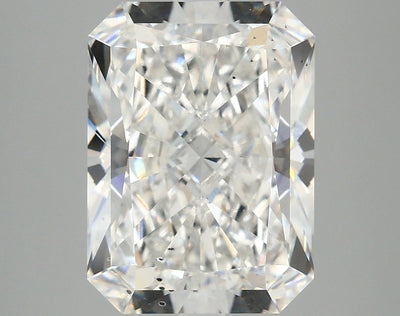
 Shown: Heart 3.17ct I VS1 IGI Certified Lab Grown Diamond
Reading the Clarity Plot
The clarity plot is a map of the diamond, drawn from above (crown) and below (pavilion), with symbols marking each inclusion. It is one of the most useful parts of the report because it shows where features are, not just how many.
- Color coding: On many reports, red symbols mark internal inclusions and green symbols mark external blemishes.
- Key to symbols: A list beside the plot names the features in order of importance, such as crystal, feather, cloud, pinpoint, needle or indented natural.
- Location: Inclusions under the table (the large central facet) are easier to see. Those near the edge can often be hidden by prongs.
- Type: Dark crystals stand out more than white pinpoints. Large feathers that reach the surface deserve a closer look because they can be a weak point.
Smaller diamonds and some higher clarity grades may come with a shorter report that has no plot. In that case, rely on magnified photos or video.
Lab Grown Diamond Reports
Lab grown diamonds are chemically, physically and optically the same as mined diamonds, so they are graded using the same 4Cs. The difference is in the disclosure.
- Origin statement: The report clearly states that the diamond is laboratory grown.
- Growth method: Many reports name the method, CVD (chemical vapor deposition) or HPHT (high pressure, high temperature).
- Treatments: Some lab grown diamonds receive a post-growth treatment to improve color. The comments section notes this. "As grown" means no such treatment was applied.
- Inscription: The girdle inscription often includes "lab grown" or a similar phrase alongside the report number.
A post-growth treatment is a normal part of production for some lab grown diamonds and is permanent under normal wear. What matters is that it is disclosed, so you know exactly what you are buying.
Fancy Color Reports
Colored diamonds are graded by hue and intensity, such as "Fancy Intense Greenish Blue." The first word describes intensity and the last color is the dominant hue. Modifying colors come before it, so a "greenish blue" is mainly blue with a green influence.
| Intensity term | What it suggests |
|---|---|
| Fancy Light | Soft, pastel color |
| Fancy | Clear, noticeable color |
| Fancy Intense | Strong, rich color |
| Fancy Vivid | Very strong, saturated color |
| Fancy Deep or Dark | Deep color with darker tone |
For colored diamonds, color is the main factor and clarity is less important as long as the stone looks clean. Read colored and black diamonds explained.
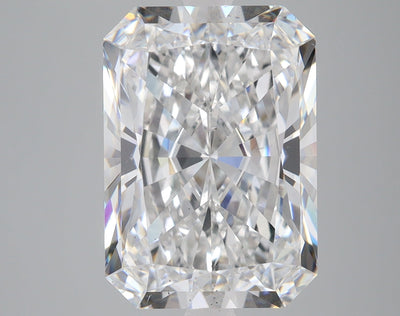
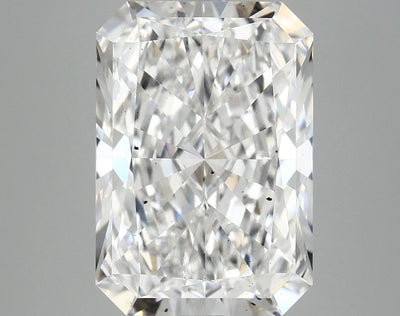
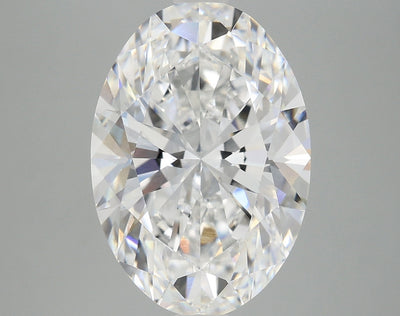
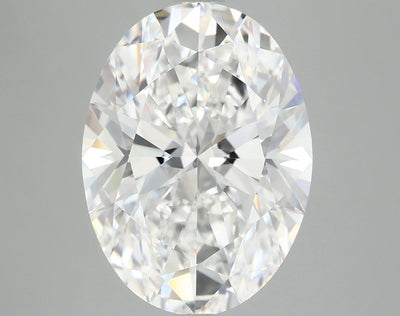
Shop the styles in this guide








How to Verify a Report
- Check online: Enter the report number on the lab's website and confirm the record exists.
- Compare details: Check carat weight, measurements, color and clarity on the website against the paper or PDF and the product listing.
- Confirm the inscription: Ask a jeweler to read the girdle inscription under magnification and confirm it matches the report number.
- Check the measurements: A jeweler can measure the stone with a gauge. The numbers should match the report closely.
- Keep a copy: Save the PDF and a photo of the report for insurance and future reference.
Red flags to watch for
- No report number: A "certificate" with no number you can check online is not an independent grading report.
- Details that do not match: Carat weight, measurements or grades on the listing that differ from the lab's online record.
- Unknown labs: Reports from labs you cannot find or verify independently. Stick to well-known labs such as IGI and GIA.
- Missing disclosure: A lab grown diamond whose paperwork does not say it is laboratory grown.
- Reluctance to share: A seller who will not show the full report or the report number before you buy.
Which Labs Are Trusted?
IGI and GIA are the most widely recognized labs for lab grown diamonds. Report formats change over time, and the level of detail can differ between labs and report types, so read the specific report rather than assuming. Grading standards can also vary slightly from lab to lab, which is why it is best to compare diamonds graded by the same lab. Read IGI vs GIA.
Certificate vs appraisal
A grading report describes quality. It does not give a price. An appraisal is a separate document, usually from a jeweler or appraiser, that estimates value for insurance. You may need both: the report to know what you have, and an appraisal to insure it.
Common Mistakes When Reading a Report
- Buying on paper alone: Two diamonds with identical grades can look different. Always view photos or video of the actual stone.
- Ignoring measurements: Carat weight does not tell you face-up size. Compare length and width in millimeters.
- Overpaying for invisible grades: D color and Flawless clarity cost more but rarely look different from G and VS2 to the naked eye.
- Skipping the comments: Treatments, growth method and other notes are often listed here.
- Comparing across labs: Grades from different labs are not always interchangeable. Compare like with like.
Certified Diamonds at Ivevar
We offer certified loose lab grown diamonds, many with IGI reports, and can set them in any ring design in our Surat workshop. If you would like help reading a report or comparing stones, book a virtual appointment and we will walk you through it. Every order ships free worldwide and comes with 30-day easy returns. Browse heart lab diamonds and all loose lab diamonds, or see our lab grown engagement rings and round lab diamonds.
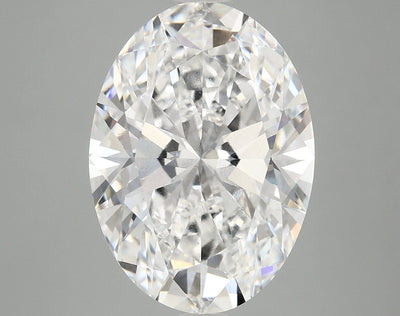
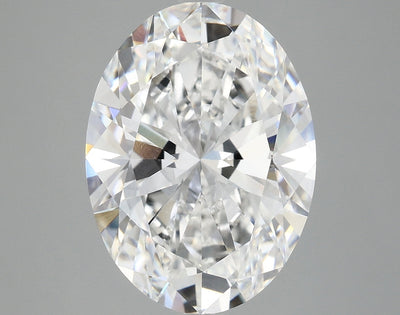
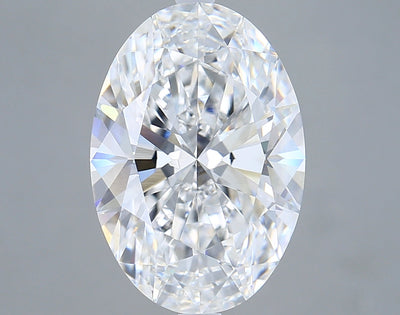
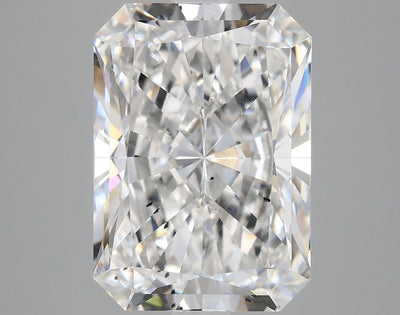
Shop Loose Heart Lab Diamonds
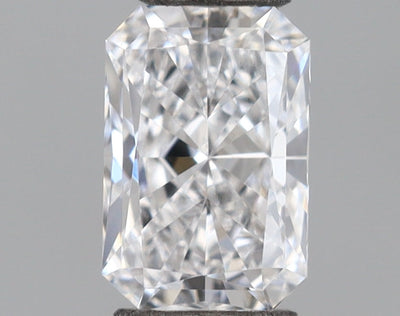
 3.17ct I VS1 HeartShop Now
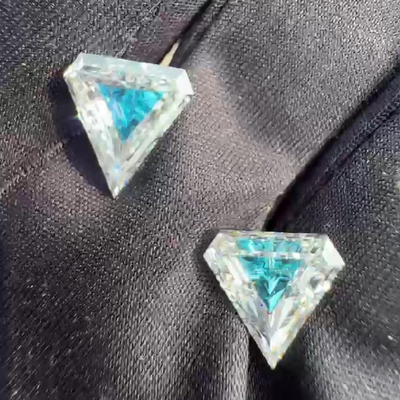
 2.00ct Vivid Blue HeartShop Now
 2.08ct Green Blue HeartShop Now
 1.27ct Pinkish Orange HeartShop Now
 1.01ct Greenish Blue HeartShop Now
 0.87ct Bluish Green HeartShop Now
Swipe to see more → | View heart lab diamonds
Frequently Asked Questions
Is a certificate the same as an appraisal?
No. A certificate grades quality; an appraisal estimates value for insurance.
What is a girdle inscription?
A tiny laser-engraved report number on the diamond's edge, readable under magnification.
Do lab grown diamonds have certificates?
Yes, usually from IGI or GIA. The report states that the diamond is laboratory grown.
What does "as grown" mean on a report?
No post-growth color treatment was applied.
Can I check a report online?
Yes, on the lab's website using the report number.
Which grade matters most?
For round diamonds, cut. It has the largest effect on sparkle. Then choose color and clarity that look white and clean to your eye.
Why does my oval diamond have no cut grade?
Many labs do not give an overall cut grade for fancy shapes. Use polish, symmetry, proportions and visuals instead.
Does moissanite come with a diamond grading report?
No. Moissanite is a different gemstone, not a diamond, so it is not graded on a diamond report. Some sellers provide their own quality card instead.
The Bottom Line
Read each section, verify the report number, and use the measurements, proportions and clarity plot to judge real-world beauty, not just the grades.
Related Guides

Author Bio
Aumsri Pradhan
Founder, Ivevar Luxury
Aumsri Pradhan is the founder of Ivevar Luxury, a Surat-based fine jewelry brand that designs and handcrafts lab grown diamond and moissanite jewelry in its own workshop. She leads the brand's design and customer experience, from engagement rings and bridal sets to custom pieces made to each client's story. Through the Ivevar blog, she shares practical guidance on lab grown diamonds, moissanite, diamond grading and ring design to help buyers choose with confidence.


